
Beard hair grows on an unusually long cycle — years, not weeks — which is why it reaches lengths body hair never will. Which means beard length isn’t something that happens to you; it’s a choice.
The right call depends on your growth speed, your face shape, and your honest tolerance for upkeep. Here’s how to choose the perfect beard length for your face.
What’s The Right Beard Length for You?
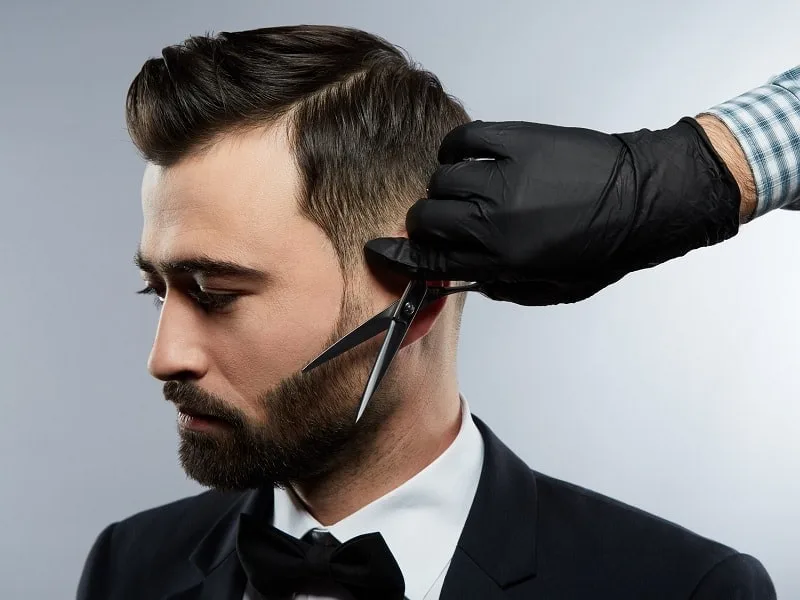
Beards need as much attention, if not more, than the hair on your head. Before thinking about growing one, there are four questions you should ask yourself.
1. How long do you want your beard to be?
There are different requirements depending on the beard length you choose. It takes less time to grow a shorter beard than a longer one. There are countless lengths to choose from, and even if a certain length doesn’t work for you, growing it out or trimming it back is a simple fix.
2. How much time do you want to spend?
Growing a long beard is a real investment, one that can take years. And that’s before you factor in the healthy practices that come with it. Cleaning, moisturizing, and regular beard grooming all require additional time you need to plan for.
Shorter beards still need care, but they take significantly less time to grow and manage.
3. How much money do you want to spend?
Longer beards generally come with a higher cost than shorter ones. You could technically grow a beard without beard oil or grooming products, but its health will suffer for it. More length means more product, and more product means higher expenses.
4. How will your beard look to others?
Your personal preference is the most important factor here. Never choose a beard length you don’t enjoy. That said, people often have preconceived notions about facial hair, and ignoring them isn’t always practical.
In the business world, for example, very long beards are often viewed as unprofessional, while a well-groomed shorter beard rarely carries that stigma. Some jobs also restrict long beards for safety reasons.
5. What are your height and hair color?
When choosing a beard length or style, your height and hair color are worth considering. Taller men often carry fuller, more voluminous beards well, while shorter men may benefit from more minimal facial hair.
If you have light skin and dark hair, a shorter beard with clean-shaved cheeks can be a sharp look. Men with lighter hair can pull off a wider, fuller beard with ease. You can also use beard coloring to dial in your personal style.
Keep in mind that there are no fixed rules when choosing a beard length or style. These are simply recommendations. Above all, what matters most is how the beard looks on you and how confident you feel wearing it.
Beard Length: Factors That Play A Vital Role
Testosterone

A few things can influence how your beard grows, and one of the biggest is testosterone. Higher testosterone levels can make your beard grow faster, but everyone’s baseline is different. It typically starts ramping up during the teenage years and begins to taper off around the 40s.
So how do you boost your levels naturally? Get active. Lifting weights is one of the most effective forms of exercise for the job.
Diet

Fueling your body with the right nutrients pushes those benefits straight to your beard. Oily fish like salmon and tuna, beans, eggs, fruit, and leafy vegetables are loaded with the protein and vitamins your body uses to build keratin.
These foods keep the beard you grow strong, healthy, and glossy. A varied, balanced diet covers everything your beard needs.
Proper Grooming
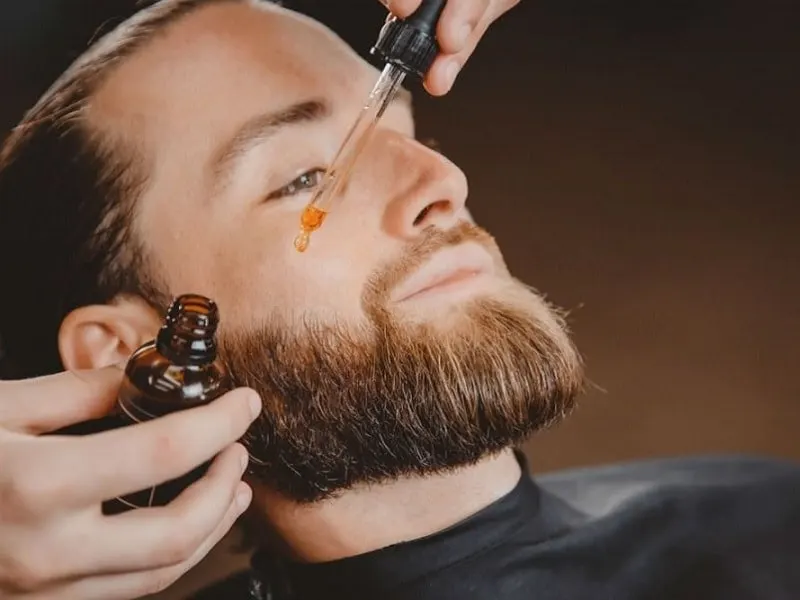
Adding a quality beard oil to your routine gives your facial hair benefits that diet alone simply can’t deliver. When shopping for an oil to support beard length, look for argan oil or unrefined jojoba. Both naturally moisturize your beard and skin while actively promoting facial hair growth.
Can Genetics Affect Your Beard Growth and Length?
Nothing will control your healthy beard length and growth more than your own genetics and hormones. They control facial hair thickness, strength, growing speed, and the number of hair follicles you have. It’s a common misconception that a beard’s genes are completely influenced by your father.
However, it is both parents that affect those traits. If you are worried about your beard, the factors listed above can help increase growth and thickness. However, they cannot increase the number of facial hair follicles.
How Long Can It Take to Grow Your Beard?

Due to each person having different genetics, testosterone levels, diet, and grooming routines, there is no straightforward answer.
From a clean shave, most men can see beard growth within a few days. A filled-in beard can take a week or two after that. To grow a full, bushy beard, it can take anywhere from a month to three months. Growing your beard to its full terminal length can take years.
Your beard has a couple of growing cycles that last about six years. The first stage is the anagen phase, where facial hair is actually growing. It is the longest stage and can last multiple years.
The second stage is the catagen phase, which usually lasts a few weeks. By this point, the hair has stopped growing.
The last stage is the telogen phase. During this time, new hairs grow and push the old hairs out. In a few months, the whole process starts again.
This process is only an estimate, and plenty of guys fall well outside these averages. For reference, the longest beard ever recorded was 17 feet 6 inches. Most men, however, will only reach around three feet at most.
How Fast Does Your Beard Grow?
The average facial hair grows about 0.5 inch per month. That figure does not account for testosterone levels, diet, grooming habits, or other factors. To see how fast your beard actually grows, take the time to track it.
After a few months, measure and compare your results.
Different Beard Lengths
One of the biggest factors in deciding how long to grow your beard is how it will look on you. A few details can make or break your style.
So, which beard length should you choose? Short, tailored, long, or very long? Let’s take a closer look at what each beard length really means and what it requires from you.
Short Beard with Natural Cheek Line

Short beards are a classic. They are the easiest to grow, coming in at under ½ an inch, and they remain one of the most popular beard choices around. Since the facial hair does not cover a large portion of your face, it can look patchy unless you have decent, even growth.
This length does not dramatically reshape your face, which is exactly why a short beard works well on almost anyone.
Short beards require the least maintenance. Proper beard wash, conditioning, and moisturizing a few times a month will keep things healthy. An exfoliator helps prevent beard irritation and beardruff from creeping in.
Tips for Short Beards
1. If your beard tends to grow in patchy, let it grow out longer first so it can fill in. Then trim it back down to your preferred short length.
2. You can still customize the length and do some light beard shaping, even at this short a length, to nudge your face shape in the right direction.
3. It is easy to overdo it with beard oil or conditioner on a short beard. Use a small amount at a time and build up only if needed.
Tailored Short Full Beard with Carved Cheek Line

A tailored beard is both professional and a classic mark of manliness. It takes more time to grow since it can reach up to one inch in length. Almost anyone can pull off this style.
If you plan to sit on the longer end of this range, keep in mind that some workplaces may have opinions about it.
There is enough beard bulk here to widen the jawline visually. That effect does not always flatter faces that are already wide, but smart beard sculpting and contouring can mold it to suit your proportions.
At this length, set aside time at least once a week for beard maintenance. Beard oil is a great addition to your routine here, keeping the hair conditioned and the skin underneath happy.
Tips for Tailored Beards
1. To hold this length steady, trim just once a week.
2. If your beard grows denser in some areas than others, use clipper-over-comb or a guard to balance the bulk and even out the density.
3. A styling balm can be used to mold your beard and give it a polished, refined finish.
Long Full Beard with Handlebar Mustache
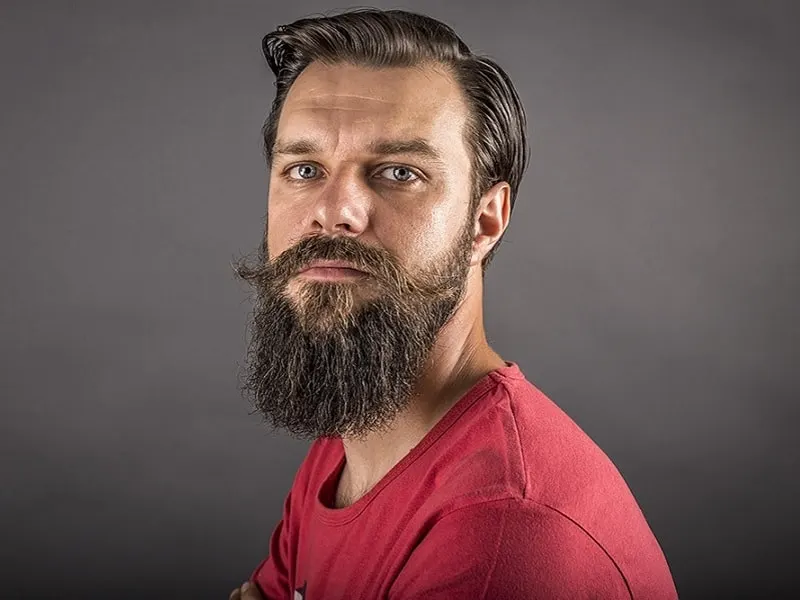
Long beard styles require a serious level of commitment. They typically take around three months to grow and often become the defining feature of your entire face. Keep in mind that as your beard grows longer, fewer workplaces and social settings may view the look as polished or professional.
Once your beard grows beyond an inch in length, your facial hair begins to develop a three-dimensional quality. Depending on how it’s styled, long beards can suit most face shapes. Men with round faces should trim their beard to add length while keeping extra width in check.
Those with thinner faces can use a long beard to create a fuller-looking jawline, but should be careful not to make their features appear even longer.
Long beards require regular care, including beard wash, conditioner, and beard oil, to prevent dryness and beardruff. Try to follow this routine every few days. Combing your beard regularly will also help maintain a clean, well-shaped appearance.
Tips for Long Beards
- Choose a moisturizing beard oil to keep your beard from drying out and developing beard frizz.
- Visit a barber at least once and discuss how to shape and contour your beard to complement your face shape.
- Use a beard balm or styling balm to maintain a smooth, controlled shape and tame any flyaways.
Dark Voluminous Bandholz-Style Full Beard
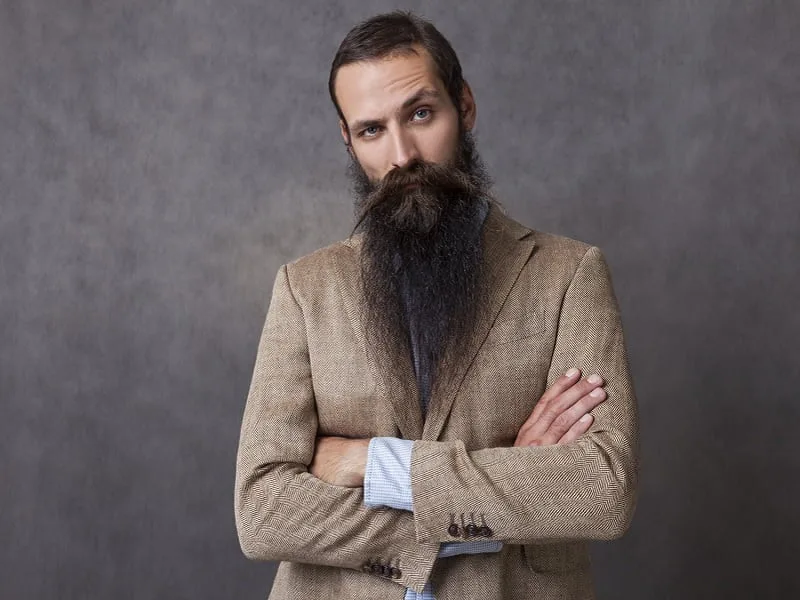
Very long beards make a bold statement, but they should only be grown by someone ready for the responsibility. At this length, it’s easy for your beard to get caught on objects, so extra care is required.
With proper maintenance, a Bandholz-level beard can be an impressive achievement. Because of their substantial length, very long beards tend to make the face appear longer.
This can be overwhelming for men with naturally thin faces, but it often looks excellent on round faces, where the added chin projection and fullness creates a great sense of balance.
As with shorter beard lengths, beard wash, conditioner, and beard oil are non-negotiable for maintaining beard health at this level. Use these products every other day. Moisturizing is especially critical once you’re dealing with this much length and density.
Tips for Very Long Beards
- Visit a barber at least once a month, or more often if needed, for a beard maintenance trim to address split ends and keep the shape dialed in. If you’re confident with your tools, you can handle some of this yourself.
- Keeping your beard clean is essential, but over-washing strips natural oils and causes dryness. Find a routine that keeps things fresh without compromising moisture.
- Pay attention to beard shedding. If you notice excessive hair loss, it may be worth considering a shorter beard length to reduce the strain on your follicles.
Beard Length and Face Shape
Below are some general tips to help you choose the right beard length based on your face shape. Your facial structure plays a major role in how any given beard length or style will actually look on you.
Heart-Shaped Face
If your face is heart-shaped, your goal should be to visually widen the lower portion of your face so the chin appears more substantial. Short boxed beards, horseshoe mustache styles, or slightly rounded beards all work well here.
Round Face
Men with round faces should consider a beard with a trapezoidal shape that adds chin projection and draws the eye downward. Adding a short mustache can help elongate the face further. Long beards work great for this face shape.
Mutton chops, on the other hand, add unwanted width and should be avoided.
Oblong Face
If your face is oblong, the goal is to visually widen it. Short horseshoe styles or pronounced sideburns are solid options for adding that width. Steer clear of goatees or Van Dyke styles, as they emphasize chin length and make the face appear even longer.
Oval Face
If you have an oval face shape, consider yourself lucky. Nearly any beard length or style will suit you, so feel free to experiment without worrying about strict limitations.
A beard is one of those features that can genuinely complete your overall look. Like the hair on your head, it can be customized through shape, length, and even beard coloring to match your personal style. If a particular choice doesn’t work for you, you can always start fresh.
Now that you understand the key factors behind healthy beard growth, you’re well equipped to choose the ideal beard length for yourself.