There’s not much to know about the origin of a ducktail beard. It is, as the name suggests, a style that resembles the tail of a duck. Growing and styling it, however, is another story entirely.
Throughout history, facial hair has changed and evolved. The ducktail beard is one of those styles that have surged in popularity. It is categorized as one of those types of a full-on beard.
This beard walks a fine line between sophisticated and wild. The ducktail focuses all its visual energy on the bottom part of the face, which is the section that mirrors the shape of a duck’s tail. Maintaining a full-on ducktail takes more than just a few passes with a comb and some wax.
In this article, we break down some essential ducktail beard hacks. If you are still undecided about whether this style is right for you, stick around until the end, where we round up some of the most famous ducktail beards worn by real men.
Which Face Shape Is Complemented By A Ducktail Beard?

Start with the basics: figuring out whether a ducktail beard is the right style for your face. Your face shape can significantly affect how your beard, mustache, or goatee sits on your features, so choosing a style that works with your bone structure rather than against it makes all the difference.
A ducktail beard looks good on diamond, round, rectangular, and inverted triangle face shapes.
If you have a heart or square face shape, you may want to adapt the traditional style slightly. Read on to explore the different variations of the ducktail beard and find the one that suits your face best.
How To Grow, Trim and Shape A Ducktail Beard
Now, onto the nitty gritty: learning how to grow, trim, and shape your ducktail beard like an expert beardsman. This section covers three key stages: growing your full beard foundation, trimming the bulk to reveal the shape, and sculpting that signature pointed chin projection that makes a ducktail unmistakable.
Growing Your Ducktail Beard
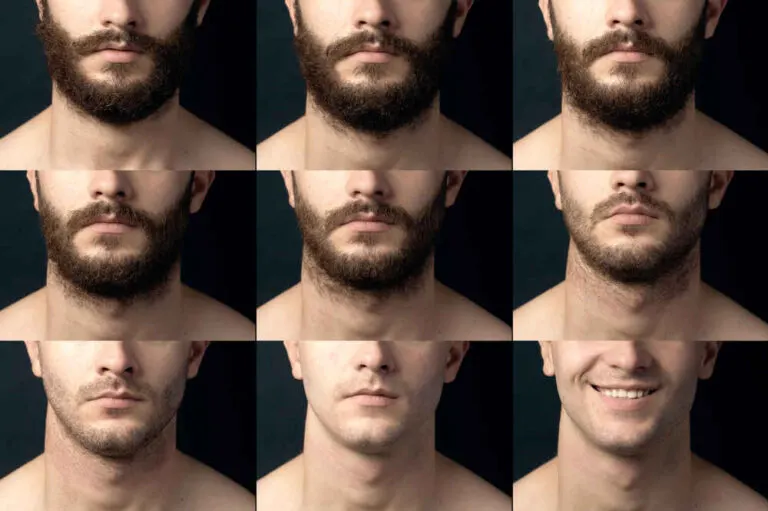
Facial hair grows roughly half an inch per month, so patience is non-negotiable here. Around the fifth month, you can expect anywhere from two to three inches of growth to work with. Since the ducktail is built on a full beard foundation, you need that density across the entire face before you can start carving the shape.
During the grow-out phase, wash your beard once a week with a dedicated beard cleanser and rinse daily as needed. Food, dust, and debris collect fast in longer growth, so good hygiene keeps the follicles healthy and the beard looking presentable while you wait.
Skip the myth that shaving speeds up growth. It does not. Focus on nutrition, sleep, and patience.
Trimming Your Ducktail Beard
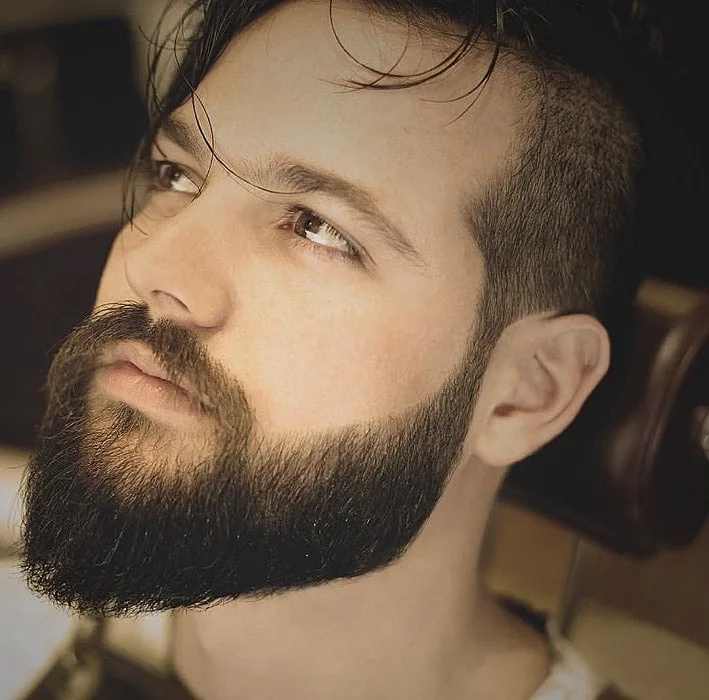
If a full multi-inch grow-out feels like too much commitment, two to three inches is plenty to execute a clean ducktail. Keep the cheek areas trimmed shorter and tighter, since the style draws all its visual weight from the chin projection downward. Use a quality clipper with a guard to debulk the sides, then clean up the neckline and upper cheek line with a detail trimmer or straight razor for a sharp finish.
A well-executed ducktail has a clearly defined perimeter: a clean carved neckline, tidy cheek lines, and a bottom point that tapers to a distinct chin apex. Let the sides sit noticeably shorter than the chin length so the eye is drawn straight down to that signature point.
Shaping The Ducktail Beard
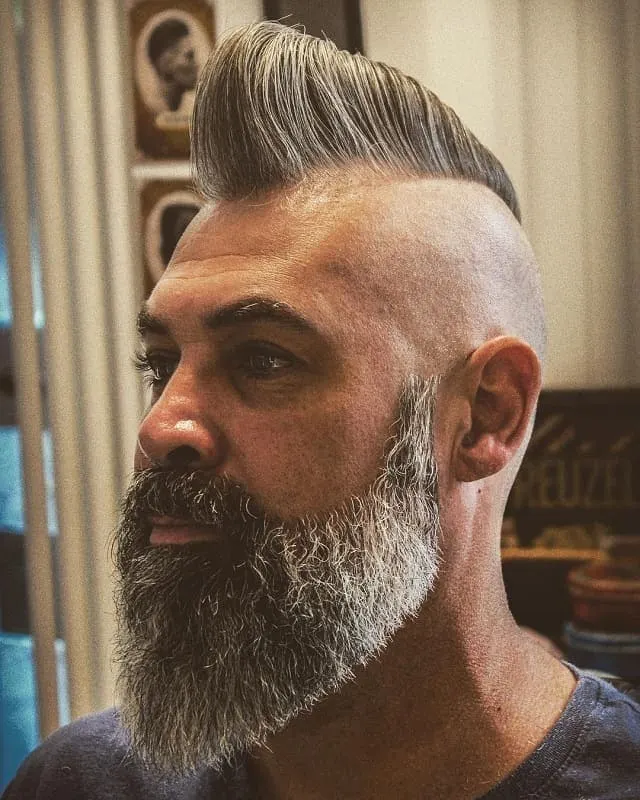
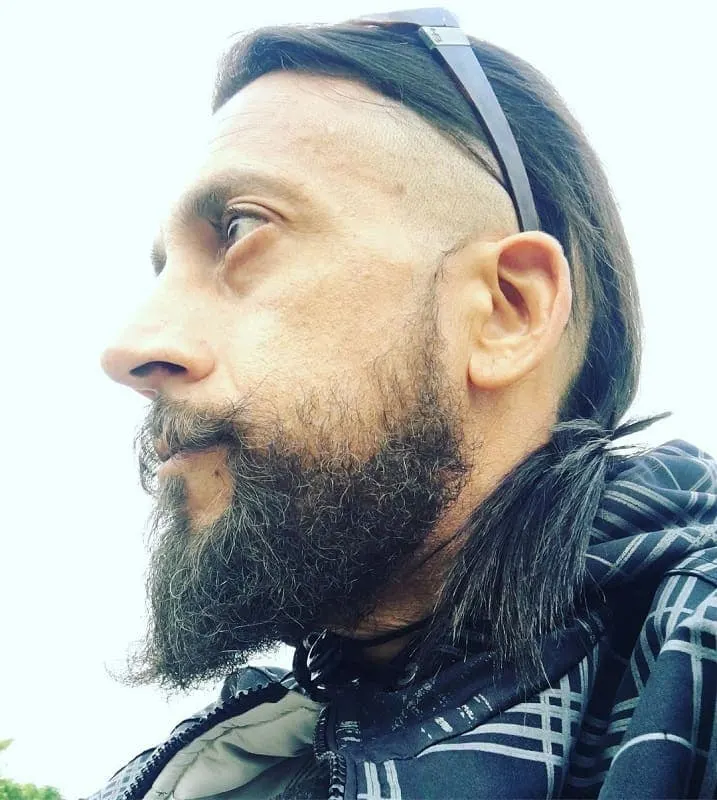
You need at least two inches of growth before shaping begins. From there, trim downward along the sides, gradually removing less bulk as you move toward the chin base. That graduated reduction is what builds the pointed beard shape.
The chin point does not need to be razor-sharp, but the longest facial hair must sit at the chin apex for the style to register as a true ducktail. Use a beard comb to guide the hair downward and a detail trimmer to carve the outline.
Finish with a small amount of beard balm to tame flyaways and hold the point in place throughout the day. Do a symmetry check on both sides in good lighting before you call it done.
Ducktail Beard Grooming Hacks
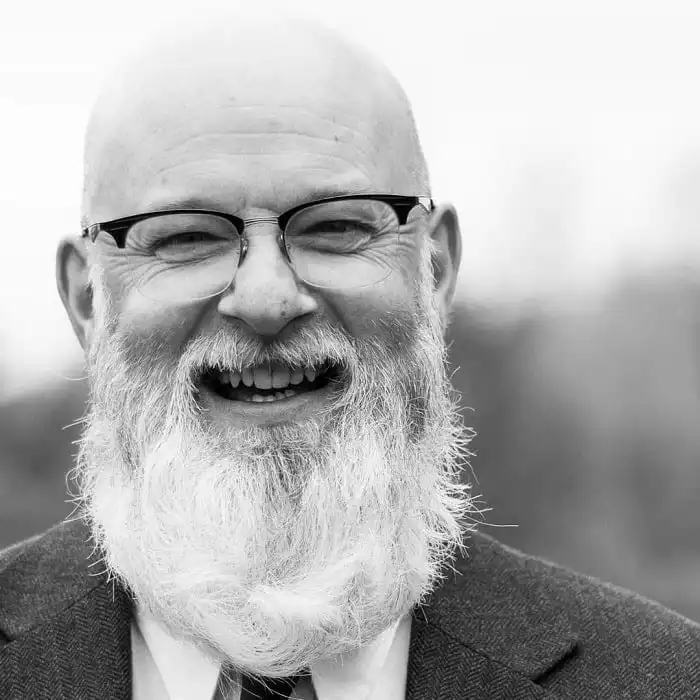
Proper care is what separates a great ducktail from a scraggly mess. Commit to these grooming habits and your beard will stay on point between every trim.
- Never pick at your ducktail beard. Stroke it in the direction of growth to train the lay and keep the point intact.
- Use only high-quality beard combs. A wide-tooth comb for detangling and a fine-tooth comb for shaping the point will make a noticeable difference.
- Avoid obsessing over a single beard hair. Fixating on one strand leads to picking, which causes split ends and patchy gaps you’ll regret later.
- Invest in a quality beard wash and beard conditioner. Consistent cleansing helps reduce flaking and keeps your coarse beard hairs soft enough to sculpt into that clean ducktail point.
- Beard oil is non-negotiable. Apply it daily to moisturize both the hair shaft and the skin underneath, taming flyaways and keeping your beard looking full and healthy.
- Beard balm goes a step further. Its thicker formula coats the hair shaft, helps protect against beard breakage, and gives you the light control you need to shape and hold the ducktail point throughout the day.
- If your beard looks shaggy, flaky, or wiry, that is often a grooming consistency problem. Daily beard oil and beard balm application will usually improve it faster than any single product ever could.
- Know the difference between the two: beard oil hydrates and conditions, giving your beard its healthy appearance. Beard balm adds a layer of hold and protection, giving you the confidence to actually wear it.
Famous Men Who Made Ducktail Beards Sexy
Choosing to grow a ducktail beard starts with inspiration. If you are still on the fence, here are some famous men who prove that ducktail beards are absolutely worth the commitment. Note that some of these are variations of ducktail beards.
1. Leonardo DiCaprio
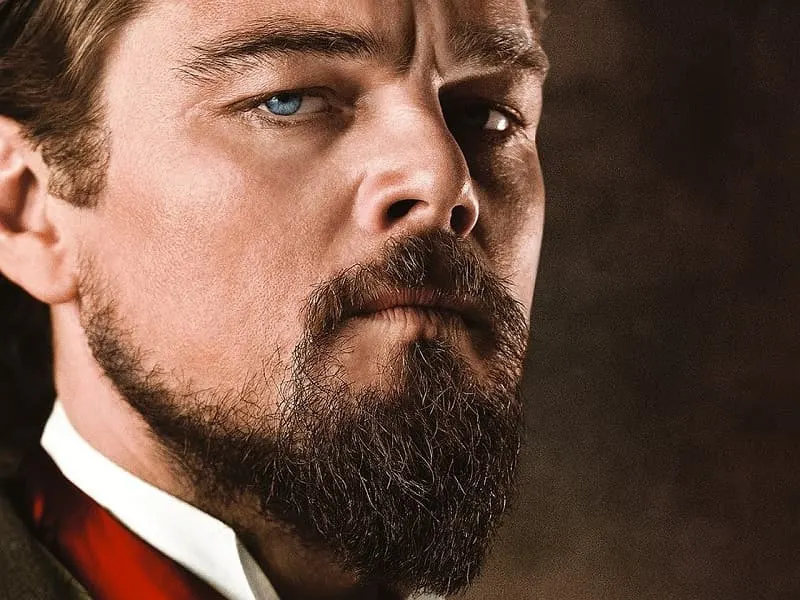
Few celebrity beards have sent men rushing to their barbers the way DiCaprio’s mid-2010s ducktail did. He wore a medium-length ducktail with dense, coarse growth through the cheeks, a natural cheek line, and a chin point that tapered cleanly into a defined apex.
No over-sculpted razor lines, just raw, well-maintained fullness with serious presence. If your growth is dense enough to pull this off, let the beard reach about two to three inches at the chin before you begin carving the point.
Use a detail trimmer to establish the outline and scissor-over-comb to debulk the sides, keeping the weight concentrated at the chin projection for maximum ducktail effect.
2. Brad Pitt
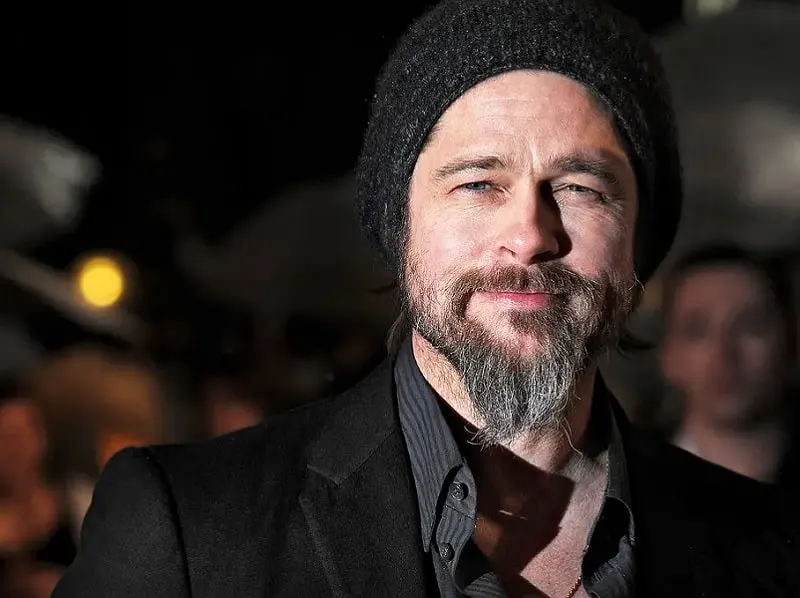
Brad Pitt turned the ducktail into a full lifestyle signature. Paired with a beanie and an oversized coat, his version leaned into a softer, more natural finish rather than a razor-sharp outline. The salt-and-pepper color variation through the chin and mustache gave it a rugged, lived-in quality that felt unforced rather than groomed-to-death.
Replicate this by resisting the urge to over-line your cheek line. Keep it natural and soft, trim your neckline low and clean, and let the ducktail point do all the talking. A light application of beard balm will hold the shape without making it look stiff or overdone.
3. Pierce Brosnan
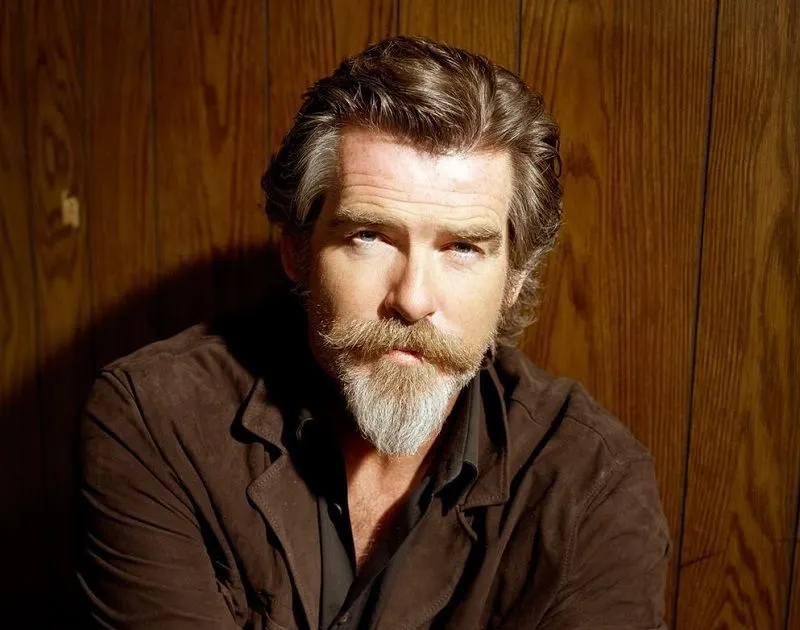
Pierce Brosnan took the ducktail somewhere more sophisticated by blending it with a French beard influence, combining a pointed chin with a mustache styled to curl slightly at the ends. For men with a heart-shaped or square face, this combination works brilliantly because the elongated chin point draws the eye downward, adding length and softening a wide jaw.
Grow your chin hair out to a solid point, then direct your mustache growth outward and use a firm mustache wax to twist and set the ends. Most men drawn to this style want to project maturity and authority. Between the two-tone color, the pointed beard, and the styled mustache, Brosnan’s version delivers all three without trying too hard.