
A curly beard can be worn close to the face or grown into a fuller shape. The aim is to work with the texture: detangle gently, keep the skin beneath it comfortable, and trim the outline after the curls have settled.
Compare the shapes below, then use the care routine to adapt your grooming to your beard’s length and your skin.
Curly and Wavy Beard Style Ideas
1. Short Boxed Beard with a Defined Cheek Line

A short boxed beard keeps dense, coily growth close to the face while giving the cheeks and jaw a clear outline. The pictured beard has a defined cheek line and a mustache, so it is different from a mustache-free Curly Old Dutch Beard.
This compact shape also works with a bald head. Maintain the line-up without pushing the cheek line lower at each touch-up.
2. Wavy Full Beard with a Thick Mustache

Loose waves give this full beard a softer texture than the tightly coiled examples below. The rounded lower edge and thick mustache keep the shape full without a sharply pointed chin.
Comb gently through the beard before shaping it, then check the outline after the hair has settled. Trim protruding ends sparingly instead of trying to make every wave lie flat.
3. Dense Curly Beard with a Rounded Outline

Curly and coily beard textures naturally build outward volume. This full beard keeps that fullness through the cheeks and chin, with a rounded lower outline and connected mustache.
Keep the sideburns balanced and detangle before trimming. Check the beard from the front and both sides so the outline stays even without cutting away the curl pattern.
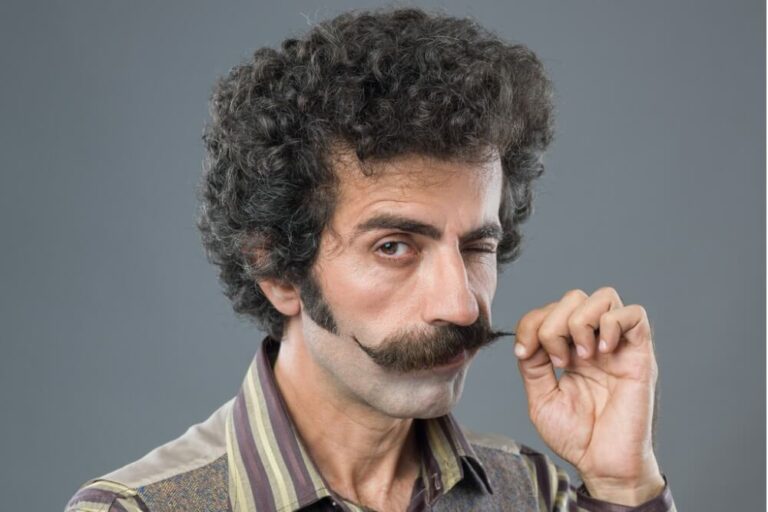
4. Curly Full Beard with a Handlebar Mustache

A curled handlebar mustache adds a separate focal point above a dense, curly full beard. The beard stays full through the sides while the mustache tips curl upward.
Use a small amount of mustache wax to shape the tips if you want this finish. Detangle the beard gently beneath it, keeping the mustache styling separate from the beard’s natural texture.
5. Natural Full Beard with Tousled Curls

This beard follows a natural outline, with softer edges around the chin and cheeks. Loose curls in the hair complement the beard’s texture without requiring the two to have identical lengths.
Use your fingers or a wide-tooth comb to arrange the growth, then trim only the ends that fall outside your chosen outline. Keep enough length for the texture to remain visible.
6. Rounded Beard with an Outward-Swept Mustache

A rounded beard and an outward-swept mustache create a broad, full shape. The mustache ends lift away from the mouth rather than forming a straight chevron.
Detangle the beard gently and shape the mustache separately. Preserve the rounded chin while tidying ends that project beyond the perimeter.
7. Short Textured Beard with a Fade

Pairing a short beard with a faded haircut keeps the sides compact. The pictured beard has a slightly tapered chin and a defined cheek line; its short texture is subtler than the longer curls above.
Keep the cheek line tidy and check both sides before trimming the chin. Start with a longer guard than you think you need, since you can shorten the beard gradually.
How to Take Care of Your Curly Beard
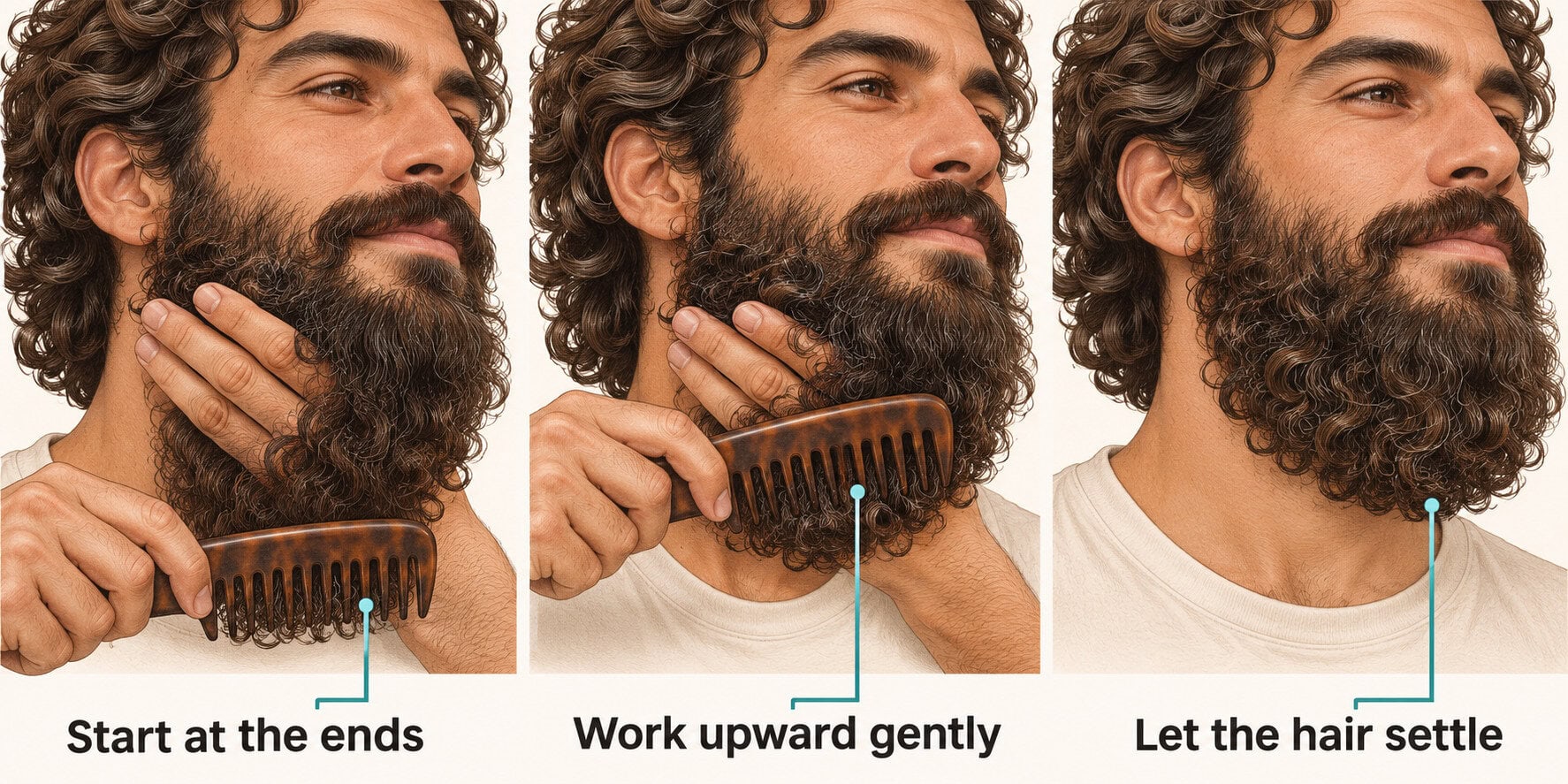
Wash your beard and the skin underneath, then use a conditioner that suits your hair and skin. Gently comb out tangles, starting at the ends and working upward.
If the comb catches, loosen the knot before continuing. Don’t pull it through.
Let your beard dry and fall into its usual shape before trimming. Check the front and sides, then snip the hairs that stick out.
Avoid pulling the curls straight while cutting. It’s harder to judge where they’ll sit once they spring back. Use a little styling product if you need help holding the shape.
Wash the Beard and the Skin Beneath It

Product buildup and dirt collect in a beard as well as on the skin underneath. The American Academy of Dermatology recommends daily washing with a gentle cleanser suited to your skin type. Rinse thoroughly with lukewarm water, then pat dry rather than rubbing.
Choose Moisture and Hold Separately
Choose a beard conditioner, oil, or moisturizer according to your skin. The AAD suggests beard conditioner for acne-prone skin, beard oil for normal or dry skin, and a fragrance-free, non-comedogenic moisturizer for sensitive skin. Use a small amount and spread it through the beard and onto the skin underneath.
Beard balm can help arrange the hair and add hold. Start lightly, adding more only if the beard needs it. Styling hold and skin care serve different purposes.
Detangle Gently

Use a wide-tooth comb to detangle, starting at the ends and working toward the roots. Work in small sections and ease apart a snag rather than pulling the comb through it. The AAD notes that detangling is easier when the beard is wet; use a gentle touch and avoid forceful brushing.
Stop at the snag instead of pushing the comb through it. Hold that small section above the tangle so you are not pulling at the skin, then separate the loose ends with your fingers. Try the comb again only when it moves without force.
Trim the Settled Shape

Let your beard dry and settle into the way you normally wear it before judging the outline. Stretching the curls straight can make the beard appear longer than it looks at rest, so trim cautiously.
Use scissors to tidy strays or a trimmer to maintain a shorter shape. Keep the neckline defined without cutting into the underside of the beard. If the shape is difficult to balance, ask a barber to establish an outline you can maintain at home.
If you want a shorter shape, use the length guide to choose a starting setting. Keep enough length to see how your own curls sit before making the next reduction.
Keep Stubble at a Consistent Length
If you prefer Light stubble, use a trimmer with a guard that leaves your preferred length. Check the millimeter marking or your trimmer’s instructions; guard numbers are not universal across devices. Tidy the edges as needed rather than shaving the entire beard back each time.
Work with Your Natural Curl Pattern
A curly beard doesn’t need straightening to look tidy. Keep the shape you like, work through tangles gently, and trim with the curls sitting naturally.