

At a glance
- Growth speed: varies by person; assess progress over weeks, not days
- What helps: time, gentle grooming, and addressing a diagnosed health problem if one is present
- What is hype: grooming oils are not proven mustache-growth treatments
Wondering what actually helps a mustache come in? Genetics and age strongly influence the result. Healthy habits support general wellbeing, but do not guarantee faster or denser facial hair. Cleveland Clinic explains the main influences on beard development.
This guide separates the habits that genuinely help from the myths that do not.
Find what suits you: browse all beard styles, mustache styles, or the trimming guide.
Stages of Facial Hair Growth

Before we dive into what helps a mustache grow in, let’s take a quick look at the mustache growth cycle. The facial hair growth cycle has 4 stages:
- Anagen phase: This is the active growth phase where hair is actively growing.
- Catagen phase: This is a transitional phase where the hair follicle shrinks.
- Telogen phase: This is the resting stage after active growth ends. Shedding is described separately as exogen.
- Exogen phase: The old hair is released from the follicle. Terminal length depends on growth rate and the duration of active growth; individual hairs cycle at different times. Reaching a particular length does not cause the whole mustache to shed at once.
Factors that Affect Mustache Growth
Genetics

Your family’s genetic traits play a significant role in determining the thickness, color, and growth rate of your mustache. You may inherit similar facial hair characteristics from your parents or grandparents.
If the men in your family grow patchy or sparse facial hair, a thick, full mustache is less likely. But just because the men in your family sport long, dense mustaches doesn’t guarantee you the same result, since mustache growth depends on several other factors too. Ancestry can also shift average beard density, but coverage varies from man to man within every group, including East Asian and Native American men.
Hormones
Hormones drive facial-hair development, but your follicles’ genetic sensitivity decides what they do with it, which is why two men the same age can grow completely different mustaches.
Age
Facial hair growth rates vary with age. During puberty and early adulthood, most men experience faster facial hair growth. Growth may slow down as they get older.
Nutrition

A balanced diet promotes healthy hair growth. Foods rich in protein, zinc, and iron help keep your skin and the hair you grow healthy.
Hydration and Facial Hair Growth
Drink enough fluid for your needs. There is no established number of glasses that makes a mustache grow faster.
Lifestyle
Sleep, activity, and stress management support general health. They do not provide a predictable increase in mustache growth speed.
Most adults need 7 to 9 hours of sleep each night. This is a general health recommendation, not a mustache-growth schedule.

Skincare

Gentle cleansing and a suitable moisturizer help care for the skin beneath a mustache. They do not create new follicles or determine where facial hair grows.
Keep track of your mustache
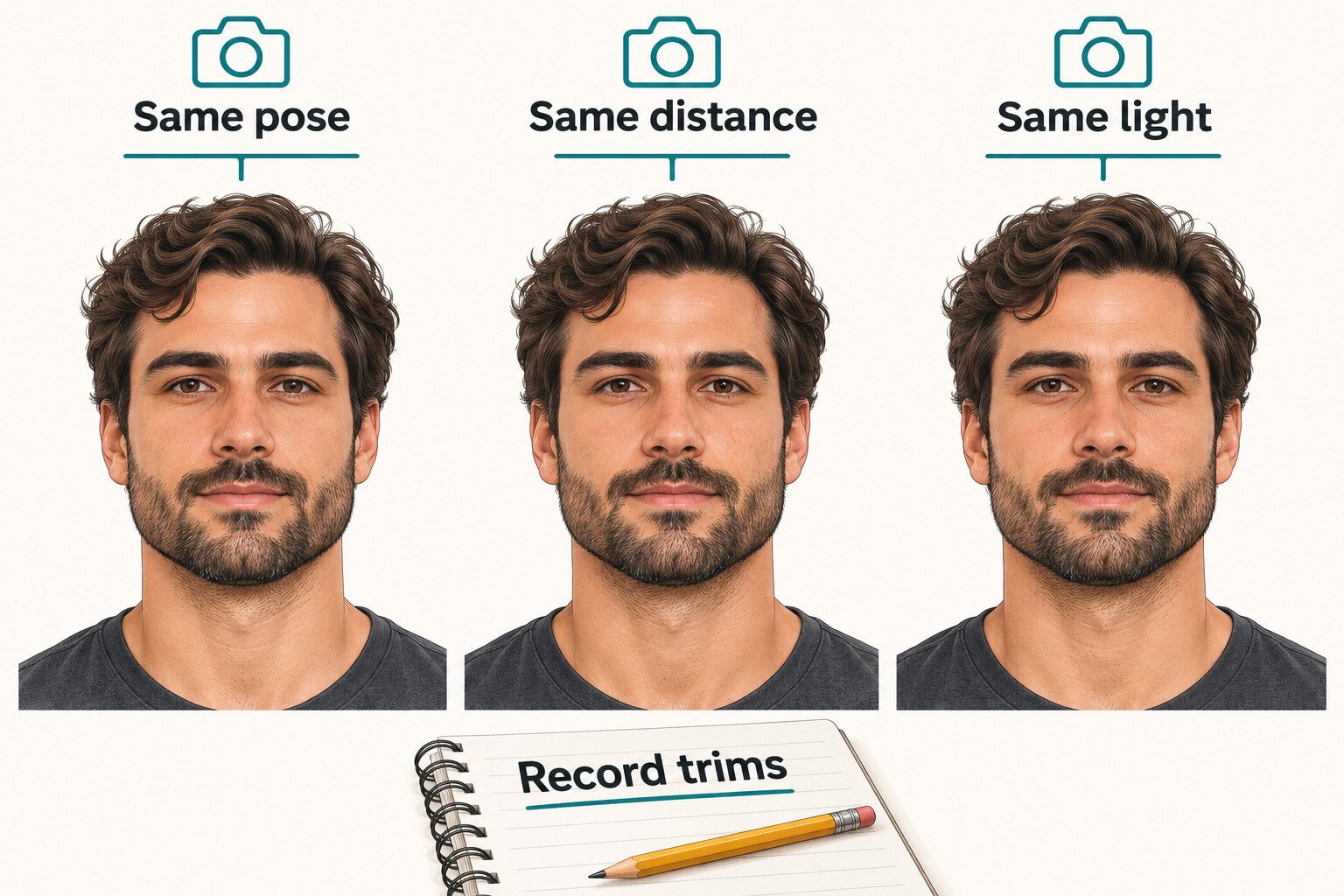
Take a photo now and then with the same lighting, distance, and angle. Comb your mustache the same way and note any trims.
Look for changes that help you style it: more length over the lip, longer ends, or enough hair to shape the way you want.
Photos show how your mustache looks. They don’t prove that a product created new hair follicles or tell you which product helped if you’ve changed several things at once.
Use the photos to decide when to trim or style, rather than comparing your progress with someone else’s.
Giving Your Mustache Its Best Shot
Follow these habits to give your mustache its best shot:
1. Eat Healthy For Nutrition

A varied diet can supply protein and micronutrients. Do not take high-dose biotin, iron, or zinc just to grow a mustache: the American Academy of Dermatology recommends supplements for a confirmed deficiency, rather than assuming more is better.
2. Trim the Splits and Condition

Trim the ends of your mustache to even out its appearance. Cutting the visible hair does not change its growth rate or make patchy areas grow in.
3. Take Care of Your Skin

Choose a conditioner, beard oil, or gentle moisturizer that suits your skin. The AAD’s beard-care guide explains the options. These products help with care and comfort, not new growth.
Natural Extras: What Helps and What Is Hype
Here are the popular natural extras, and what the evidence really says about each:
Essential Oils
Essential oils have not been established as mustache-growth treatments. Concentrated oils can irritate skin; Johns Hopkins Medicine explains their risks. Do not apply undiluted essential oils around the mouth.
Commonly mentioned oils have important evidence limits:
- Rosemary oil: scalp-hair research does not establish that it grows mustaches.
- Peppermint oil: a cooling sensation is not evidence of hair growth.
- Lavender oil: laboratory findings do not establish faster mustache growth in people.
If you choose a fragranced grooming product, follow its directions and stop using it if it irritates your skin. A homemade oil blend is not necessary for mustache care.
Castor Oil
Castor oil can coat the hair and add shine, but evidence does not establish it as a facial-hair growth treatment. Laboratory findings about its ingredients do not prove a benefit for the skin beneath a mustache.
If you use a castor-oil grooming product, follow its directions and stop if irritation occurs.
Aloe Vera

Aloe vera appears in some skincare products, but it has not been established as a mustache-growth treatment.
Use an aloe product according to its label rather than following a fixed leave-on time intended to stimulate growth.
Onion Juice
Onion juice has not been established as a way to grow a normal mustache. The presence of sulfur does not demonstrate a growth benefit.
Applying onion juice near the mouth can irritate the skin. A home patch test does not prove that it is an effective or suitable facial-hair treatment.
Massage Your Mustache Area

A gentle facial massage may feel relaxing. It has not been established as a way to speed up mustache growth, and a smooth facial roller is not a microneedling tool.
Beard Grooming and Maintenance

Maintain your mustache to keep it clean and manageable, rather than to make it grow faster.
- Wash your face and facial hair gently, rinsing away cleanser and food residue.
- Choose a suitable conditioner or moisturizer for comfort. You can also make mustache wax at home for styling hold; wax is not a growth treatment.
- Use a beard brush or beard comb to detangle and style the hair.
- Use grooming scissors carefully to shape the ends. Trimming does not guarantee protection from ingrown hairs.
For styling ideas, explore beard styles and design tricks.
Growth Questions, Answered
How fast does a mustache actually grow?
Mustache growth varies. Photos taken several weeks apart under the same lighting are more useful than treating a single daily average as a personal deadline.
What genuinely helps a mustache grow?
Give it time, use gentle grooming, and avoid products that promise guaranteed growth. If facial hair suddenly becomes patchy or falls out, a dermatologist can assess the cause.
Do oils make a mustache grow faster?
Grooming oils are not established mustache-growth treatments. Some can condition the hair, while fragranced products and essential oils can irritate skin.
The Beard Style Verdict
Give your mustache time and keep it tidy while it grows. Genetics affect the result, so be wary of products that promise a fuller mustache on a fixed schedule.