
At a glance
- The order: bulk with a guard, lip line with the bare blade, detail with scissors
- Always: trim completely dry
- Never: cut into the bulk before combing it down
Scissors, trimmer, or clippers: which one’s actually in your drawer, and do you know how to use it on your upper lip? That’s where most mustache trims go sideways: right tool, no technique, and suddenly one half is shorter than the other.
Trimming a ’stache is genuinely simple once you know the moves for each tool and the order to run them in. Here’s the complete how-to, scissors to clippers, so you never botch the edge again.
Find what suits you: browse all beard styles, mustache styles, or the trimming guide.
How to Trim Your Mustache
With the right tools and techniques, you can rock any mustache style you desire by following these 6 simple steps:
Step 1: Choose Your Mustache Style

Deciding on a mustache style is essential for a successful trim. To decide on a mustache style, follow these guidelines:
- Analyze your mustache’s shape, growth pattern, length, and thickness.
- Consider the style you wish to achieve and how it complements your face shape.
Three popular styles to consider:
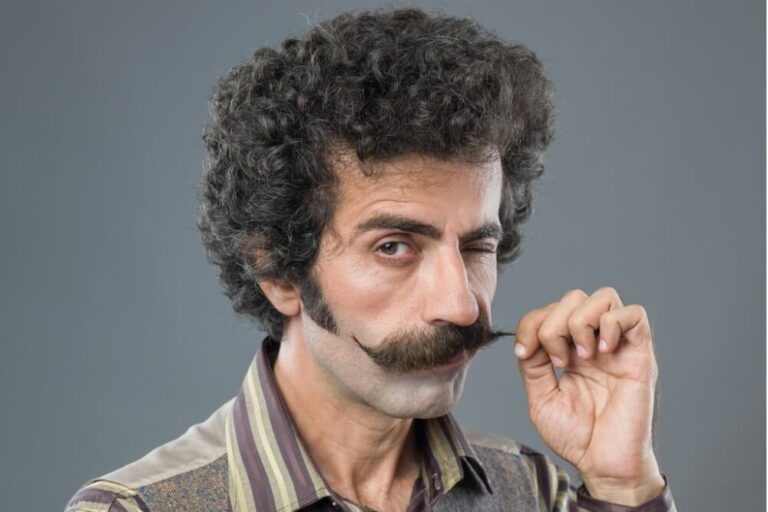
Walrus Mustache: This style features a thick, bushy mustache that droops over the upper lip. It is a bold, classic look. If you prefer a neater, close-trimmed option, consider a Chevron instead.
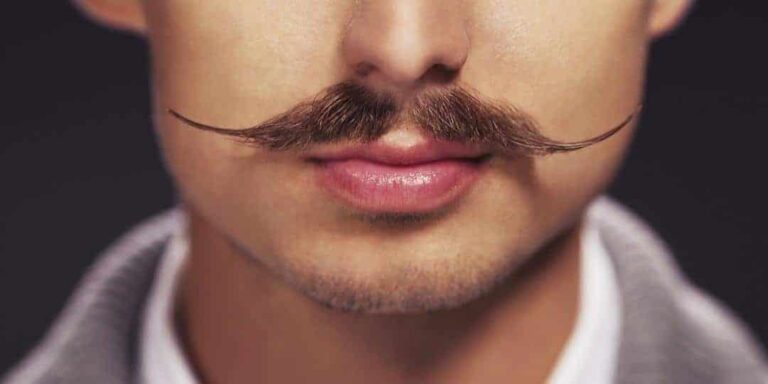
Handlebar Mustache: A handlebar mustache is characterized by its long, curled ends that are twisted upward. This style requires more maintenance but can make a bold statement.
Chevron Mustache: The chevron mustache is a thick, wide mustache that covers the entire upper lip. This style is ideal for those with naturally thick facial hair.
Step 2: Gather Your Tools and Prepare Properly
Essential tools include a fine-tooth beard comb, sharp facial hair scissors, an electric trimmer or clippers, and a mirror. Make sure your mustache is clean and free of dirt. If you have washed it, wait for it to dry first.
Step 3: Analyze Your Preferred Mustache Style Length
If you cut your mustache shorter than your preferred style, you will have no way to reverse the process. Before starting, be sure of the length of your desired style.
Step 4: Comb and Trim Your Mustache
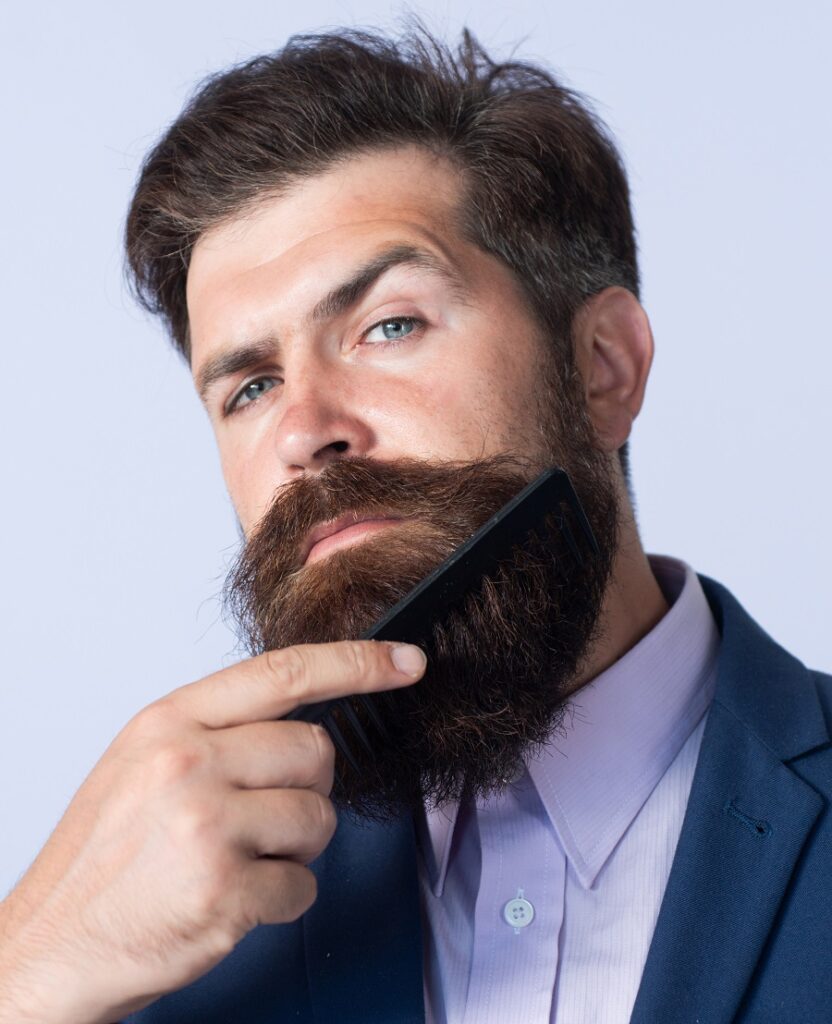
Comb your mustache downward to help straighten the hairs. This exposes stray hairs and split ends so you can easily and precisely snip them away. Then trim the outside edges of the mustache first.
You can also use a white barber pencil to outline the edges before cutting for better symmetry. Slowly trim the mustache under your nose and along the upper lip. Always trim your facial hair dry to avoid cutting off more than you intended.
Step 5: Thin Out Your Mustache if Needed
If your mustache looks too bushy, thin it out carefully. Comb your mustache downward, then lift small sections slightly with a fine-tooth mustache comb and snip only the hairs that extend past the comb.
Step 6: Style Your Mustache
If you want to define your mustache more, use a few drops of beard oil to add moisture to the skin beneath. To create a twisted-up look or add hold, use a specialized mustache wax. Stick to products made for facial hair around the mouth, as generic scalp styling products may irritate the skin and clog pores in this area.
That’s it. You have successfully trimmed your mustache.
How To Trim Your Mustache With Scissors
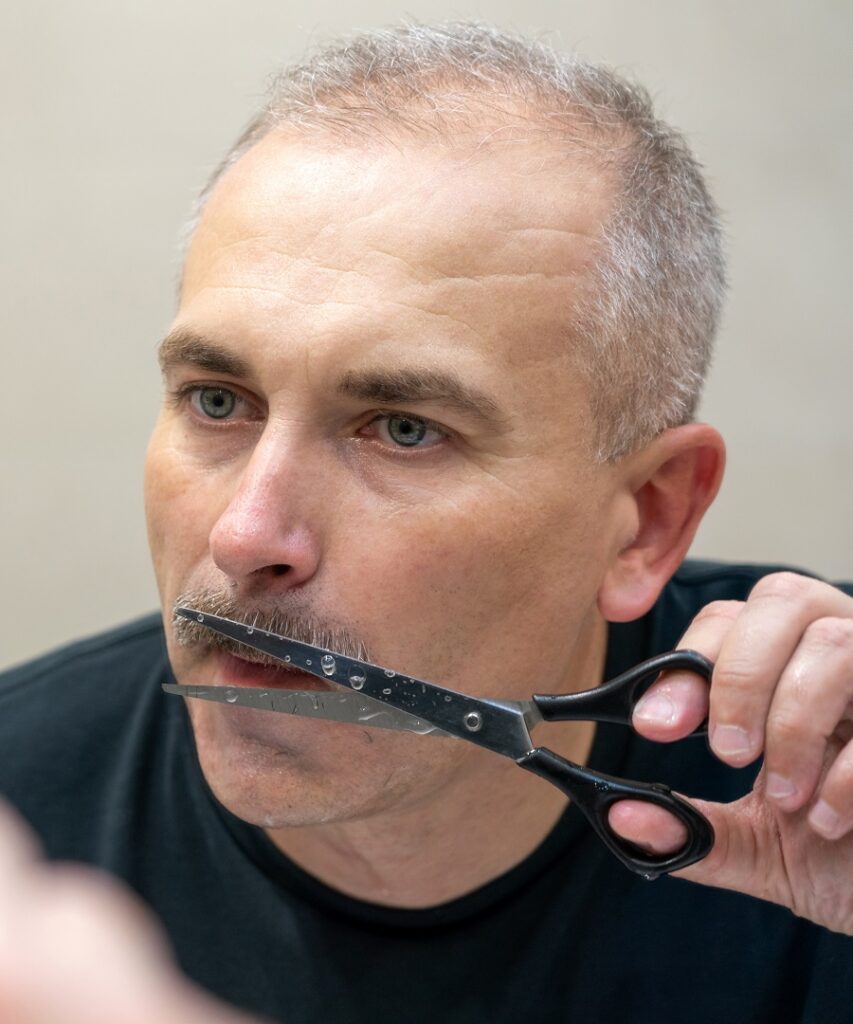
Trimming your mustache with scissors is a cost-effective and efficient way to style your mustache. From choosing the right pair of scissors to perfecting the final touches, here is your step-by-step guide for trimming your mustache with scissors:
1. Choose the Right Scissors
- Use small, sharp, straight-edged scissors designed for facial hair.
- Avoid using kitchen or craft scissors.
2. Prepare your mustache
- Clean your face and mustache with warm water and a mild cleanser.
- Dry your mustache thoroughly with a towel.
- Comb your mustache in the direction of its natural growth.
3. Trim the mustache with scissors
- Start with a clean, completely dry mustache.
- Comb your mustache downward to remove tangles and show the true shape.
- Use sharp facial hair scissors and trim a little at a time.
- Trim along the lip line first, then snip any stray hairs that stick past your outline.
- Check both sides in the mirror often to keep the shape even.
Don’ts:
- Don’t use dull or oversized household scissors.
- Don’t trim a wet mustache, as it may look longer than it really is.
- Don’t cut straight into the bulk of the mustache without combing it into place first.
- Don’t remove too much at once, because you can always trim more later.
How To Trim Your Mustache With a Trimmer
Electric trimmers are the best tool for speed, even bulk removal, and clean lines. They work especially well for shorter, denser mustache styles like the Chevron or beardstache, where you want a controlled shape and a uniform length.
1. Choose the Right Guard Size
Always start with a longer guard than you think you need. A #3 or #4 is a safer starting point for many men because you can always go shorter on the next pass. You cannot put the hair back once you cut it too short.
2. Remove Bulk and Establish Uniform Length
Comb the mustache hairs downward first so they sit in their natural position. Then run the trimmer downward, with the grain, to reduce bulk and clean up flyaways while keeping the hair flat. If you want a much closer crop, you can make a careful pass upward against the grain, but do this slowly because it removes more hair and can create patchy spots if you rush.
3. Define the Lip Line (The Bare Blade Technique)
Remove the guard so the bare blade is exposed. Hold the trimmer so the teeth face the skin, then gently tap and pull the blade just above the top lip to clean the line. Keep your mouth relaxed while you do this. If you pull your lips down too hard while trimming, the line can end up sitting too high once your face relaxes again.
Scissors vs. Trimmers: Which Should You Choose?
Neither tool is automatically better. The right choice depends on the mustache style you want, your hair texture, and how comfortable you are with grooming at home.
When to Use Scissors
Scissors are best for longer, flowing styles like the Handlebar or Walrus and for coarse hairs that need precise detail work. They let you trim small sections at a time, which gives you more control and makes it less likely that you will remove too much. They are also ideal for snipping individual stray hairs around the lip line and the corners of the mouth.
When to Use a Trimmer
A trimmer is best for shorter, more structured mustache styles like the Chevron or Pencil mustache. It is faster, makes it easier to maintain an even length across the whole mustache, and helps create crisp boundary lines around the lip and outer edges.
The Verdict: Use Both
The best grooming routine often uses both tools. Use a trimmer with a guard to remove heavy bulk quickly. Use the bare trimmer blade to clean the lip line and outer edges. Then finish with facial hair scissors to snip the last stray hairs and detail the corners for a cleaner final shape.
Trimming Questions, Answered
How do I trim a mustache with scissors?
Start clean and completely dry. Comb the mustache downward, trim along the lip line first, then snip strays past your outline a little at a time, checking both sides in the mirror as you go.
Should I trim my mustache wet or dry?
Always dry. Wet hair hangs longer than it really is, so a wet trim almost guarantees you take off more than you wanted.
Should I use scissors or a trimmer?
Both, in order: a guarded trimmer to remove bulk, the bare blade to define the lip line, and scissors to detail the corners and the last strays.
The Beard Style Verdict
The tool matters less than the order: bulk first, lip line second, detail last, always on dry hair. Master that sequence and the botched-edge era of your mustache is over.