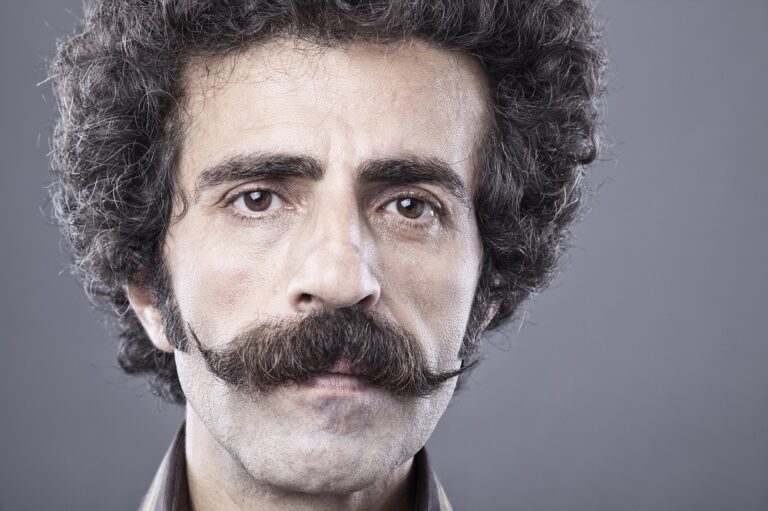

It’s one of those ‘facts’ that gets repeated until nobody questions it: Native Americans can’t grow beards. Except it isn’t true. Many Indigenous men do grow facial hair, and coverage varies from person to person. Historical accounts also describe bearded Chumash people.
The real story is a tangle of genetics, grooming traditions, and centuries of cultural choice, not a missing ability. Here’s what’s actually going on, separating the biology from the myth.
Find what suits you: browse all beard styles, mustache styles, or the trimming guide.
Ancestral History of Native American Beard Culture

Facial hair varies within Native American communities as well as between populations. A 2016 study of Latin American participants found several genetic regions associated with beard thickness; it does not establish one beard pattern for every Native American person.
Grooming customs also affected how much facial hair people wore. In an account written in 1783, Mohawk leader Joseph Brant described men who plucked facial hair, some who kept chin or upper-lip hair, and some who shaved.
Attitudes played a part too. In New Englands Prospect, published in 1634, English colonist William Wood wrote that Native men in the Massachusetts Bay region pulled out chin hair by the roots as soon as it grew, because they considered it useless, cumbersome, and shameful.

One Navajo leader was even known as “Man with the Whiskers.” Barboncito, who signed the 1868 treaty that let the Diné (Navajo) leave Bosque Redondo and return home, was called Hastiin Dághaa’ in Navajo.

Nowadays, many Native Americans wear beards and mustaches. Facial hair patterns vary widely from person to person, and a beard is not evidence of someone’s tribal identity or mixed ancestry.
Here are some facts about Native Americans you may find interesting:
Worth noting too: some men cannot grow beards at all, regardless of ethnic background.
Do Native Americans Have Facial Hair or Only Patchy Facial Hair?
Native Americans can have thick facial hair, patchy facial hair, or little to no facial hair at all. Genetics influences a patchy beard, but ethnic heritage alone does not determine an individual’s coverage.
Facial hair commonly develops during puberty, while beard density, coverage, and texture vary with age, hormones, and inherited traits.
If a man comes from a family line with naturally lighter or sparser facial hair, he is more likely to inherit that same pattern.
Why Does Facial Hair Coverage Vary?
Historical accounts describe both keeping and removing facial hair. Those accounts concern particular people and communities, rather than one practice followed by all Native Americans.
Research on genetic variants has examined EDAR and traits including hair thickness. A later study identified several regions associated with beard thickness. These findings do not mean that all Native Americans have sparse beards. Plucking is a grooming practice, not an inherited change to a person’s genes.
A clean-shaven appearance can reflect grooming as well as natural growth. It does not show how much facial hair someone could grow if they left it untrimmed.
Can Native Americans Do Something to Help Beard Growth?
Anyone who wants to grow a beard, Native American or not, can support the health of existing facial hair by eating well, getting enough sleep, and keeping the skin beneath the beard properly conditioned.
Genetics plays a major role in beard coverage. Grooming products can help care for existing hair, but they do not guarantee a fuller beard.

A balanced diet supports general health. Eating particular foods is not a reliable way to turn a naturally sparse beard into a full one.
As for sleep, this is when the body repairs itself. Still, your overall beard pattern and density are largely genetic.
Supporting clean, moisturized skin is also helpful if you want to grow facial hair. Use a gentle facial cleanser and a lightweight, non-comedogenic beard oil or facial moisturizer if your skin tolerates it.
Did Native Americans Ever Shave?
Yes, some did shave. Joseph Brant’s 1783 account describes some Mohawk men using razors, alongside others who plucked their facial hair or kept hair on the chin and upper lip.
Shaving and plucking practices differed among communities and individuals. One historical account should not be treated as a rule for all Native American peoples.
Bearded Native Americans
A documented example is Kenneth Kahn of the Santa Ynez Band of Chumash Indians. His beard illustrates individual variation; it does not establish a typical beard for every member of his community.
Kenneth Kahn: Short Full Beard and Mustache

Meet Kenneth Kahn, chairman of the Santa Ynez Band of Chumash Indians. He sports a well-groomed short full beard with solid cheek fullness and a clean neckline, paired with a full mustache. The National Park Service records the early Spanish name for Santa Cruz Island, Isla de Gente Barbuda, or “island of the bearded people.”