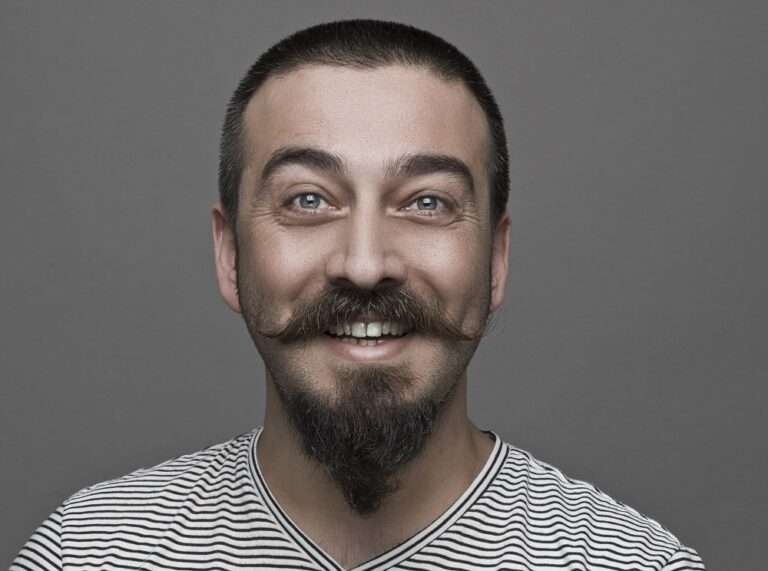

If you’ve been growing your beard and maintaining it for 6 whole months, you’ve got a lot of patience, and congratulations for getting here because few can make it to this point. If you’re thinking of growing the 6-month beard, this article is also for you.
Growing a beard is not easy and certainly comes with varying maintenance, but growing it for 6 months and keeping it is a whole other ballgame. You need to do your due diligence to keep your beard healthy and looking good.

Six months gives many men enough length to shape a substantial beard, sometimes called a power beard. Using the common estimate of about ½ inch per month, untrimmed hair might reach roughly 3 inches or 7.5 cm. Growth rate, density, curl, and trimming all affect the result, so that length and fullness are not guaranteed.
Longer chin hair may begin to cover the front of the neck. How much cheek and side coverage you have still depends on your growth pattern; leaving the cheek line untrimmed does not guarantee that every area fills in.
Longer hair can make some patchy beards look fuller, but sparse areas may remain. Choose a shape that works with the coverage you have. The photos below are styling examples, not proof that every beard will reach the same length or density in six months.
Why Grow a 6-Month Beard
A 6-month beard is a statement that showcases patience, commitment, and style. It allows you to explore various beard styles and shapes, giving you the freedom to experiment with your look. A beard can also enhance your facial features, make you look more mature, and give you a sense of uniqueness.
Here are some of the reasons to grow and not to grow a 6-month beard:
Reasons To Grow a 6-Month Beard
- Enhances Facial Features: A 6-month beard can accentuate your facial features, making you look more attractive and masculine.
- Boosts Confidence: A well-groomed beard can boost your confidence and self-esteem, making you feel more comfortable in your own skin.
- Provides a Unique Look: A 6-month beard lets you stand out from the crowd and express your individuality.
- Demonstrates Patience and Commitment: Seeing the full six months through takes real dedication, and the finished beard shows it.
- Offers Versatility: With a 6-month beard, you have the flexibility to experiment with various beard styles and shapes to find the one that best suits your personality and preferences.
- Improves Facial Hair Texture: As you grow and maintain a 6-month beard, consistent use of beard care products can leave your facial hair feeling softer and more manageable.
- Keeps You Warm: A 6-month beard can provide extra warmth during cold weather, acting as a natural insulator.
- Provides Some Sun Protection: A thick beard can block some of the sun’s UV rays from the skin it covers, but that protection is limited, so keep using sunscreen on exposed skin.
- Reduces Shaving Time and Expenses: Growing a 6-month beard means you’ll spend less time and money on shaving and related products.
- Allows for Beard-related Hobbies and Communities: Growing a 6-month beard can open doors to beard-related hobbies, such as participating in beard competitions and joining online communities where you can share tips and experiences with fellow beard enthusiasts.
Reasons Not to Grow A 6-Month Beard
Growing a 6-month beard comes with its fair share of challenges:
- Workplace Restrictions: Some workplaces have strict grooming policies that may prohibit long beards, making it difficult to maintain a 6-month beard.
- Itchiness: As your beard grows, it may become itchy, especially during the initial stages. Dry skin under the new growth and short hairs curling back into the skin are common causes.
- Patchiness: Some areas may remain sparse even after six months. Extra length can soften the appearance of gaps, but time and grooming do not guarantee new coverage.
- Maintenance: A 6-month beard requires regular grooming and upkeep to keep it looking its best.
- Allergies: Fragrance and other ingredients in some beard oils and balms can cause a skin reaction in you or a partner. The usual fix is to stop using the product that causes the reaction and choose another, such as a fragrance-free option, rather than giving up the beard.
- Heat and Discomfort: In hot and humid climates, a 6-month beard can be uncomfortable and cause excessive sweating or overheating.
- Food and Drink: Maintaining a 6-month beard can make eating and drinking messy, as food particles and liquids can easily get trapped in your facial hair.
6-Month Beard Styles
1. Dark Rounded Full Beard

This dark full beard has a broad, rounded bottom and dense coverage through the cheeks. It is a useful shape to aim for when you want fullness without a long point. Keep the outer edges tidy while preserving enough length at the chin to maintain the curve.
If you prefer less bulk, a well-maintained heavy stubble or a shorter full beard can work just as well. Choose the length around your actual coverage and daily routine rather than treating the fullest example as a requirement.
2. Textured Full Beard with Natural Edges

Dense, textured growth gives this beard a relaxed outline, with natural edges through the cheeks and chin. The black-and-white photo emphasizes the shape rather than the color. Keep enough fullness below the jaw to show the texture while tidying hairs that extend well outside the outline.
Work a small amount of beard balm through the longer hair if it needs control, then brush gently to arrange the surface. Avoid pressing every wave flat; the natural texture is part of this look. Trim obvious strays individually instead of cutting away the whole outer layer.
3. Rounded Medium Beard with Carved Cheek Line

This rounded beard pairs a trimmed jawline with a defined cheek line and tidy neckline. The fuller chin gives it weight, while the shorter outline keeps the profile controlled. Use the image as a shape reference rather than an exact six-month growth target.
4. Long Tapered Full Beard

This long beard narrows toward the chin instead of ending in a broad Garibaldi curve. The relatively controlled cheeks and sides give the lower length room to stand out. It is a good option when you want to keep a substantial beard but prefer a slimmer silhouette.
Comb the beard into its usual position, then tidy the sides in small passes while protecting the chin length. Clear stray hairs above the cheek line and below your chosen neckline, taking care not to shorten the outline you are trying to preserve.
5. Full Beard with Handlebar Mustache and Pointed Bottom

The full dark beard has plenty of presence, but the most distinctive detail is the handlebar mustache curling upward at both ends. Work a small amount of mustache wax into the tips and shape them outward with your fingertips, keeping the center neat along the lip.
For the pointed bottom, let the chin projection grow freely and resist the urge to blunt-cut across it. The natural taper to a soft chin apex is what gives this beard its commanding, sculptural shape.
How to Grow A 6-Month Beard
- Commit to the process: Prepare yourself mentally for the 6-month beard journey. Patience and dedication are key to achieving your desired beard length.
- Maintain a healthy lifestyle: Eat a balanced diet rich in proteins, vitamins, and minerals to support normal hair growth. Include foods like lean meats, fish, eggs, nuts, seeds, legumes, fruits, and vegetables in your diet.
- Cleanse and condition: Use a beard wash and beard conditioner regularly to keep your beard clean and healthy.
- Moisturize and hydrate: Apply a beard oil, balm or moisturizer that suits your skin daily to keep your beard moisturized and help prevent itch and dryness.
- Brush away flakes: Gently brush the beard and the skin beneath it to lift loose flakes. Brushing too hard can irritate the skin, and if the flaking keeps coming back, see a dermatologist.
- Be patient: Remember that beard growth rates vary from person to person. Don’t be discouraged if your beard doesn’t grow as quickly as you’d like.
- Comb and brush: Use a beard comb or boar-bristle brush to detangle your beard and distribute natural oils evenly.
These grooming steps can help you manage the beard you have grown over six months; the final length and coverage will vary.
How to Shape A 6-Month Beard

At the six-month mark, assess the length you actually have and decide how much to keep. These steps will help you add structure without treating three inches as a required milestone.
Step 1: Wash and Condition
Clean your beard with a beard wash and beard conditioner to remove dirt and buildup, making it far more manageable for shaping. Gently pat dry with a towel. Rubbing causes beard frizz and unnecessary breakage, so skip it.
Step 2: Comb and Detangle
Detangle gently from the ends first, then work the comb through the full length in the direction you normally wear it. Let the beard dry into its usual shape before judging which hairs are longer than the rest.
Step 3: Plan Your Style
Decide on your target shape, whether that’s a rounded Garibaldi, a squared boxed beard, or a pointed spade beard. Factor in your face shape and natural growth pattern before making a single cut.
Step 4: Define the Front
Choose a rounded, pointed, or squared lower edge based on the length available. Preserve the longest part while tidying around it, and make small adjustments as the beard grows. You can shape the perimeter before six months without abandoning your length goal.
Step 5: Trim Cheek and Neck Areas
Tidy stray hairs above the cheek line and below the neckline, leaving the main beard between those boundaries intact. Use a detail trimmer for close cleanup, or a short guard if you prefer to leave some stubble.
Step 6: Clean Up Below the Ears
Define the sideburn point and the area just below your ears, removing any stray hairs that blur the transition from your haircut into the beard.
How to Maintain A 6-Month Beard

- Introduce beard oils or balms: Apply a beard oil or balm that suits your skin once a day, using just enough to reach the full length of your beard, to lock in moisture and help prevent a dry, brittle beard.
- Tame a curly beard: For coily or wavy growth, work a small amount of beard butter or styling balm through the beard to soften the curl pattern and keep flyaways under control without stiffening the hair.
- Brush and comb: A daily pass with a boar-bristle brush distributes your beard oil evenly from root to tip, trains the lay of the hair, and keeps the overall shape looking groomed rather than overgrown.
A 6-month beard demands real commitment, both in time and in your grooming budget. Weekly maintenance trims, daily beard oil applications, and consistent detangling sessions become part of your routine.
But if you want to carry genuine weight and presence, a power beard at 6 months delivers exactly that. You can sculpt and shape it in so many directions, from a natural full beard to a refined Garibaldi, and that versatility alone makes the effort worthwhile.