Whether you want to grow out a luxuriously thick handlebar mustache or a thin chevron, a small mustache gap might stand in the way. Now there are plenty of reasons why you might see a strange gap in your mustache.
These factors can include genetics, poor shaving techniques, growth direction, and various others we will be getting into. But the important thing to know is that there is a way that you can fix it. In this guide, we will tell you what causes these issues and how you can solve them. So, here’s to your dream of a pristine mustache.
Types of Mustache Gap
A mustache gap, also known as a mustache window, is an area where facial hair does not grow, resulting in a gap or empty space in the mustache. Some of the most common types of mustache gaps include:
Mustache Gap in the Middle
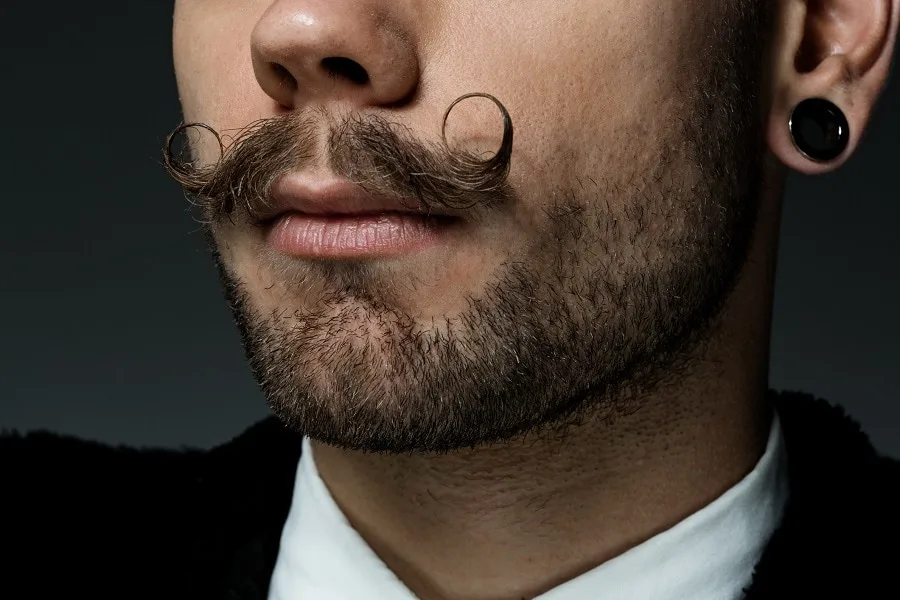
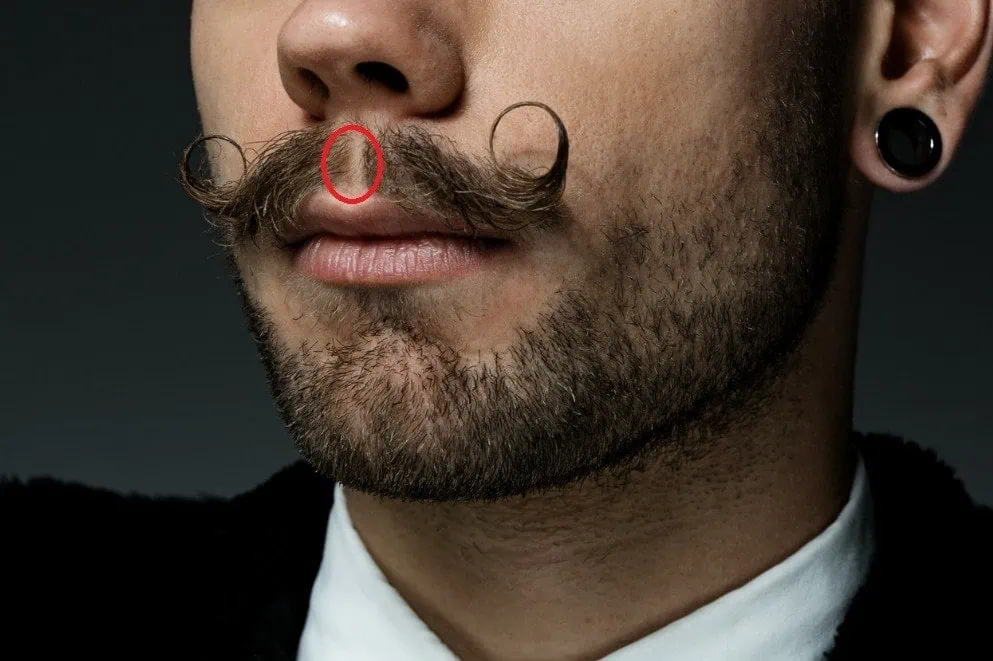
A center gap can actually work in your favor when it’s small, acting as a natural partition that gives a handlebar mustache its signature split personality. Where it gets tricky is when that gap stretches well beyond the philtrum, leaving you with two disconnected halves that no amount of wax can convincingly bridge.
Train your mustache hairs to grow inward toward the center daily using a fine-tooth beard comb, and load up on a firm mustache wax to coax those strays across the divide.
Mustache Side Gap

A side gap is a different beast entirely. Rather than splitting the mustache down the middle, it creates a break along one side, either preventing the mustache from connecting to the beard or leaving a bare patch at the outer corner of your upper lip.
If your connector growth is weak on one side, lean into a disconnected goatee aesthetic and let the medium stubble on your cheeks frame the look so the gap comes across as a deliberate style choice rather than a growth problem.
Bald Spot
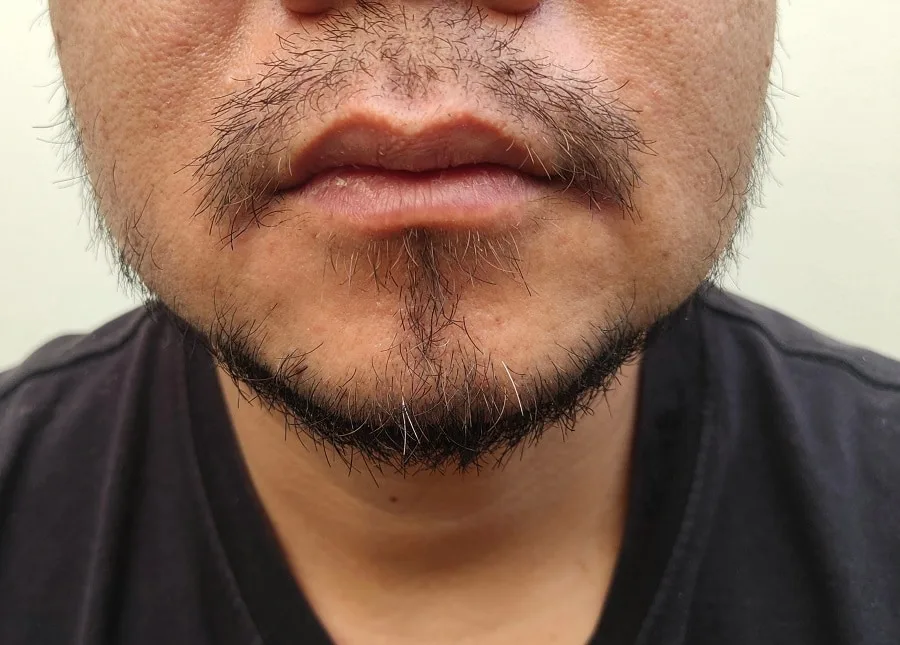
Bald spots are the most unpredictable of the three because they follow no pattern, popping up anywhere on the mustache as a small, bare circle. Since you can’t predict their placement, your best move is to shape around them.
Sculpt your mustache outline lower, below the bald zone, so the sparse area sits outside your perimeter entirely. Finish with a detail trimmer to keep the edges razor-clean and the overall shape looking purposeful.
What Causes a Mustache Gap?
Now that you better understand mustache gaps, we can get into what really causes them. The human body is a complex machine, so plenty of factors can affect how your mustache turns out or whether it will have gaps. Some of the most common causes include:
Genetics
Winning the genetic lottery has a greater impact on your mustache than almost anything else. If you have a gap in an unusual spot, there’s a good chance someone in your family tree handed it down to you.
That said, unfavorable genetics don’t mean you’re stuck. With the right mustache style, smart grooming, and a little patience, you can absolutely work with what you’ve got.
The Direction of Hair Growth
Your mustache has a natural grain, and brushing it the wrong way repeatedly can actually train it to grow away from the gap rather than over it. A lot of guys do this without realizing it, sweeping hairs aside with their fingers out of habit.
Pay attention to which direction your growth lays, and redirect it deliberately with a boar-bristle brush and a light beard balm every morning.
Size of the Mustache
A thick, dense mustache with strong color will absorb a gap visually, making it nearly invisible to anyone who isn’t looking for it. Flip that around to a fine, light mustache and even the smallest under-lip gap becomes front and center.
Growing more bulk and length is often the simplest solution before you explore any other fix.
Poor Shaving Technique (Patchiness)
Shaving without proper prep, skipping shave gel, or dragging a dull razor across your upper lip can cause patchiness that mimics a natural gap. Aggressive, repeated shaving over the same spot can irritate the skin and trigger razor bumps or ingrown hairs that break up the area, so trim instead of scraping.
Switch to a sharp shavette or a quality straight razor with a transparent shave gel, and always shave with the grain along your upper lip line.
A Larger than Average Philtrum
Some guys are simply born with a wider philtrum, that vertical groove running from the base of the nose down to the cupid’s bow of the upper lip. A broader philtrum creates a naturally wider center gap, and no amount of growth will fully close it.
Owning the look with a style that works around the philtrum, like a well-waxed handlebar or a bold chevron mustache, is far more effective than fighting your own anatomy.
How to Fix a Mustache Gap
After reading about the factors that contribute to a mustache gap, it’s easy to feel like the odds are stacked against you, especially when genetics are involved. But there are several practical moves you can make to minimize, disguise, or outright fix your mustache gap, no matter what you’re working with.
Growing a Long Mustache to Cover the Gap
Letting your mustache grow out is the most straightforward fix, even if the in-between phase looks rough. Resist the urge to trim it back, be patient, and give the hair enough length to drape over the bare zone.
Brush it daily with a fine-tooth beard comb and apply a light beard oil to keep the hairs soft, conditioned, and growing in the right direction.
Using Mustache Growth Products
If length isn’t coming in fast enough, conditioning balms and beard oils can still help the hair you have look fuller. These products soften and condition the hairs and keep the skin beneath your mustache comfortable, though no topical oil is proven to speed up growth or add density.
With enough length, covering that gap becomes significantly easier to pull off.
Mustache Wax for Filling the Gap
Once your mustache has enough length to work with, a firm mustache wax becomes your best styling tool. Work a small amount between your fingertips, press it into the mustache, and comb the hairs over the gap to lock them in place.
It keeps everything neat, holds the shape all day, and gives your mustache a polished, well-groomed finish.
Mustache Fibers for Filling the Hole
When length alone isn’t enough to close the gap, mustache fibers are a solid backup plan. Made from tiny keratin or plant-based fibers, they cling to existing strands and fill in bare patches convincingly, recreating the appearance of a full, dense mustache.
They work best when your existing hair gives them something to bond to, so a little growth goes a long way before applying them.
Trimming and Shaping for a Neater Appearance
If your gap sits at the top of your mustache, drop your trim line below it. Reducing the overall height of your mustache so the bare zone falls outside the outline entirely is a clean, no-fuss fix.
Use a detail trimmer to carve a precise, even baseline, and the result is a lower-set mustache that looks completely balanced and well-sculpted.
Eat Real Food
If poor nutrition is behind a lackluster mustache, the fix is on your plate, not in a bottle: regular meals built around protein, vegetables, and whole foods. That is the entire tip.
Mustache Styles with Gap
After reviewing how you can likely solve your mustache gap problem, let’s talk about styling that stash. Some styles let you embrace the gap with serious personality, while others cleverly camouflage it by shaping the mustache a certain way.
1. Curled Handlebar Mustache with a Center Gap

A center gap is no reason to abandon a handlebar mustache. Grow it out long enough to build real density across the upper lip, then brush it outward daily to train the hairs away from the gap zone.
Once those curled tips are locked in with a firm mustache wax, the eye follows the dramatic upswept ends rather than any sparse patch in the middle.
2. Dali Mustache with a Side Gap

Got a side gap and a flair for the dramatic? The Dali mustache is your best friend. Because the waxed points lift completely off the face, any sparse connector gap along the sides simply disappears from view.
Load up on a strong mustache wax, sculpt those points straight up, and nobody is looking at a bald spot because they’re too busy looking at the whole spectacle.
3. Salt and Pepper Cowboy Mustache with a Bald Spot

Length is everything with a cowboy mustache, and that extra bulk is exactly what makes it so forgiving on patchy growth. Let it grow past the lip line before you touch it with a trimmer, because that added weight naturally drapes over bald spots and fills in the outline.
Once you have enough length, use a beard comb and light mustache wax to push the hairs over any sparse areas and lock them flat.
4. Handlebar Mustache with Soul Patch and Center Gap
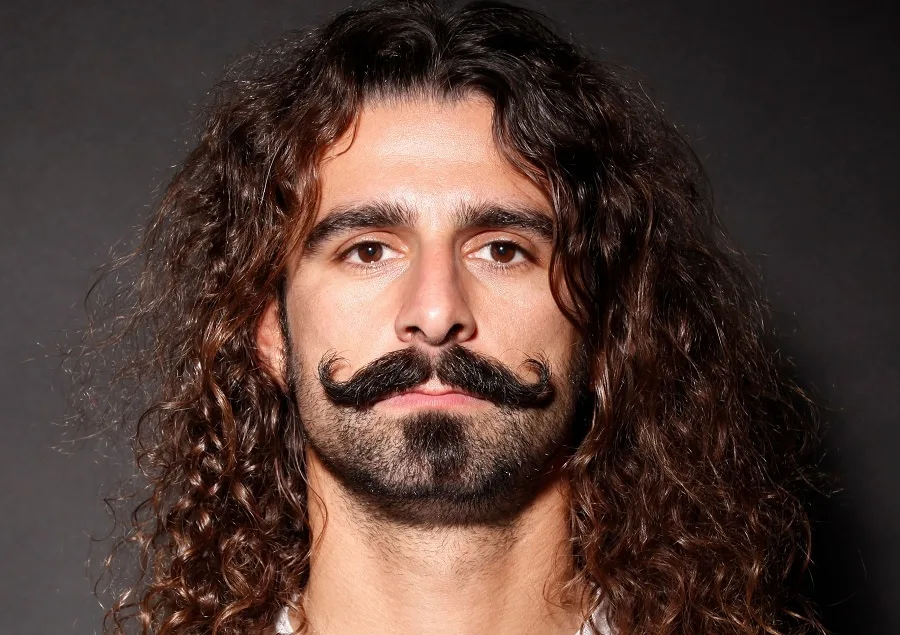
Pairing a handlebar mustache with a soul patch is a smart move when a center gap is your concern. The soul patch draws the eye downward to the chin, pulling attention away from the philtrum area entirely.
Nearly any mustache style except a walrus can work alongside this combo, so lean into the disconnected look and let the two elements complement each other rather than compete.
5. Chevron Mustache with a Thin Appearance

If your gap sits near the top of the upper lip, a chevron mustache trimmed just slightly shorter than full density keeps the sparse zone from becoming the focal point. For a gap closer to the lip line, resist the urge to trim and let the mustache grow downward to cover it naturally.
Use a boar-bristle brush to press the hairs flat and keep the chevron shape clean without a razor line that might expose the gap.
So, How Do You Fix the Mustache Gap?
Whether your mustache gap comes down to genetics, growth direction, or shaving habits, you can fill it by growing it out. Along with letting it grow and fill in over the lip, use wax to properly shape it and beard oil to keep it soft, conditioned, and easier to style.