
The V-Shape Beard is a unique style that goes beyond trends and has its own special place among different beard styles. As the name suggests, the beard is shaped to create a ‘V’ point at the chin. This distinct formation contributes to a look of refined ruggedness, offering a perfect balance of classic sophistication and modern edge.
In this comprehensive guide, we will provide you with all the necessary information about growing and maintaining a V-shaped beard. We’ll cover different styles of V-shaped beards, tips on growing one, and techniques for proper maintenance.
Features of a V-Shape Beard

The V-Shape Beard stands apart from the crowd of generic facial hair arrangements. More than just a grooming choice, it’s a precision-cut statement that signals attention to detail and a sharp sense of personal style.
Defining Characteristics
A V-shaped beard narrows toward a point at the chin. The sides are usually shorter than the chin so the lower outline forms a taper. It can be paired with a mustache or worn as a pointed goatee, and the cheek lines can be sharp or more natural.
- A V-shaped beard is not always full. The key defining characteristic is that it is pointed at the chin.
- The chin is usually left longer than the sides to create the taper.
- It can be styled in a variety of ways, from short and stubble-like to long and full.
Suitable Face Shapes
V-Shape beard styles can be modified according to face shapes. To give the illusion of a more symmetrical face shape, there are some general rules for choosing beard styles for different face shapes. If you are not sure what face shape you have, you can use a simple online face shape quiz to find out.
Once you know your face shape, consider these tips for choosing your V shape beard style.
- Oval face shape: If you have an oval face shape, you can choose any V-shaped beard style that you like. The V-shaped beard will complement your natural beauty.
- Round face shape: A longer chin point with relatively close sides can make the face appear longer. Keep the width controlled if that is the effect you want.
- Square face shape: A softer taper can balance a strong jaw without adding another sharply cut angle. Keep some length at the chin while rounding off the very tip.
- Heart face shape: Keep enough fullness around the lower jaw to balance a wider forehead. A very narrow, long point may emphasize a small chin, so try a shorter, broader taper.
V Shape Beard Styles
The V-Shape can be implemented in different beard styles. You can try a V-shape on different types of beards. Check out the popular V-shape beard styles below.
1. Ducktail V-Shape Beard

If a standard V-shape feels too contained, let the chin projection do the talking. The ducktail takes the V-shape concept and pushes it further, allowing the chin hair to grow noticeably longer than the sides, which are trimmed back to maintain a clean taper toward that signature pointed tip.
Work scissor-over-comb on the sides to gradually reduce bulk as you move toward the jaw, keeping the weight concentrated at the chin point. A boar-bristle brush and a dab of beard butter will train the hair downward and keep that ducktail sitting tight and defined rather than fanning out.
2. Goatee with V-Shape

Sparse growth on the cheeks? Stop fighting it and lean into a V-shape goatee instead. By concentrating all the density around the chin and mouth and keeping the cheeks either clean-shaven or at a bare five o’clock shadow, you direct every eye straight to the chin point, manufacturing the illusion of a longer, more angular face.
Keep the goatee outline tight with a foil shaver on the cheeks and a detailer along the perimeter. Round faces benefit enormously from this setup, since the elongated chin projection visually stretches the face downward and narrows the overall appearance.
3. Van Dyke V-Shape Beard

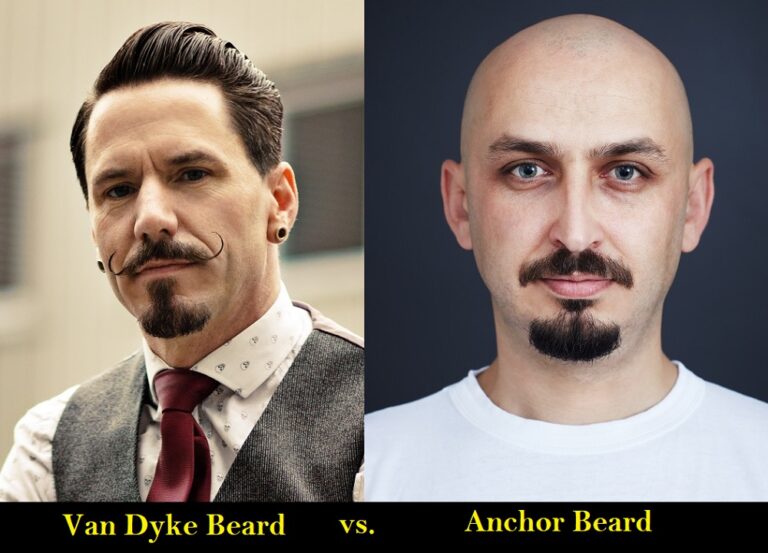
Few beard styles carry as much artistic weight as the Van Dyke. The disconnected goatee and mustache create two separate focal points on the face, with the pointed chin beard forming a crisp V that draws the eye downward and elongates the front profile.
Clean-shaven cheeks make the separate mustache and goatee easy to see. Use a detail trimmer to maintain the edges and preserve the gaps beside the mouth; there is no need to shave the goatee narrower every time you tidy it.
The long mustache ends in this photo hang downward rather than curling up. A small amount of mustache wax can help arrange them, keeping the mustache separate from the pointed white goatee.
4. Pointed Full Beard with a Handlebar Mustache

This full beard narrows toward the chin, while the swept handlebar mustache adds width higher on the face. The contrast between those two shapes gives the look its character. Keep the sides controlled and leave more length through the center so the beard retains its soft point rather than becoming rounded all the way across.
Comb the beard into its usual position before trimming the lower edge. Then shape the mustache separately, sweeping the ends outward with a little wax if they need hold. The beard and mustache do not need matching lengths; their different proportions are what make this combination work.
5. Sculpted V-Shape Balbo Beard

This Balbo-style beard uses a broad band of hair around the chin and lower jaw, with the mustache kept separate above it. The lower edges slope toward the center to create a compact V. Its mustache is fuller than a pencil-thin mustache, which would give the same beard a lighter contrast.
Keep the cheeks clear and tidy the upper edge of the beard without raising it into the cheek area. On a diamond face, a broader, shorter taper can add lower-face width without making the chin look much longer.
6. Balbo V-Shape Beard

This Balbo keeps more length at the front of the chin while the jaw sides stay narrower. The soul patch is small and the mustache sits apart from the beard, leaving clear gaps around the mouth. Those open areas keep the longer chin from looking overly heavy.
Sculpt the V at the chin point with a detailer, and use transparent shave gel when outlining the mustache disconnect so you can see exactly where you’re cutting.
How to Grow a V-Shape Beard
Growing a V-shape beard takes patience, a solid growth phase, and some basic understanding of how your facial hair actually behaves. Follow these steps to get there without wasting weeks of growth on avoidable mistakes.
Prepping Your Beard
Let the chin grow long enough to extend below the jaw before trying to form the point. The time needed depends on your starting length, growth rate, and the size of the V you want. Keep the sides tidy during this stage without cutting the chin back to match them.
Growing Phase
During the growth phase, keep the beard clean and conditioned. Work a beard oil into the skin and hair daily to prevent beard itch, soften coarse strands, and encourage even, healthy growth across the cheeks and chin. A patchy connector zone is much easier to work with when the surrounding hair is well-nourished and lying flat.
Styling and Shaping a V-Shape Beard
Once you have got enough growth to work with, shaping the V is where the real craft begins.
Tools Required
Grab a quality clipper with multiple guard lengths for bulk removal, a precision detail trimmer for outlining, a straight razor or shavette for razor-sharp line carving, a beard comb for detangling and alignment, and beard balm for post-shaping hold and aftercare.
Trimming the Beard
Comb the beard down and check the outline from the front and both sides. Trim bulk from the sides gradually, leaving the chin longer. Using one guard over the entire beard would remove the extra chin length needed for the V.
Shaping the V
Use a trimmer or scissors to narrow the lower sides toward the chin, working in small passes. Check both sides from the front before taking off more hair. Shape the beard’s lower outline first, then tidy the cheek and neck edges separately; a diagonal cheek line alone does not create a V-shaped beard.
Pros and Cons of V-Shape Beard Styles
Like any style choice, the V-shape beard comes with its own set of advantages and drawbacks. Here is a quick rundown before you commit:
Pros:
- Adds the appearance of length and a more pointed outline at the chin.
- Gives the lower beard a defined taper, with cheek lines that can be sharp or natural.
- Works across a wide range of face shapes, from round to diamond, with minor adjustments to width and chin length.
Cons:
- Patchy or uneven growth makes achieving a clean, symmetrical V outline genuinely difficult without professional beard sculpting.
- The sharp perimeter demands regular line-up sessions every few days to stay looking polished rather than grown-out.
- Beard detailing at this precision level is time-consuming, and the products needed, including beard oil, balm, and quality trimmers, represent a real ongoing cost.
The V-shape beard is a proven, versatile shape that rewards the effort put into it. Do your research, find the proportions that suit your face shape, and commit to the maintenance routine it deserves.