
Maybe a long beard isn’t your cup of tea, and you’re seeking a style that doesn’t require more than a stubble or short beard. Well, that’s where Spanish beard styles come into play.
These beards are stylish, but not too long to hide your facial features. In fact, they have quite the opposite effect as they complement your face shape. If you like this trimmed, structured approach, Arabic beard styles work on the same principle with a bolder edge.
The Spanish Beard is characterized by a connecting mustache and a short goatee, with the cheeks remaining clean-shaven. This beard style is remarkably versatile, as it can be adapted to various lengths and levels of fullness.
Origin Of Spanish Beard
The origins of this unique style can be traced back to the 16th century, during the golden age of Spain. It was often worn by noblemen and explorers of the era.
Spanish explorers and conquistadors of that era are often depicted wearing this style of beard, and the look went on to become a trend not only in Spain but also in many other parts of Europe.
Despite the passage of centuries, the attraction of the Spanish Beard has not faded. Today, it remains a favored choice for men around the world. For another look with deep cultural roots, see our guide to Mexican mustache styles.
Even if you experience patchy facial hair growth, you’ll see from these styles that a patchy beard isn’t an issue at all. Here’s a look at some of the best Spanish beard styles worth trying — from clean goatees to bold handlebar combos, there’s genuinely something for every face and every preference.
01 of 12Salt and Pepper Goatee with Spiky Faded Hair
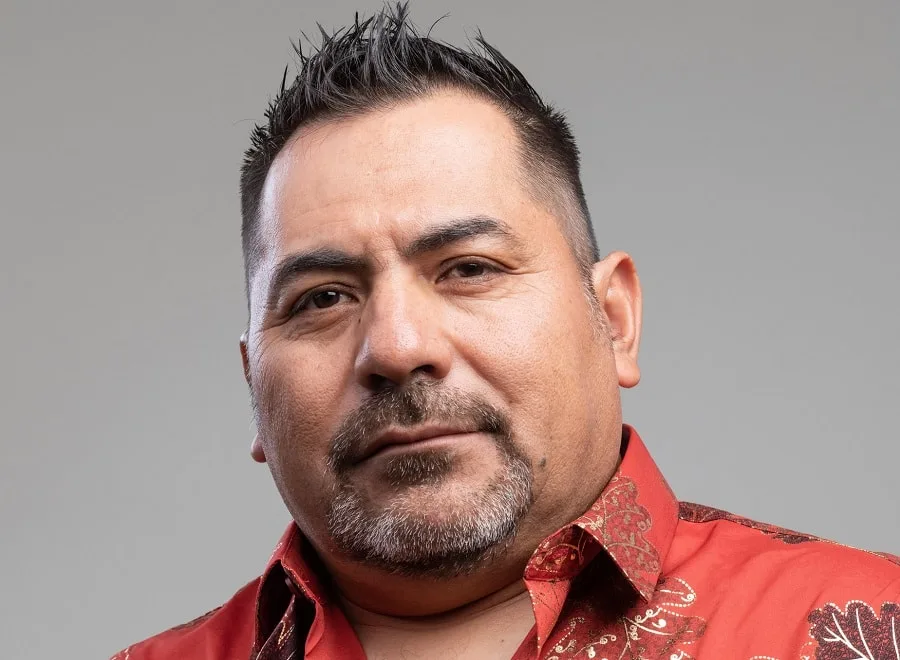
First on the list of Spanish Beard styles is the simple yet stylish goatee. Start by growing a stubble beard, then trim away the excess hair to form a goatee.
What truly sets this beard style apart is the stunning salt-and-pepper effect. The goatee here sits neatly below the lip, with clean-shaven cheeks that put all the focus on the chin and mustache. The natural two-tone coloring — dark at the edges, lighter toward the center — gives the beard a lived-in depth that younger guys would have to fake with dye. Complement this trendy-looking beard with a faded haircut for an added edge.
To maintain this look, use a trimmer set to a short guard (around a #1 or #2) every few days to keep the goatee tight without losing its natural texture. Define the borders along the cheeks and neck with a detail trimmer or straight razor, keeping those lines crisp. The spiky hair on top is styled upward with a light-hold pomade or wax — just work it through damp hair and push forward and up.
02 of 12Patchy Beard with Thicker Mustache and Goatee
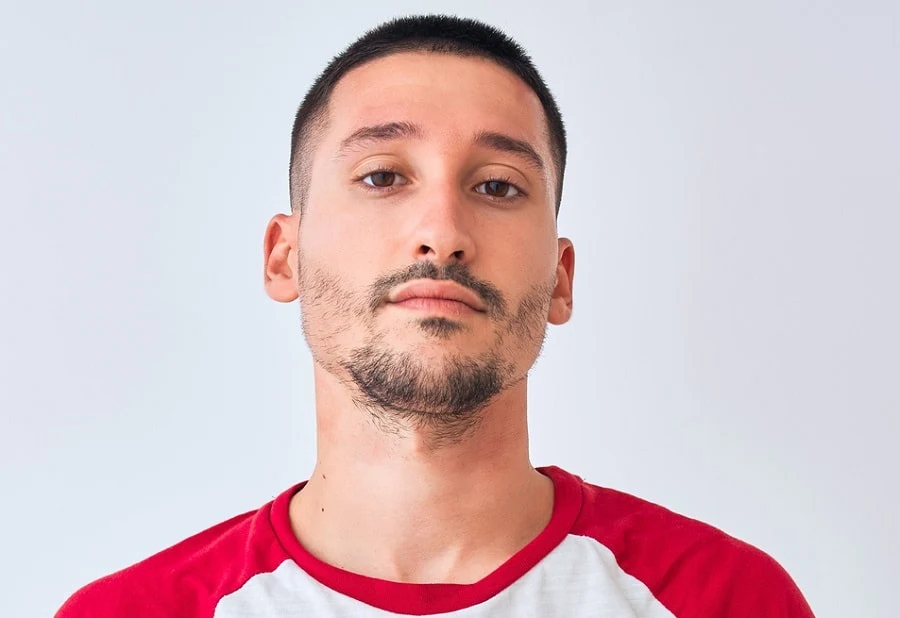
Even if you struggle to grow a full beard, patchy beards are actually in style. This look leans right into the patchiness — light, scattered stubble spreads across the cheeks and lower jaw, while the mustache and chin area carry noticeably more density. The contrast is what makes it work. To avoid growing out a stringy beard, keep a light stubble on the sides of your face and on your neck. Keep the mustache and goatee thicker and denser to bring the entire look together.
The trick to pulling this off is resisting the urge to shave the patchy areas completely. Instead, trim everything to an even, short length — around 3–4mm — so the sparse spots blend into the overall texture rather than looking neglected. Let the mustache grow slightly longer and fuller to anchor the face, and clean up the neckline regularly so the whole thing looks intentional.
03 of 12Clean Stubble Goatee without Sideburns

This goatee, with its clean edges, soul patch, and stubble mustache, offers a winning combination. The cheeks and jaw are completely bare, making this one of the sharpest, most polished takes on the Spanish beard. No sideburns, no stray hairs — just a well-defined chin piece and mustache that frame the mouth perfectly. Call it one of the cleanest Spanish beard styles, with added freshness coming from the low-fade crew cut on top.
Getting this right is mostly about precision. Use a detail trimmer to carve out the goatee boundaries — keep the top edge just below the lower lip and bring the sides down in clean vertical lines. Shave everything outside those borders with a razor for that smooth contrast. Touch it up every two to three days to stop the edges from going soft.
04 of 12Patchy Long Stubble with Curtains Hairstyle

Here’s an impressive pairing that balances patchy long stubble with curtains softly parted in the middle. The hairstyle has fringes on the side, giving the wavy hair that extra volume. The beard itself sits at around 5–7mm — long enough to look full but short enough that the patchiness on the cheeks comes across as texture rather than a problem. Trim the patchy beard on the sides of your face so it looks thicker around the chin and on your upper lip.
This is a very relaxed, natural-looking style — which means the maintenance is actually pretty easy. A trimmer with a medium guard every four or five days keeps the length consistent. The curtains hairstyle works best on medium-length hair with a natural wave; apply a small amount of light cream or sea salt spray to damp hair, part it down the middle with your fingers, and let it air dry for that soft, slightly tousled finish.
05 of 12Gray Anchor Beard with Ivy League Haircut

Show off that grey with a beard that gets attention at first glance. This is a full gray anchor beard paired with a salt-and-pepper mustache — clean-shaven cheeks keep everything looking sharp and intentional rather than overgrown. Paired with a clean-shaven face, the anchor beard looks neat and works really well with an Ivy League haircut. It’s more of an executive look, so the short sideburns make sense.
The anchor shape requires a bit of sculpting — the mustache stays neatly trimmed and connects downward through the soul patch into a rounded chin beard that doesn’t extend past the jaw. Use a trimmer to keep the beard at a consistent medium length (around 10–15mm), and clean up the anchor’s outline with a razor every few days. Gray hair can go wiry, so a small amount of beard oil or balm goes a long way in keeping it soft and looking its best.
06 of 12Circle Beard with Handlebar Mustache
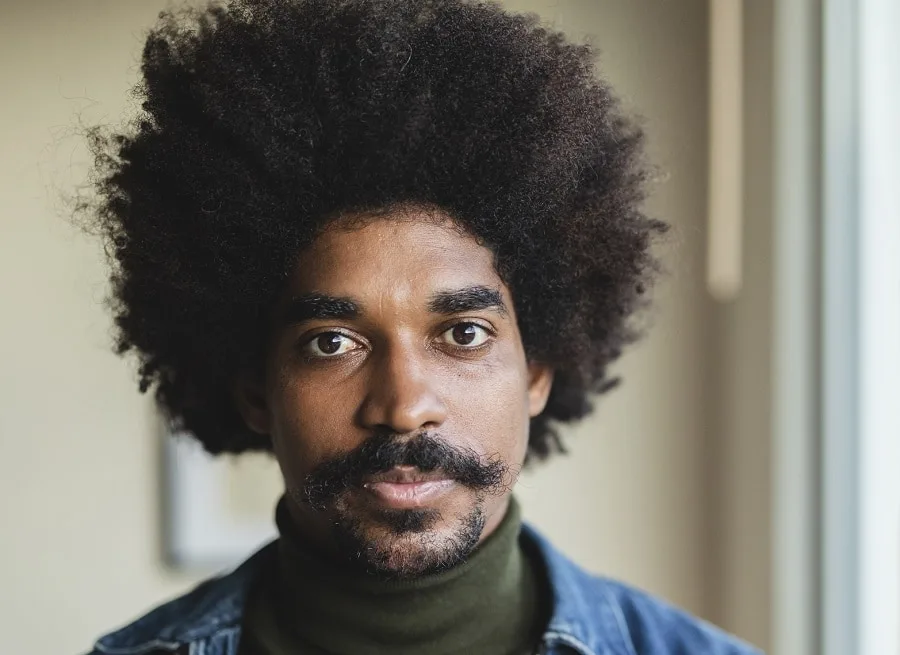
If you are an African American man with a patchy beard, you can go for a bold Spanish beard style. When you look closely, it’s a circle beard at its core, but the handlebar mustache is a great twist to the setup. The mustache curls outward at both ends, extending well past the lip line and drawing the eye across the face in a way that a standard mustache simply can’t. What helps this look stand out even more is the large afro hairstyle on top.
Growing the handlebar takes patience — you’ll need to let the mustache grow out for at least six to eight weeks before the ends are long enough to curl. In the meantime, train the hairs outward daily using a mustache comb and a small amount of mustache wax. Once the length is there, apply wax to the ends and twist them upward and outward into the signature curl. Keep the chin beard rounded and tight with a trimmer to balance the drama of the mustache.
07 of 12Trimmed Light Stubble Beard with Short Hair
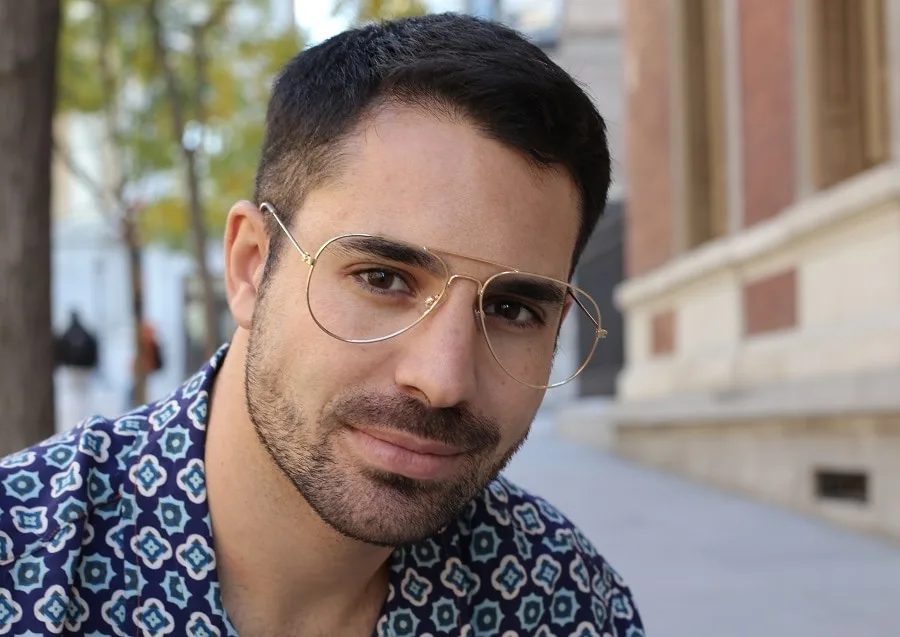
This short hair and light stubble combo is for those who want a low-profile look that still comes across as intentional. The stubble is uniform across the face — cheeks, jaw, chin, and upper lip all sit at roughly the same short length, giving the impression of a well-maintained beard rather than someone who simply forgot to shave. The light stubble gives you the double benefit of adding definition to your face while letting you show off your chiseled jawline.
It’s a Princeton clip on top, but with sides that are slightly more tapered than usual, which keeps the overall silhouette clean and modern. To maintain the stubble at this length, use a trimmer with a #1 or #2 guard every two to three days — consistency is what separates deliberate stubble from laziness. Clean up the neckline and cheek lines with a razor to keep the borders defined.
08 of 12Untrimmed Stubble Goatee with Spiky Fringe

This stubble goatee is untrimmed, and you can tell that from the edges — they aren’t sharp. The mustache looks only slightly thicker than the goatee here, but the combination as a whole looks great because there’s no other facial hair or even sideburns. The soft, unfussy borders are actually the point — this is a style that leans into a natural, unforced vibe without looking unkempt. The haircut is a simple spiky fringe with no tapering or fade.
To get this look, grow out your goatee area for about two weeks, then lightly trim it down with a guard to keep the length even without hardening the edges. Skip the razor work around the borders — just let the hair fade out naturally into the clean-shaven cheeks. The spiky fringe is easy to style: apply a medium-hold wax or clay to dry hair and push the front section upward and slightly forward.
09 of 12Anchor Beard with Pyramid Mustache
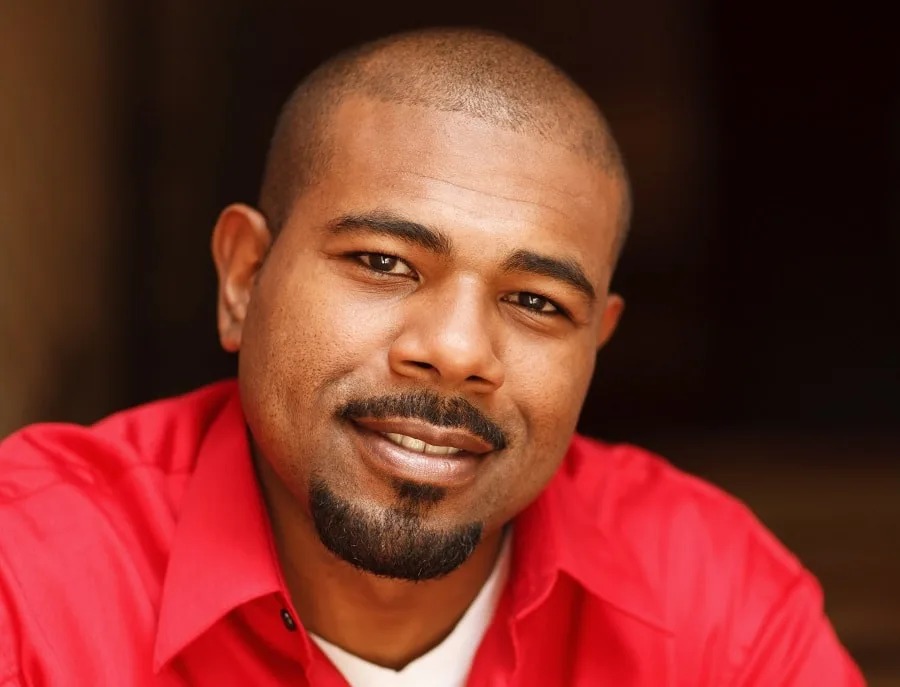
This minimalist anchor beard only covers half the chin, starting well below the bottom lip. The edges are neatly trimmed to give it a rounded look, and it connects to the soul patch in a clean line. For better symmetry, the pyramidal mustache ends along the edges of the upper lip.
What makes this style particularly striking is just how precise the shaping needs to be — and how good it looks when you get it right. The mustache tapers to a point on each side, almost like a downward-facing triangle, which creates a very deliberate, geometric feel. Use a detail trimmer to carve out the mustache shape first, then work on the anchor below, making sure the soul patch connection is clean and centered. Shave everything outside the lines with a razor for that razor-sharp contrast against the skin.
10 of 12Full Gray Goatee with Salt and Pepper Mustache
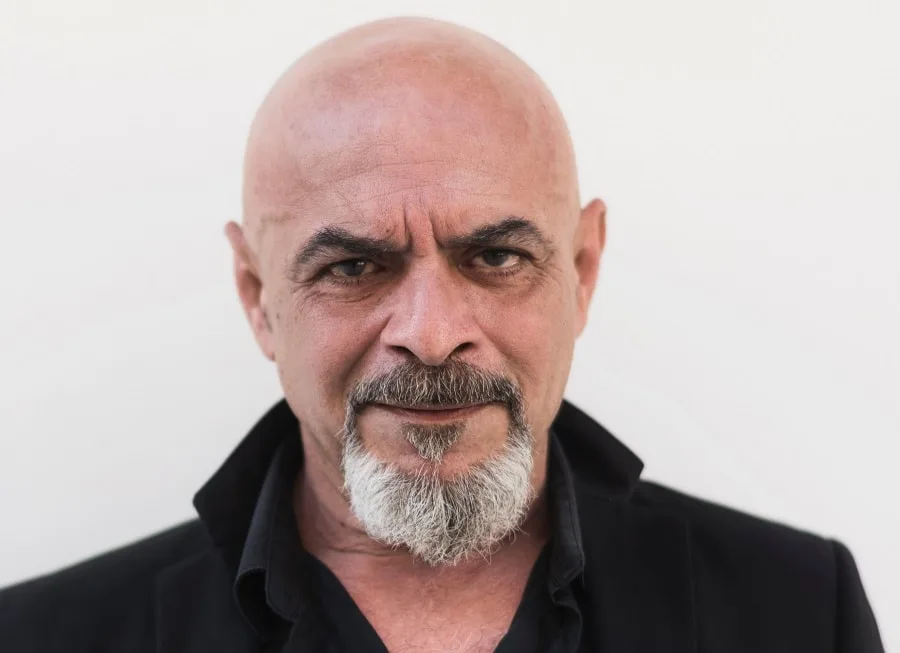
When your facial hair grows in different colors, it adds layers and depth to your beard and mustache. The goatee here is a full, rounded chin beard — noticeably longer and fuller than most styles on this list — with the hair going almost entirely white at the sides and blending into a mix of gray and white through the center. The inner edges are shaved clean to give the goatee a defined shape. You can pair it with a salt and pepper mustache and soul patch for a versatile, distinguished look.
Growing this out takes time — you’re looking at two to three months of growth before the goatee reaches a length worth shaping. Once it’s there, trim it regularly with scissors or a longer guard to maintain the fullness without it going scraggly. Gray and white beards tend to be coarser, so conditioning with a good beard oil daily is non-negotiable. It keeps the texture soft and gives the silver tones a healthy, well-groomed sheen.
11 of 12Chinstrap Beard with Spiky Quiff

The thin goatee with a traced jawline edges toward the Balbo and anchor territory Robert Downey Jr. made famous. It easily lets you show off your jawline and can be fairly easy to maintain. This particular look features thin stubble along the jawline connecting up to a short, disconnected goatee and mustache — it’s confident, a little theatrical, and undeniably cool. A voluminous spiky quiff on top completes this Spanish beard style.
The chinstrap requires the most careful trimming of any style on this list. Use a detail trimmer to draw a thin line of stubble along the jawline from ear to chin on both sides, connecting it to the goatee at the bottom. The line should be narrow — no wider than about half an inch. Shave everything above and below it cleanly with a razor. Touch this one up every two days, because the moment the lines blur, the whole effect falls apart. For the quiff, use a strong-hold pomade and a blow dryer to push the hair upward and forward.
12 of 12Trimmed Mustache with Scruffy Goatee and Sideburns

A goatee covering the contour of your chin can give your face a more masculine look, while a parted mustache that extends past the edges of the upper lip and connects to the goatee adds some symmetry. The goatee here has a slightly scruffy, textured quality — it’s not razor-sharp, but it’s not sloppy either. Think of it as controlled scruff. Pair it with sideburns and keep the rest of your face clean-shaven.
To nail this style, grow out the goatee and mustache area for about three weeks, then trim to an even length of around 8–10mm using a guard. Use a detail trimmer to clean up the outer borders just enough to give them shape without making them look overly rigid. Keep the sideburns at a similar length for consistency, and shave the cheeks and neck cleanly so the contrast between the beard and bare skin stays visible.
Now you know that Spanish beard styles are not limited to a single look. You can try out these different combinations and stick with the one that gives you a unique identity.