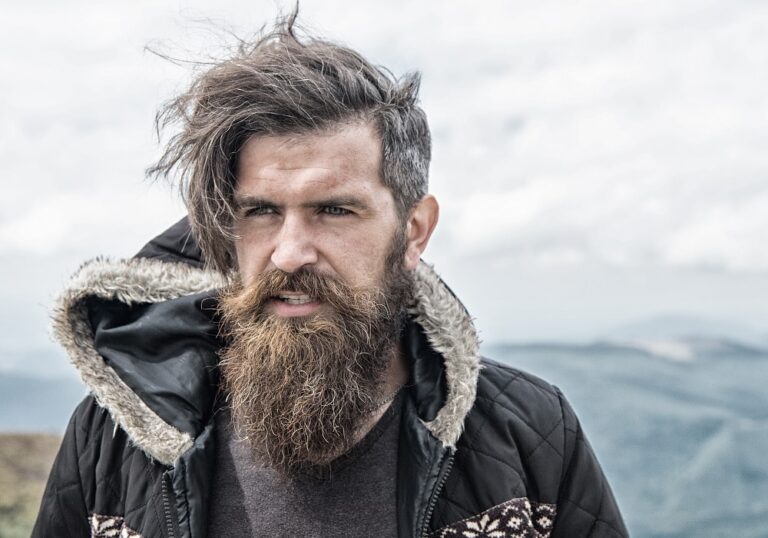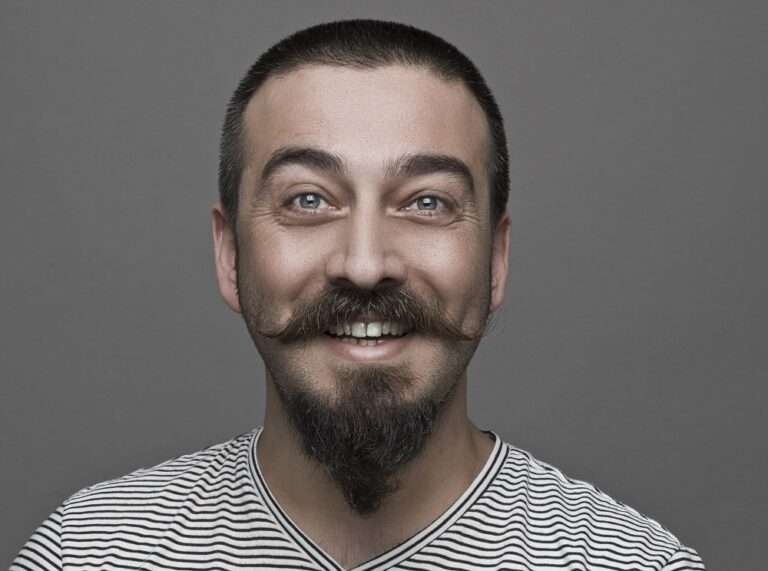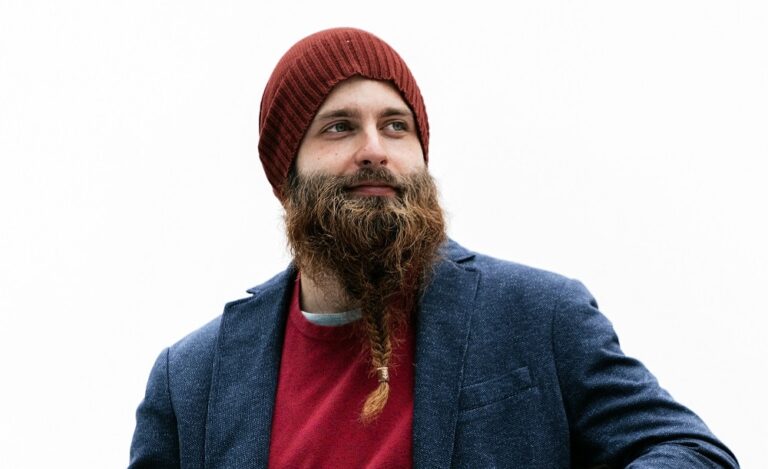

A beard can look different from the result you intended because of uneven trimming, proportions, or a finish that does not suit your taste. Those are useful things to adjust; natural patchiness or an unusual style is not automatically a grooming failure.
From full beards to goatees and mustaches, start by identifying the specific feature you want to change. Keep what works with your growth and make the smallest adjustment that helps.
Some of the examples below are deliberate statement styles. The suggestions explain how to simplify or maintain them if you want a different finish, without assuming the wearer made a mistake.
Reasons That Cause a Bad-Looking Beard
- Check proportions from the front and both sides. If one side is unintentionally longer, shorten it gradually rather than trying to correct everything in one pass.
- Keep the beard clean and comfortable, and tidy the perimeter as needed for your chosen style. A natural outline can be intentional too.
- Consider where you want width and length. Extra bulk at the sides can make a face look wider, while more length at the chin can emphasize vertical shape. Choose proportions that suit your preference rather than applying a blanket rule about long or short beards.
- Uneven outlines or stray ends can change the finish. Check the beard in even light before deciding whether a trim is needed.
Here are 15 beard styling examples, with practical changes to consider if you want a different result.
1. Horseshoe Mustache with Separate Sideburns

A horseshoe mustache, separate sideburns, and a small soul patch create several distinct shapes on this face. The separation can be intentional; it is not evidence of poor grooming.
If you want a simpler finish, choose which feature to emphasize and keep the boundaries between the others clear. Check the two downward mustache sections together before shortening either side.
2. Short Beard with Sparse Connectors

This short beard has lighter growth beside the mouth than along the jaw. Sparse connectors do not make a beard badly grown, and shaving cannot create new coverage.
For a more even-looking finish, compare a shorter overall length with a separate mustache-and-chin shape. Keep whichever suits your actual growth, rather than repeatedly shaving to start over.
3. Long Chin Goatee

This longer chin puff concentrates length below the mouth while the cheeks stay clear. The ends are finer than the growth nearer the chin.
If you prefer a compact goatee, shorten the longest ends gradually and check the outline from the front. A disconnected mustache is a style choice, not automatically a mistake.
4. Friendly Mutton Chops with a Clean Chin

These mutton chops join the mustache while leaving the center of the chin bare.
Keep both sides balanced if you want to retain this shape. If you prefer less contrast, a shorter version or light stubble is an alternative.
5. Blue Chin Beard

Blue color draws attention to the chin section of this beard. Its placement creates a strong focal point below the mouth.
If the color feels too dominant for your preferred look, a subtler color choice or a different beard outline may suit you better. Do not improvise chemical removal methods on facial skin.
6. Full Beard with Separate Braids

This is a natural-colored beard divided into separate braids. The braids create several lengths and points rather than a single lower outline.
If you want a more uniform finish, compare the sections before braiding and tidy stray ends sparingly. You can also wear the beard loose when you prefer a softer shape.
7. Long Beard with a Narrow Braid

A braided beard can include a narrow braid beneath a fuller, loose beard. The difference in width is a styling choice, not proof that the beard is too thin.
For a more balanced result, gather a section that matches the braid thickness you want. Avoid pulling hard at the roots, and leave the beard loose if there is not enough comfortable length to braid.
8. Handlebar Mustache with a Long Chin Beard

A handlebar mustache sits above a longer chin beard here. The curled tips and beard ends create two different focal points.
If the lower beard feels untidy, trim only the ends outside your chosen outline. A small amount of mustache wax can help arrange the tips without requiring you to shorten the entire beard.
9. Heavy Sideburns Joined to a Mustache

Heavy sideburns connect to the mustache while the center of the chin is shaved. That combination creates width at the sides, rather than a conventional full beard.
Keep the two sides balanced if this is the shape you want. If you prefer the mustache to be the main feature, compare it with a walrus mustache and shorter or clean-shaven cheeks.
10. Red Glitter Beard

Red glitter adds a bright, reflective finish across this full beard.
A decorative beard may suit an occasion rather than everyday wear. If you use a cosmetic decoration, follow its facial-use and removal instructions instead of assuming ordinary craft glitter or paint is suitable.
11. Mustache with Separate Sideburns

A mustache and separate sideburns leave much of the chin exposed. Several disconnected sections can be deliberate, even when you would choose a different shape.
To simplify the look, select one focal point, such as a chevron mustache, and keep the surrounding areas tidy. Change one section at a time so you can judge the result.
12. Light Stubble with Sparse Cheeks

Light stubble and sparse cheek growth make a softer outline than a dense chin strap. If you want a clearer shape, tidy the neckline and compare an even stubble length with a more defined chin section. There is no need to use a straight razor simply because the cheeks are sparse.
13. Sparse Cheeks with a Fuller Chin

This beard has gaps on the cheeks and more growth at the chin. The mustache remains separate where the connectors are thin.
Keep those differences visible or shorten the cheeks to reduce contrast. A separate mustache and chin beard can be a deliberate finish without waiting for every gap to fill.
14. Carved Beard and Hairline Outline

A narrow, carved outline connects the facial hair to a shaped hairline. The narrow lines make the whole design stand out.
For an everyday shape with less upkeep, choose a simpler cheek and sideburn outline. If you like the design, ask a barber to establish the lines before maintaining them at home.
15. Short Beard with Fuller Chin Growth

This short beard is fuller at the chin than on the cheeks. The extra chin growth gives the lower outline more weight.
If the chin feels too heavy for your preferred shape, check it with your head level and in even light. Remove a little length at a time, or ask a barber to balance the outline.
How To Fix A Bad Beard Style
Trimming and Shaping
The first step to fixing a bad beard style is to trim and shape your beard. Start by trimming the longer hairs, then shape the beard according to your desired style and face shape. This process may require a bit of patience and practice, but it’s essential for achieving a well-groomed look.
Conditioning Is Different from Growth Treatment
Beard conditioner or oil can help soften facial hair and make grooming easier, but that does not establish that an unspecified growth oil or serum will fill bald patches. Choose care products for your skin and beard needs. The American Academy of Dermatology explains how to choose beard care by skin type.
Matching Your Beard Style with Face Shape
Choose a suitable beard style for your face shape. For example, if you have a round face, opt for a beard style that adds length and structure, such as a goatee. On the other hand, if you have a long face, consider a fuller beard that adds width to balance out your features.
Proper Beard Maintenance
Taking care of your beard is crucial for maintaining a good beard style. Wash and condition your beard regularly to keep it clean and soft. Additionally, use a beard comb or brush to detangle and distribute natural oils evenly throughout your facial hair.
Find a Beard Barber
If you are unsure how to correct the outline, bring a reference photo to a barber and explain what you want to keep. Ask which parts can be reshaped now and which need time to grow before trimming again.