
Over the years, Arabic beard styles have drawn attention around the world. Many men across Arab countries wear full, well-groomed beards, which has helped make these looks widely admired.
If you’ve ever traveled to the Middle East or North Africa, you may have noticed the striking facial hair worn by many men. These looks are often grouped under the broad label of Arabic beard styles.
1. Compact Chin Goatee with a Separate Mustache

A compact chin goatee sits below a separate, thick mustache. Clean skin between them keeps the two shapes distinct.
Forget the old idea that a goatee only works on a round face. With the right line work, this style flatters practically any face shape. Grab a detail trimmer and keep those edges razor sharp.
2. Short Beard with Low Cheek Lines

This short beard runs along the jaw and connects to the mustache. Low cheek lines keep most of the upper cheeks clear.
Keep the jaw and chin close-cut, with a defined outline. Choose a guard that matches your preferred length instead of treating the photo as a precise measurement.
3. Short Beard with a Low Curved Cheek Line

A low, curved cheek line follows the jaw into a fuller chin. The mustache connects at the corners of the mouth, and a small soul patch remains beneath the lip.
Lowering the cheek line exposes more skin above the beard. Follow the shape you want and tidy stray hairs without repeatedly cutting the line lower.
4. Natural Full Beard with Trimmed Mustache

Rooted in Islamic grooming tradition, this style lets the beard grow naturally to a medium-full length while keeping the mustache clipped short and neat. The result is a look that comes across as both deeply considered and genuinely masculine.
Comb through the beard gently and use a conditioner or moisturizer if needed. Oil can help with grooming, but it does not prevent naturally sparse areas from appearing.
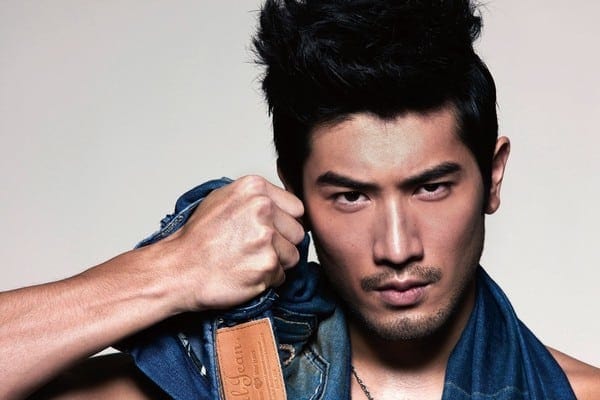
5. Designer Stubble with Defined Mustache

This fine stubble stays close to the skin, with a slightly darker mustache. Its exact millimeter length cannot be measured from the photo.
Trim as needed to maintain the length you prefer; the interval depends on your growth rate.
6. Short Full Beard with Thick Mustache

This short full beard has a rounded lower outline and a thick mustache. It follows the cheeks and jaw closely rather than extending into a long chin point.
Keep the rounded lower outline compact and tidy the cheek edges. Take off a little at a time so the beard retains its fullness.
7. Short Boxed Beard with Hard Razor Line Edges

This is a short boxed beard taken to the next level with hard line edging along the cheeks, neckline, and mustache. Every boundary is defined with surgical precision, and the overall effect is clean, commanding, and undeniably sharp.
A detail trimmer can tidy the outline. Check both sides as you work and refresh the edges when they need it rather than following a fixed number of days.
8. Circle Beard with Medium Stubble Base

A circle beard connects the mustache to the chin patch in one continuous rounded shape, sitting over a base of medium stubble on the cheeks. It’s a classic style that looks polished without demanding a ton of daily effort.
The rounded chin shape naturally draws attention to the center of the face, making the jaw look more balanced. Keep the connecting lines clean and the cheek stubble at a consistent length for the best result.
9. Soul Patch with Light Stubble Surround

A small, defined soul patch sitting just below the lower lip, paired with a dusting of light stubble across the cheeks and jaw. It’s minimal, but the soul patch acts as a focal point that gives the whole face a sharper, more artistic edge.
Less is genuinely more with this one. The soul patch works best when it’s kept tight and well-defined, so a detail trimmer with a fine blade is the only tool you really need in your kit.
10. Short Full Beard with Natural Cheek Lines

A short full beard covers the lower cheeks, jaw, and chin. The natural cheek line and connected mustache give it a softer outline.
Use a guard to maintain your chosen beard length, then tidy any stray hair outside the cheek and neck outlines.
11. Short Boxed Beard with Curved Cheek Lines

Curved cheek lines lead into a fuller chin on this short beard. The connected mustache and defined lower edge keep the outline compact.
Check the cheek lines for balance before trimming. Preserve the natural coverage rather than forcing the beard into a high, straight line.
12. Short Full Beard with Mustache

This short beard covers the lower cheeks as well as the jaw, with a full mustache. For a narrower band confined to the jawline, see these chin strap beard styles.
Keep the lower cheek growth and tidy the outside edges to maintain this full-beard shape.
History and Cultural Significance of Beards in Arab Culture
Beards have long carried cultural and religious significance in Arab societies.
Across ancient Middle Eastern civilizations, including Mesopotamia and Persia, beards were often seen as signs of masculinity, wisdom, and authority. Kings and nobles sometimes styled and adorned their beards to highlight their status and wealth.
With the rise of Islam in the 7th century, beards also took on religious significance for many Muslim men. Islamic teachings include well-known narrations that encourage letting the beard grow and trimming the mustache, which helped strengthen the beard’s place in Muslim grooming traditions.
Beard styles are universal. They are not limited to one region or religion. Today, men of many backgrounds wear beards in different ways.
Still, Arabic beard styles remain a strong source of inspiration because of their long cultural and grooming traditions.