
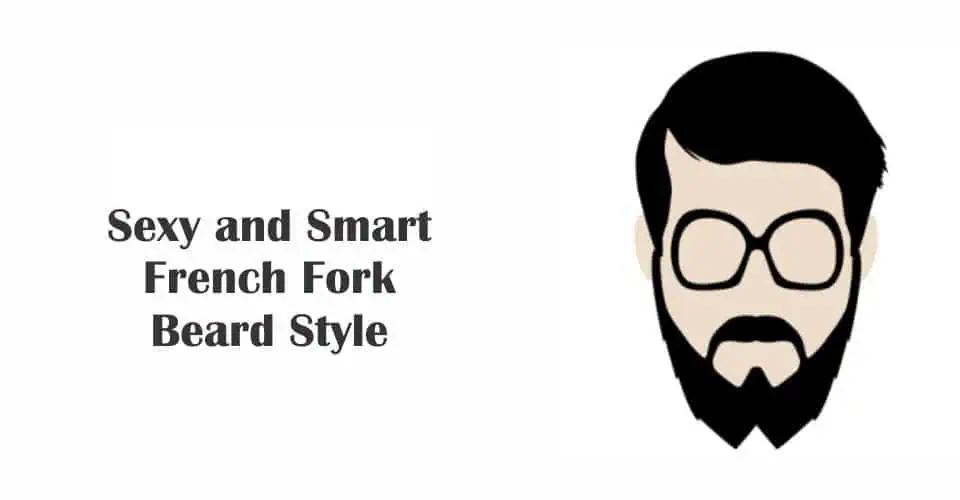
The French people have a very aesthetic and classy fashion sense. In almost every corner of fashion and styling, they have a distinctive style of their own. Likewise, one beard style carries that same signature: the French fork beard. Though this is not anything new, this style became trendy due to the protagonist of the movie Pirates of the Caribbean, Captain Jack Sparrow.
What Is a French Fork Beard?
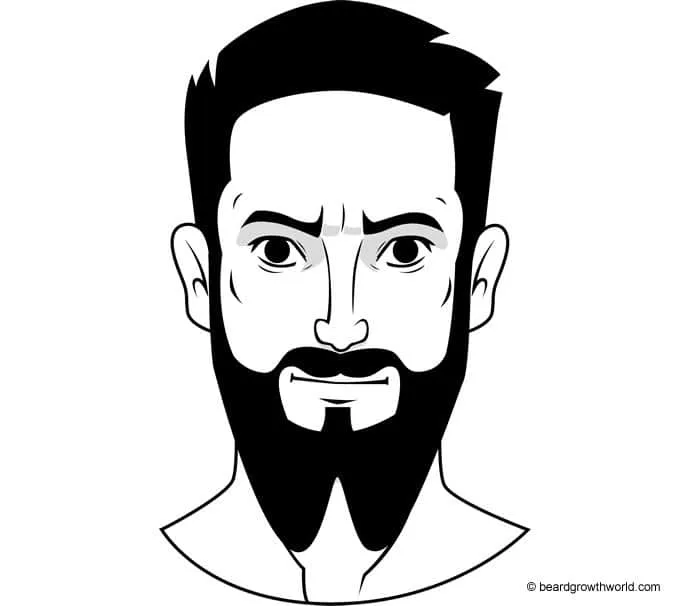
A French Fork beard is a beard type characterized by a full beard that extends past the chin, with a distinct split in the middle, dividing the beard into two segments. Despite the division, it is considered a full-bearded look.
This beard style is very much appreciated for its bold, distinctive look. You can choose this sharp and neat beard style while going on a date, but a French fork beard can come across as too unconventional for conservative professional settings.
This is more of a casual beard style that looks its best when paired with a manly mustache. One can get a masculine look easily by growing a French fork beard.
French Beards Style for Go-To Looks
The basic concept of the French fork beard style is a beard split into two prongs at the chin. This division makes this beard style unique and different from all other beard styles. Check the list of our top picks.
01 of 14Long Ginger French Fork with Glasses

This style takes real commitment to grow, and the payoff is massive. That voluminous, chest-length ginger French fork is the result of years of patient growing, regular conditioning, and consistent combing to train the hair downward.
To get close to this look, use a wide-tooth comb after washing and apply a few drops of beard oil while the hair is still slightly damp. Let it air dry completely. Fighting the urge to blow-dry is key: heat is the enemy of natural volume on a beard this long.
02 of 14Rugged Natural Full Beard French Fork

This is the French fork in its most raw, unforced form. The beard grows out naturally as a full beard, and the fork at the chin happens almost on its own once the hair gets long enough to separate under its own weight.
It is usually worn with a mustache and can be trimmed to any length. The key here is restraint: resist the urge to over-shape it and just let the split develop naturally.
03 of 14Full Gray French Fork for Older Men
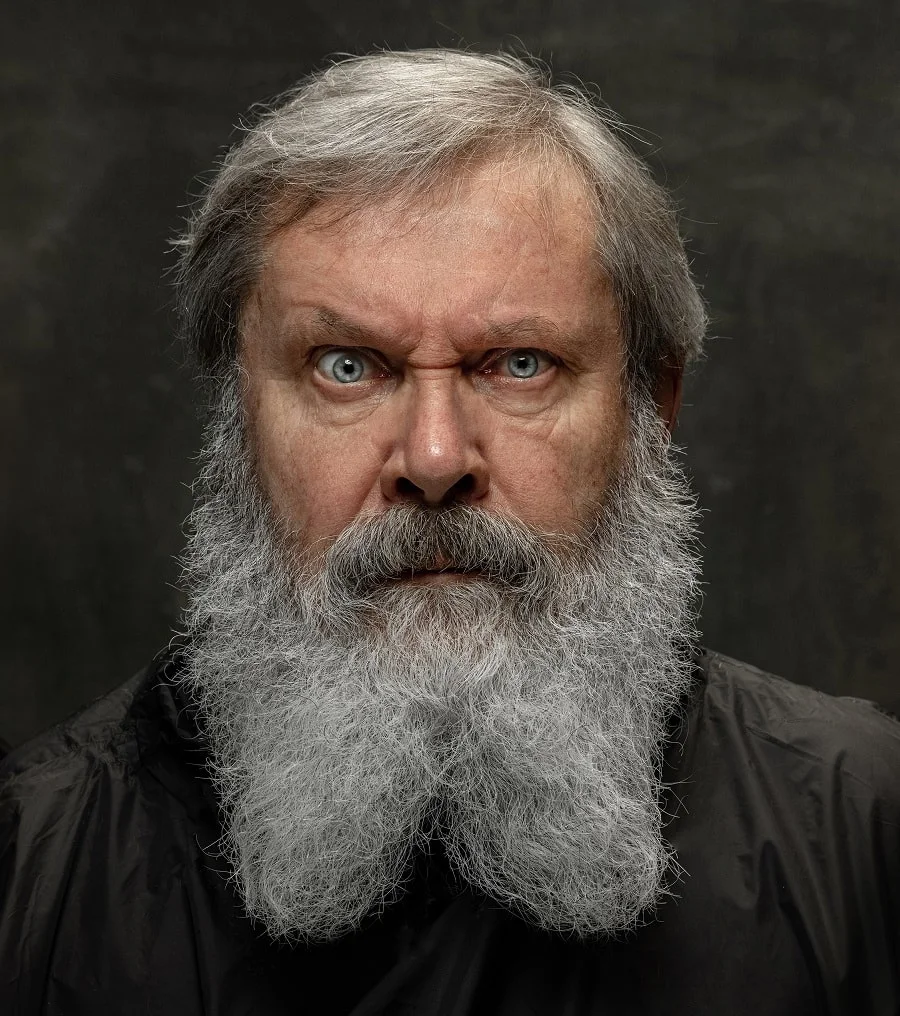
Gray beards have a natural coarseness that actually makes the French fork split easier to hold and define. This look is great for men who want a commanding, sophisticated appearance without spending hours in front of the mirror.
Use a boar bristle brush to distribute natural oils evenly and add volume. The hair on the chin and cheeks is left longer and fuller, so the fork at the bottom comes across as a strong, deliberate statement rather than an accident.
04 of 14Jack Sparrow Braided French Fork

This is a figurine recreation of the iconic Captain Jack Sparrow look from Pirates of the Caribbean, and it nails every detail. The style features a sparse, unkempt mustache paired with two thin chin braids secured with beads, the defining look of the character that put the French fork on the map.
On a real beard, you achieve this by growing a goatee to at least three inches, separating it into two sections, and braiding each one tightly from the root. Small beard beads or wraps finish the look. A little beeswax at the base of each braid keeps them from unraveling through the day.
05 of 14Extra-Long Wavy French Fork
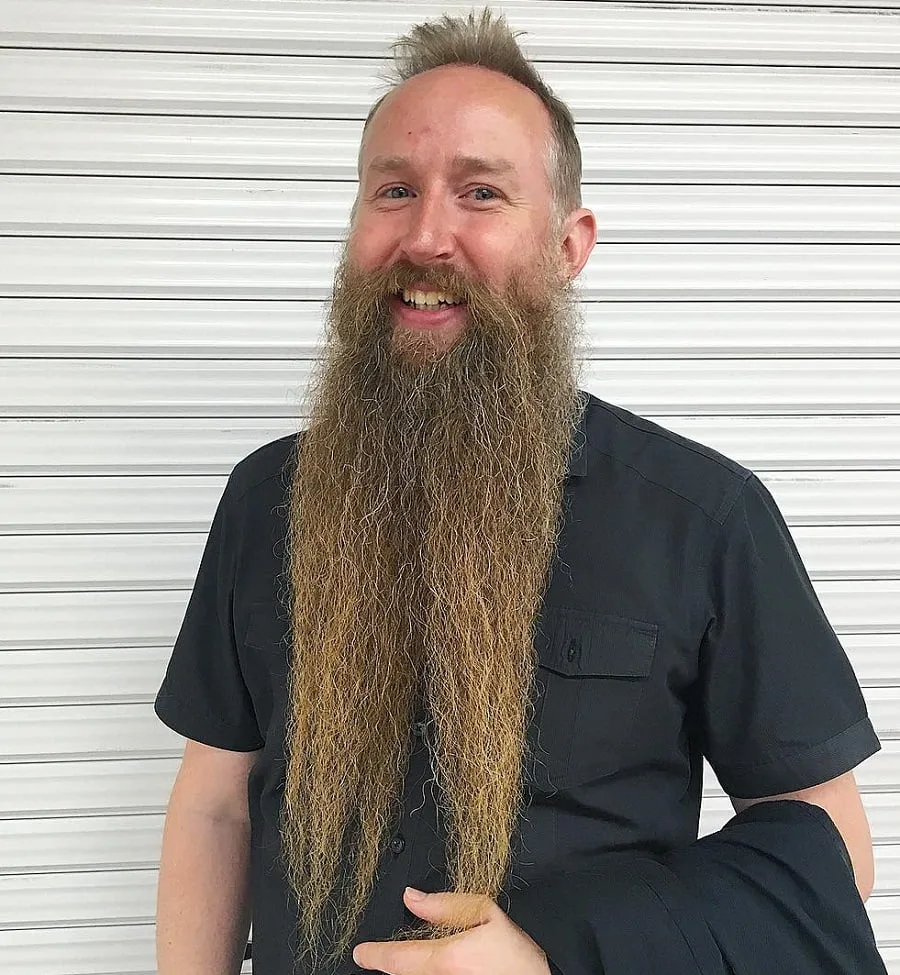
This is a serious commitment beard; we’re talking chest-length territory. The French fork split here is deep and well-defined, running from the chin all the way down.
To achieve this, grow your beard for well over a year with consistent trimming only on the sides to keep the shape controlled. Use a fine-tooth comb to part the center split cleanly, and apply a light beard balm to tame any flyaways without weighing the hair down.
06 of 14Wide Curly French Fork

This wide French fork on a curly beard is genuinely impressive. The two prongs flare outward, giving the fork an almost theatrical width that works perfectly against the clean shaved head above it.
Curly beards naturally resist the fork shape, so you need to work with the curl pattern rather than against it. Apply a medium-hold beard wax to damp hair and use your fingers to separate and define the two sections before they dry. Once dry, the curl locks the shape in place.
07 of 14Long French Fork with Handlebar Mustache
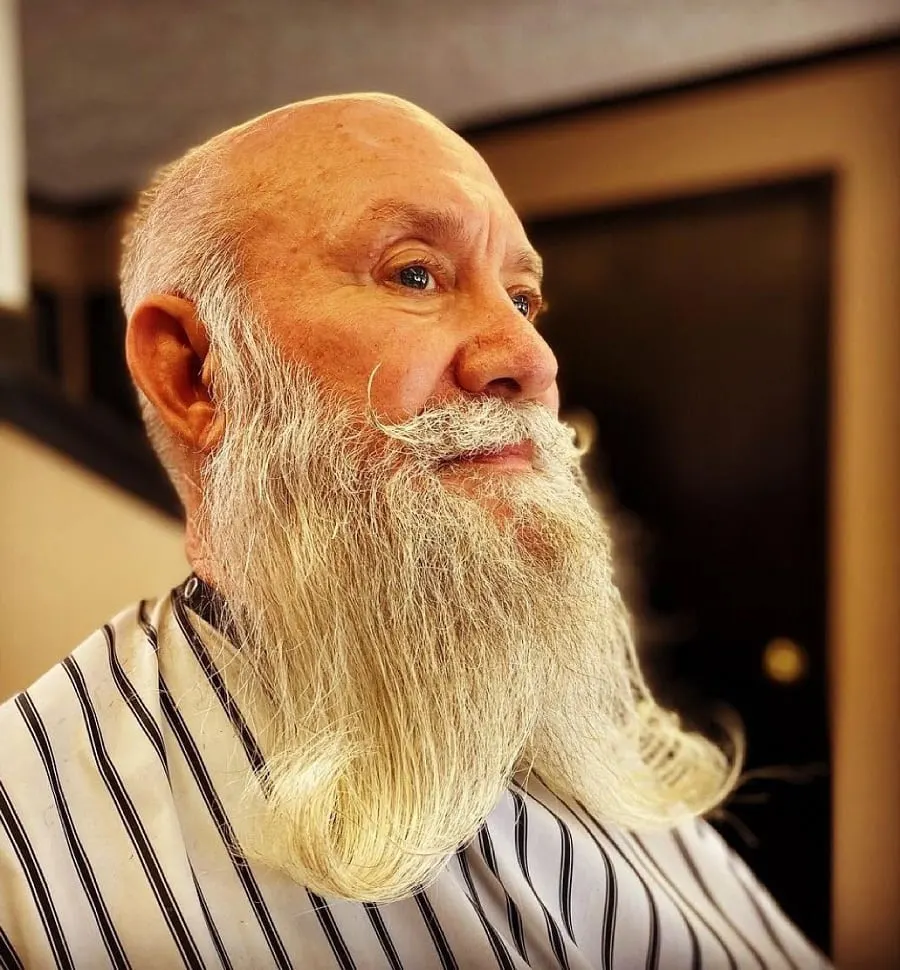
This combination of a long French fork with a fully waxed handlebar mustache is one of the most theatrical beard looks you can wear. The upswept mustache curls pull the eye upward while the forked beard draws it down, creating a dramatic vertical contrast that frames the whole face.
The handlebar requires daily maintenance with a strong mustache wax. Twist the ends outward and upward every morning after washing. For the fork itself, a light beard balm applied from root to tip keeps the long white hair looking healthy and separated rather than stringy.
08 of 14Long Curly Dark French Fork
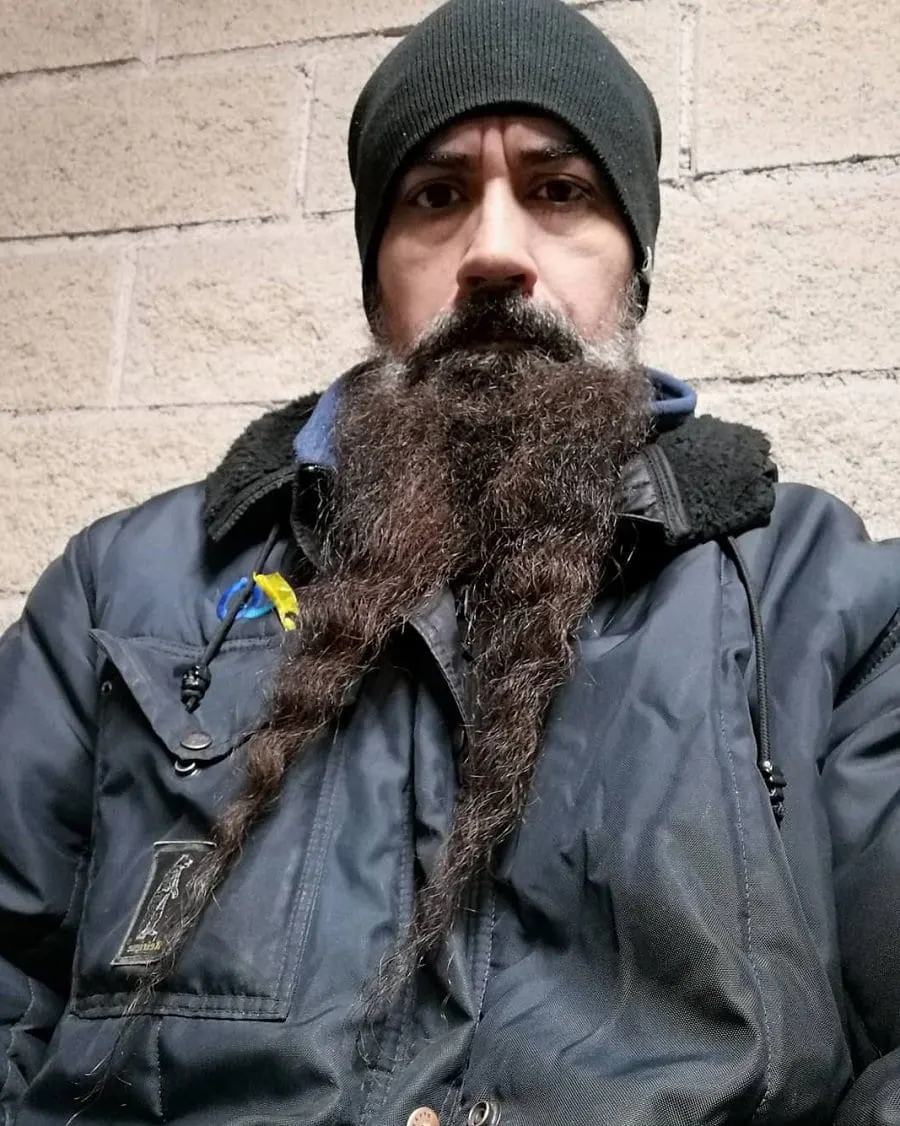
Curly beard hair has a natural tendency to clump into sections, which actually makes the French fork split easier to define on this texture than on straight hair. The waves add serious depth and body to each prong.
The trick with a long curly French fork is moisture. Curly beard hair is prone to dryness and frizz, so a leave-in conditioner or a generous application of argan oil after washing is non-negotiable. Scrunch each fork section gently to encourage the curl pattern to hold the split shape.
09 of 14Long Ginger Natural French Fork
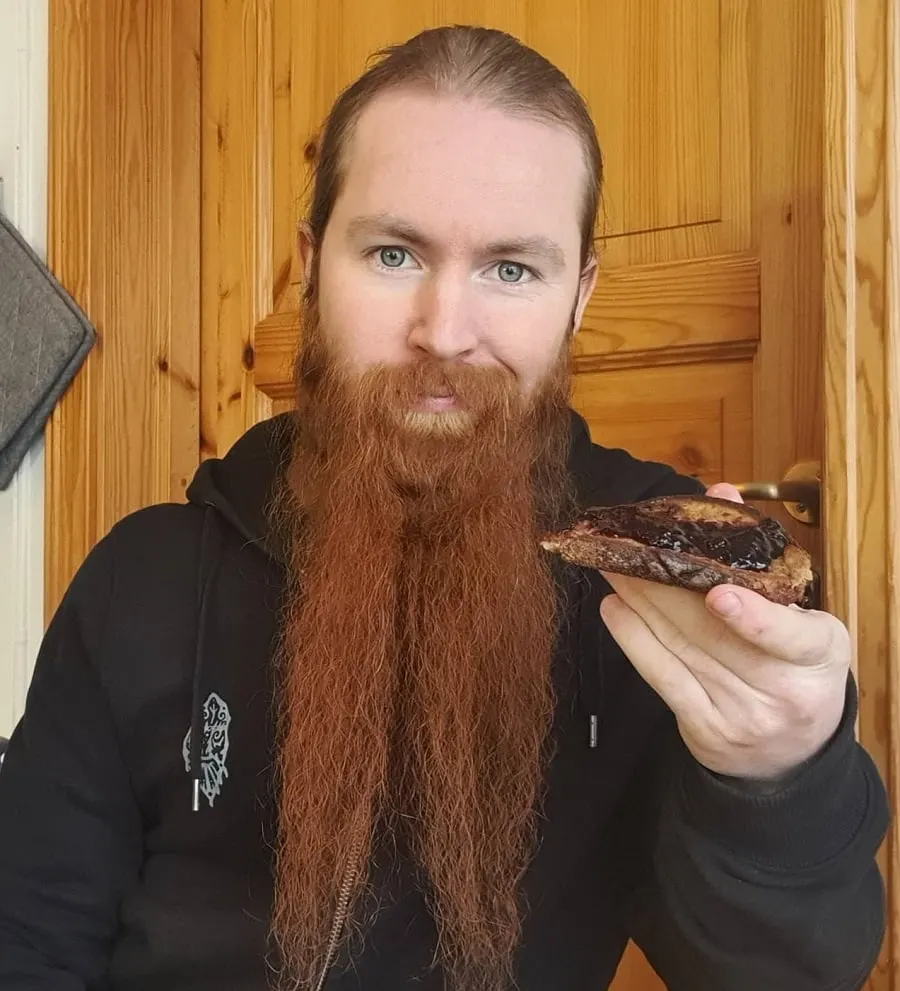
This is what happens when you commit fully and just let the beard grow. The auburn color is rich, the length is extraordinary, and the fork split falls naturally because the hair is simply long enough to part on its own.
The key to achieving this is growing your beard for well over a year and combing it consistently every single day to train the hair to fall in the right direction. A weekly deep conditioning treatment keeps hair this long from becoming brittle and splitting at the ends in the wrong places.
10 of 14Medium Full Beard French Fork with Waxed Mustache
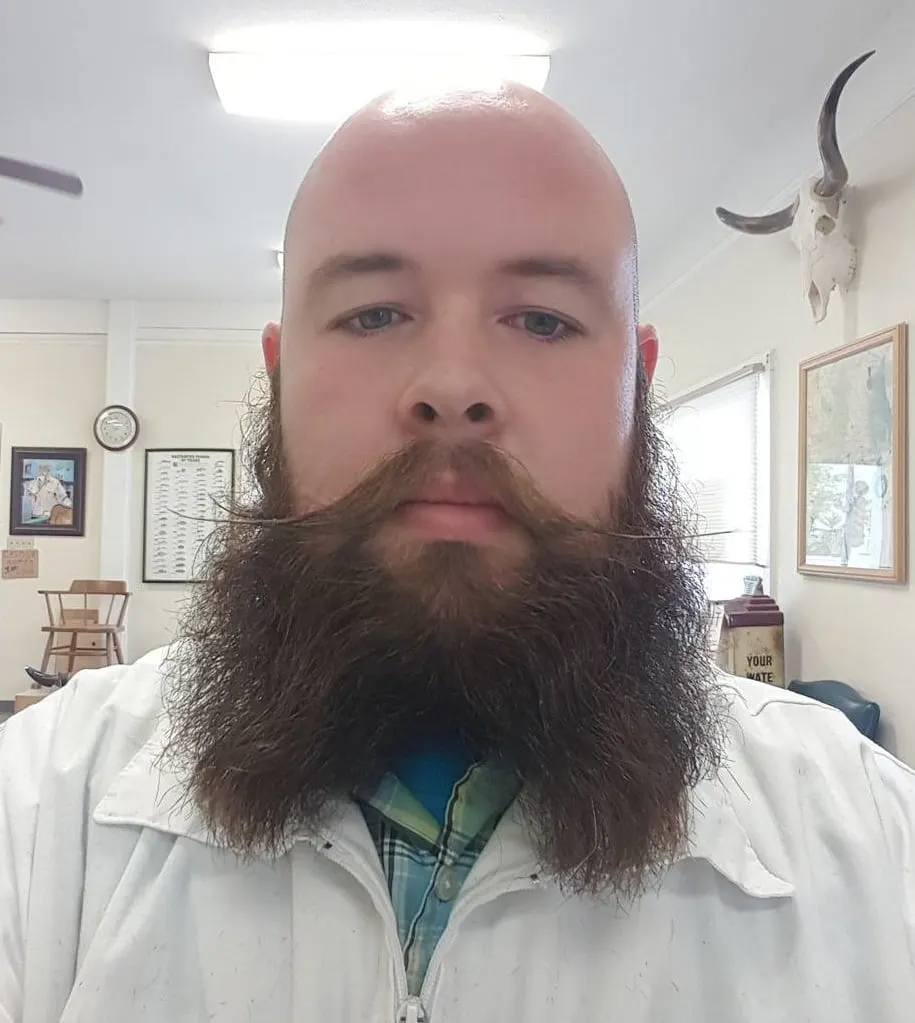
This is the French fork done in a controlled, groomed way that still carries serious presence. The beard is combed outward on both sides from the center part, and the pointed mustache is clearly waxed into place.
Add some wax while parting down from the chin and comb outward on each side to achieve that wavy, swept look. This style works especially well on oval face shapes because the width at the cheeks balances the vertical length of the fork. The pointed mustache ties the whole composition together.
11 of 14Salt and Pepper Tapered French Fork

This style starts from the sideburns and extends down to the chin in a natural, untrimmed taper. The salt and pepper coloring adds real character to the fork, making the split look intentional even without heavy product use.
This style may look low-maintenance, but keeping it from looking genuinely messy requires occasional trimming on the sides to maintain the taper. The fork itself needs no trimming; just separate it with your fingers after washing and let it dry in position.
12 of 14Windswept Blonde French Fork

This is the French fork caught mid-movement: the beard is full, wide, and dense with a strawberry blonde color that catches the light beautifully. The fork split is natural here, pulled apart by the wind and the sheer volume of the beard.
For men with this hair color and texture, the beard tends to grow outward rather than downward, so regular combing and a medium-hold balm are your best tools for encouraging the fork to drop and separate at the chin rather than just puffing out in all directions.

Brad Pitt is one of the few Hollywood actors who gets talked about as much for his beard as for his films. Here he wears a medium-length salt and pepper French fork, where a full beard grows long enough at the chin to split naturally into two sections.
You can absolutely take inspiration from this look. It works because the beard is kept relatively neat on the cheeks while the chin is allowed to grow out and fork. A light beard oil daily keeps the gray and dark hairs looking unified rather than wiry.
13 of 14Johnny Depp’s Signature French Fork Goatee

The French fork beard was an underrated style before Johnny Depp made it famous worldwide by portraying Captain Jack Sparrow. This photo shows his real-life off-screen version of the look: a slim, sparse French fork goatee with a light mustache, far more refined than the theatrical pirate version.
If your beard grows at a medium rate, this is actually one of the more achievable French fork styles on the list. Grow your goatee out to about two to three inches, keep the cheeks clean-shaved, and use a fine-tooth comb to create the center split. A tiny amount of wax at the chin keeps each prong pointing in the right direction.
14 of 14The Classic Textbook French Fork

This is the French fork in its purest, most textbook form. Two clean, symmetrical prongs, a well-groomed mustache, and a full beard that is neatly shaped on the cheeks. No gimmicks, no extreme length, just the style executed exactly as it was meant to be worn.
Original forms always carry a special appeal because they show mastery of the basics. To nail this version, keep your cheek line clean and your neckline defined, then use a comb and a small amount of beard wax to create and hold the center split at the chin.
Patchy Beard Style to Make a Statement
No style stays confined to the country it is named after forever. The French fork beard has traveled far beyond France and found fans on every continent.
It works across face shapes, hair textures, and age groups, which is exactly why it has earned its place as one of the most recognizable beard styles in the world.