The Ultimate Guide to the Chin Strap Beard
What is a Chin Strap Beard
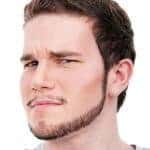
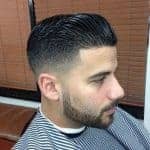
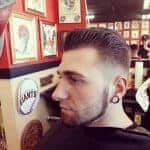
A chin strap beard runs from one side of your face along the jawline, down to the chin, and back up to the other side, connecting with your hairline. Plenty of guys choose to link it up with a mustache for a more complete look.

Will a Chin Strap Beard Suit My Face Shape?
Ideal Matches
Oblong
Oblong and rectangular faces are genuinely built for the chin strap beard. Because this style wraps the perimeter of the jaw, it adds visual width and fullness to a face that can otherwise read as too long and narrow.
Go with a wider chin strap to load up some weight at the bottom of the face. That extra bulk along the baseline does serious work for your overall proportions.
Diamond
The diamond face shape brings wide cheekbones and a narrow jawline, and without any facial hair, those cheekbones can dominate the whole picture. A thick chin strap builds out the jaw perimeter, creating a stronger, more balanced frame that pulls attention away from the upper face.
Any full beard style that adds width at the chin will serve you well here.
Square
Square faces carry hard angles and a strong jaw that can come across as overly severe. A chin strap breaks up those rigid lines by adding a defined layer of texture along the jaw without piling on bulk at the cheeks, which would only amplify the squareness.
Keep the cheeks clean and let the strap do the contouring work along the mandible.
Acceptable Matches
Round
A round face is not the natural home for a chin strap, but it is absolutely workable with the right approach. Let the chin section carry a little more length while keeping the cheek hair trimmed tight and neat.
That extra chin projection draws the eye downward, adding a subtle elongating effect that keeps the face from looking too wide.
Oval
Oval faces need fullness at the bottom to keep the chin from appearing weak or recessed. A chin strap can deliver that, but the balance is delicate.
Wear it a touch thicker, keep the lines razor-sharp, and stay on top of the maintenance. Let it get even slightly unkempt and the whole shape falls apart, making the face look longer rather than framed.
Incompatible Face Shapes
Triangle
Triangle face shapes already carry a prominent, pointed chin with a jawline wider than the cheekbones. Wrapping a chin strap around that structure just puts a spotlight on the chin apex, pushing it even further forward visually.
You are far better off with a style that adds fullness higher up on the face to balance out that bottom-heavy shape.
Heart
Heart-shaped faces share the same challenge: a wide forehead paired with a pointed chin. A chin strap on this face shape is essentially an arrow pointing straight at the narrowest, most delicate part of your face.
Choose a fuller, softer beard style that distributes weight more evenly and takes the focus off the chin point entirely.
How the Chin Strap Beard Evolved and Got Popular
The chin strap has a surprisingly deep history, with roots going back well over a century. The style traveled from its origins through Europe, into Russia, and eventually reached Japan.
Early adopters like Hudson Taylor and Paul Kruger, the 19th-century statesman, helped put the look on the map. Today, its celebrity following has made it a go-to for a younger generation looking for a clean, defined edge.

How to Grow a Chin Strap Beard
Getting a chin strap right starts long before you pick up a trimmer. You need a solid base of even facial hair growth from ear to ear before any shaping can happen.
Give it a full month of growth, then visit a professional barber for the initial outline and line-up. Once the shape is carved in, here is how to maintain the process yourself.
- Allow facial hair to grow evenly across the full face, from left to right.
- Give your beard at least a month to reach workable length.
- Once growth is sufficient, visit a professional barber to outline and establish the initial beard line.
- Using a precision trimmer, carefully remove all hair outside the strap, leaving a clean line of hair running along the jawline down to the chin and back up the other side.
- If you prefer a connected mustache, leave the upper lip hair in place and blend it into the strap.
- Shave or trim all remaining facial hair outside the defined strap area completely clean.
How to Trim a Chin Strap Beard
The chin strap demands more precision than almost any other beard style. Because the entire look depends on two clean, symmetrical lines running along the jaw, even a small slip throws the whole balance off.
Work slowly, check your symmetry constantly, and never rush the outline cleanup.
- Wash your face with warm water to open the pores and soften the hair before you begin.
- Apply shaving cream to all areas outside the strap, then run a finger along the jawline to clear the cream from the strap itself. That exposed strip of hair becomes your guide line for the entire shave.
- Shave only the cream-covered areas, leaving the hairy strap completely untouched.
- Work carefully around the edges of the strap to avoid nicking the perimeter or disturbing the outline.
- Rinse thoroughly with cool water and check both sides in the mirror to confirm the strap is straight and symmetrical before finishing.
Precautions
- Precision is everything with a chin strap. A crooked or uneven strap is far more noticeable than on fuller beard styles, so take your time with every line-up.
- Shave the surrounding areas regularly to keep the strap outline crisp and well-defined between full trims.
Maintenance
Keeping a chin strap looking sharp is a genuine daily commitment. Steam your face regularly to keep the skin healthy beneath the beard, and trim consistently to hold the shape.
Let it go even a few days without attention and the clean lines that make this style work will start to blur fast.
Chin Strap Beard Style Photo Gallery