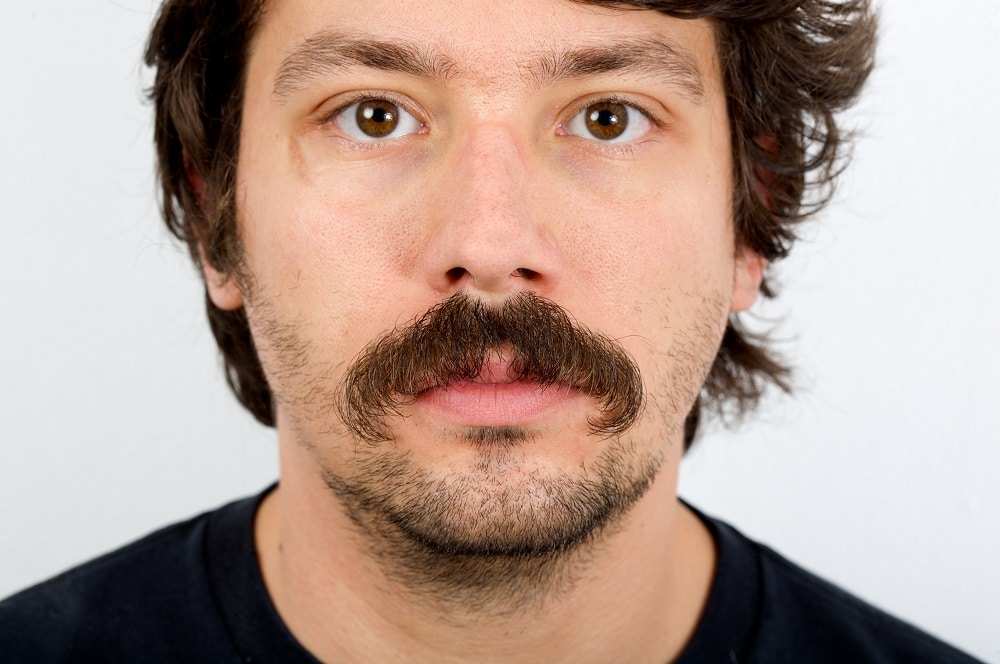
You wake up in the morning, stare in the mirror, and see that you’re still suffering from those soft, small, white patches of hair on your cheeks. That, my friend, is a peach fuzz beard, also known as vellus beard hair.
We’ve all been there. And while it may seem embarrassing to not have a full-grown Jason Momoa beard yet, having peach fuzz is a rite of passage that all male teenagers must go through.
Plus, peach fuzz beards work hard to keep your body safe and healthy, and they play an integral part in the cooling-down process.
If you’re still looking to shave that fuzz off, we go over everything you need to know about peach fuzz beards, when you can expect your peach fuzz to turn into a full beard, and what actually helps while you wait.
What Is Peach Fuzz (AKA Vellus Beard Hair)?
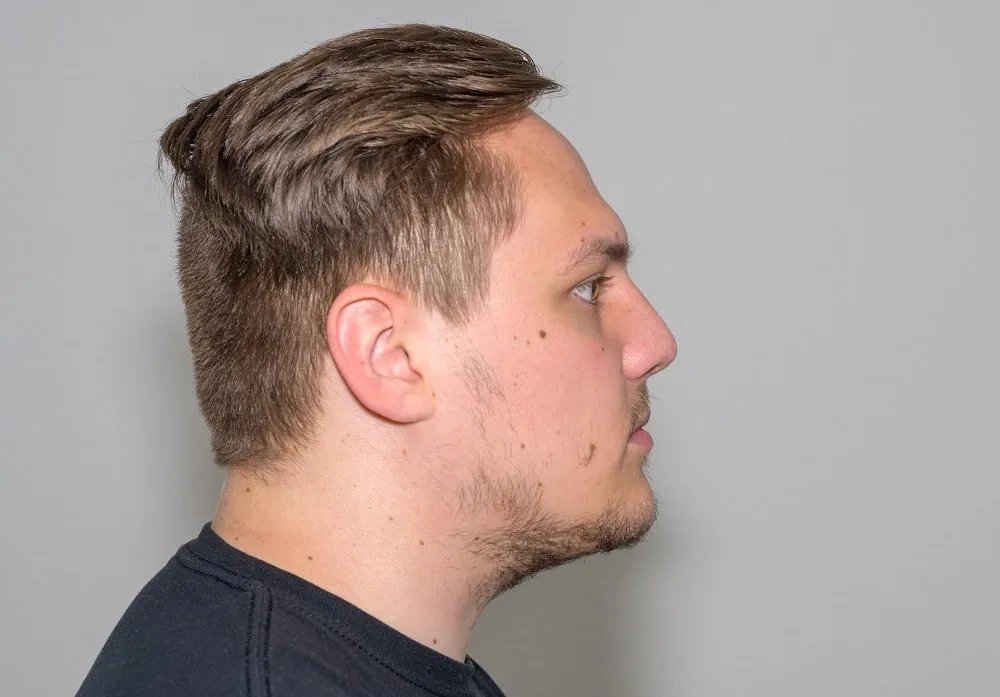
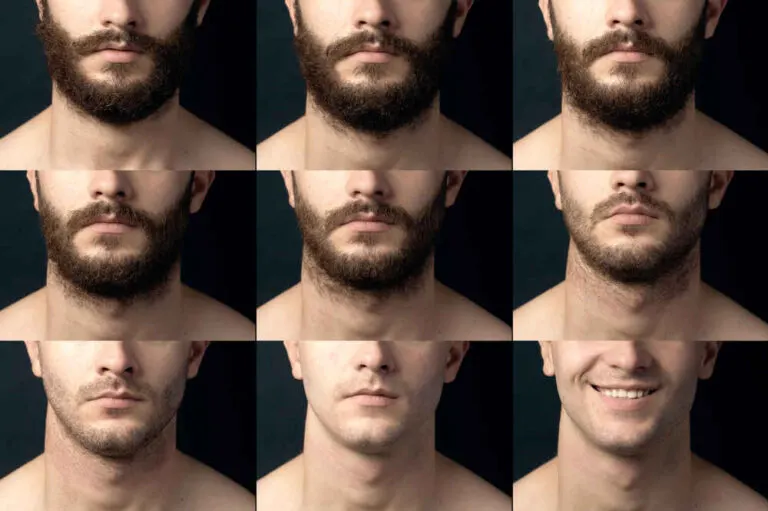
Vellus hair is those awkward, sometimes embarrassing tiny light hairs that cover your jaw, face, and other parts of your body. Think of them as the soft baby hairs that show up before your adult terminal beard ever gets the memo to arrive.
While most teenagers spend hours staring at their jaws waiting for those fuzzy hairs to transform into a beefy lumberjack beard, don’t write off your peach fuzz just yet. Vellus hair is perfectly normal and actually pulls its weight, helping evaporate sweat and keeping your body’s cooling system running smoothly.
When Does Peach Fuzz Turn into a Beard?
The transition from vellus hair to terminal beard hair kicks off during puberty, but everybody moves at their own pace. Most guys start noticing coarser, darker terminal hairs coming in around ages 15 and 16, though plenty of men report carrying peach fuzz well into their early to mid-20s.
If you’re staring down the barrel of age 20 and the terminal beard still hasn’t shown up, stay patient. Keep the basics dialed in (real food, sleep, consistent exercise) and let biology do the rest.
Difference Between Vellus Beard Hair and Terminal Beard?
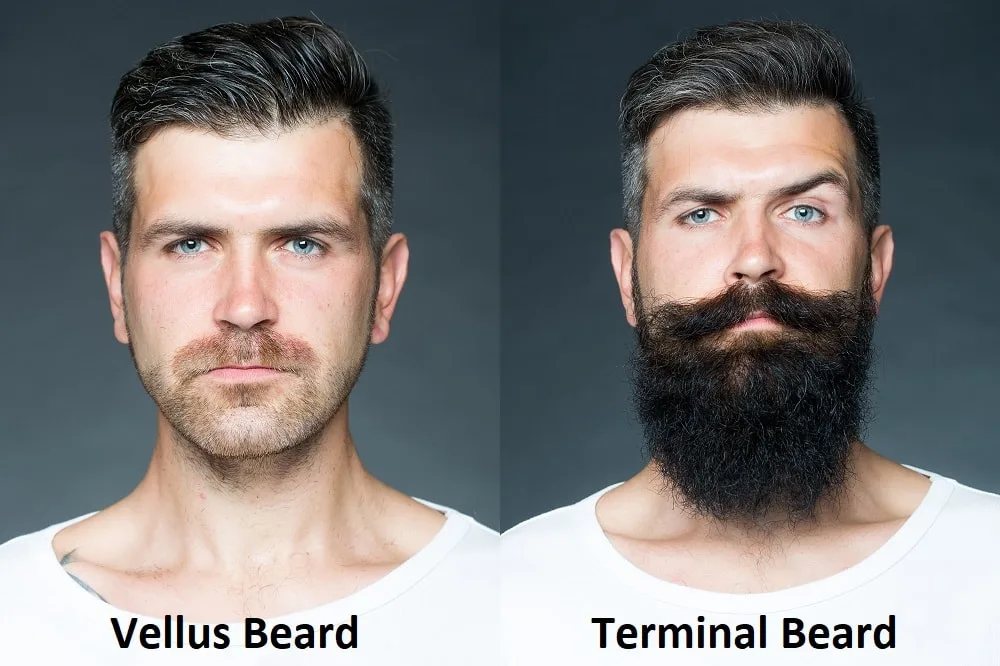
Terminal beard hair describes a fully developed, full-grown beard: long, dark, coarse strands that arrive after puberty has done its job. Beyond the obvious visual gap between the two, vellus and terminal hairs serve completely different functions for your body.
Vellus hair helps sweat evaporate off the skin, while terminal hair mainly insulates and shields the skin underneath.
There’s also a growth dynamic worth knowing: vellus hairs grow slowly and cycle out quickly, which is why they never gain length. Terminal hairs grow faster and keep growing far longer. So if your face feels like it’s always got a light fuzz but never builds into anything substantial, that’s the vellus cycle doing its thing.
How to Mature Vellus Hair into Terminal Beard?
Here is the honest answer: you mostly wait. The shift from fuzz to beard happens on your body’s own schedule, and it finishes on its own timeline, for some men at 18, for others closer to 25.
What you can do is keep the canvas ready: eat real food, sleep properly, stay active, and keep the skin clean and moisturized. None of it speeds up the calendar, but it means every hair that does arrive comes in looking its best.
Should You Get Rid of the Peach Fuzz Beard?

Shaving your peach fuzz to coax darker terminal hairs out is one of the most persistent myths in beard grooming. Grab a razor and clean it off if you want a smoother look, but understand that you’re not triggering any biological upgrade.
The new hairs growing back from the follicle are completely unchanged in color or thickness. They may feel a touch rougher at the blunt tip, which can create the illusion of something more substantial, but the actual hair structure stays exactly the same.
Not only will it not help your chances of terminal hair coming in, but shaving unnecessarily can cause unwanted problems. Guys who shave too early can suffer from:
- razor burn
- bumps
- nicks
- cuts
- painful ingrown hairs
So, if you want to get rid of your peach fuzz beard simply because you don’t like how it looks, you can certainly shave it off. Unfortunately, if you’re looking to get rid of your peach fuzz beard to encourage terminal hair growth, that won’t do much.
How to Remove Peach Fuzz (Removal Options)
If you want to remove peach fuzz, check out these standard methods to see which one is right for you.
Dermaplaning
Got cash to spend and zero tolerance for peach fuzz? Dermaplaning is your move: an in-office exfoliating treatment that doubles as instant peach-fuzz removal and leaves the skin smooth and bright.
Unlike shaving, ingrown hairs and razor burn are rarely an issue, though minor nicks and some redness are still possible. A trained provider glides a sterile blade across the skin, exfoliating dead cells and shaving away vellus hair in the same pass. It’s relatively painless, surprisingly effective, and a smart investment if you’re serious about clearing that fuzz for good.
Hair Removal Creams
Hair removal creams are the budget-friendly option, but approach them with realistic expectations. Some formulas work well; others barely make a dent. The bigger concern is the chemistry involved: most creams are simply harsh on facial skin, plus they tend to smell pretty rough while they’re doing their thing.
Before applying anything near your face, test the cream on your hand or leg first. Your cheeks will thank you if a reaction does happen to flare up.
Electrolysis and Laser Hair Removal
Permanent-removal salon treatments exist, but they aim for exactly what the name says: electrolysis removes hair permanently, while laser gives long-term reduction, and some regrowth there stays possible. If you hope to grow a beard later, skip them; if removing the fuzz for good is genuinely the goal, have a licensed professional walk you through the options. Ask about electrolysis first, since laser targets pigment and pale peach fuzz gives it very little to work with.
Threading
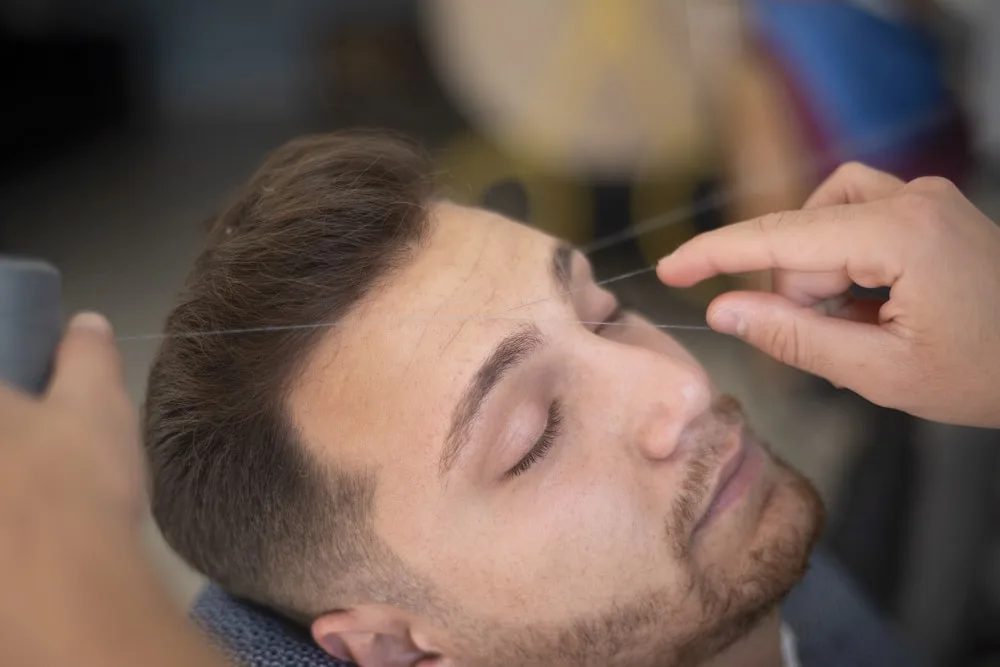
Threading has been around for centuries, originating in India and Iran, and it remains one of the most precise vellus hair removal methods available. A skilled threading technician uses two twisted strings to grab individual hairs and pull them cleanly from the root. Precise, yes. Comfortable? Not particularly.
If you go this route, choose a clean, reputable salon without compromise. Standards vary, and this is your face.
Shaving
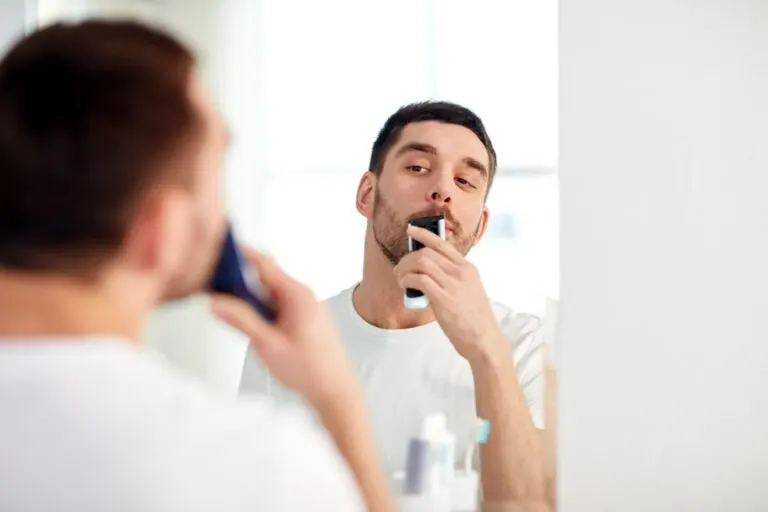
Shaving is the most accessible option on this list, no appointment needed, no extra cost. But grabbing a razor when there’s no real reason to can backfire fast. Shaving over fine vellus hair without proper prep invites ingrown hairs, razor bumps, and irritation, especially if your skin is on the sensitive side.
If you do shave, use a transparent shave gel so you can see exactly what you’re doing, and follow up with an alum block to close things down cleanly.
Sugaring, Waxing, and Tweezing
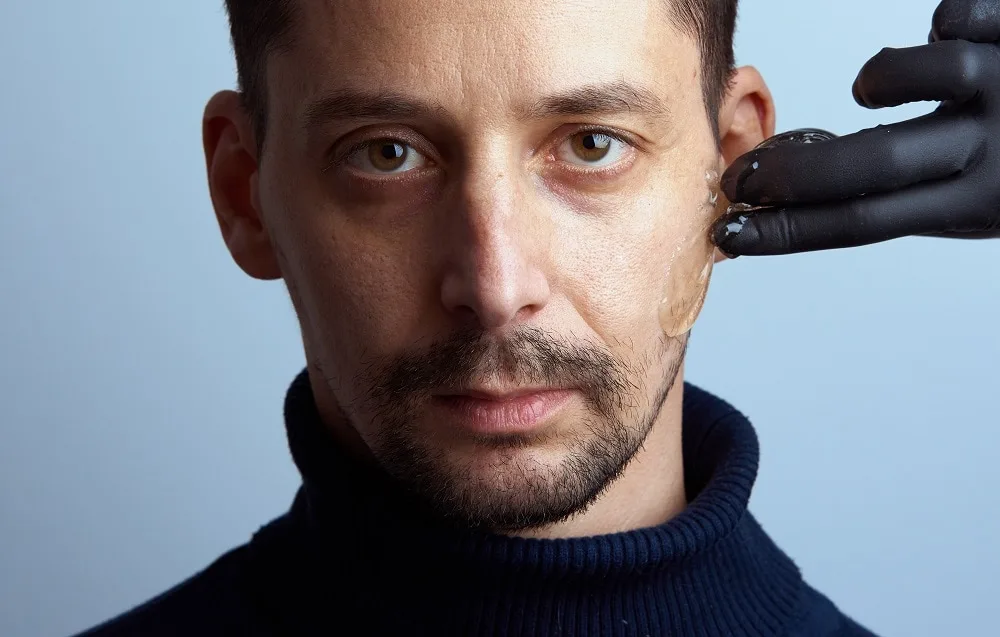
All three of these methods pull hair directly from the root, and there’s a genuine debate about what that does long-term. Some sources claim the increased blood flow to the follicle site actually strengthens regrowth. Esthetician and sugaring expert Alexandra Accardo argues the opposite: repeated root removal weakens the follicle over time, resulting in finer, sparser regrowth with each session.
Sugaring and waxing cover more ground quickly and are worth the cost if you’re treating a larger area. Tweezing costs nothing but takes considerably longer. Whichever you pick, the goal is the same: remove the hair at its source and deal with regrowth on your own terms.
Bleaching
Bleaching won’t remove your peach fuzz, but it will make it nearly invisible against your skin tone, which is often enough. Compared to more aggressive facial hair removal methods, it’s less invasive and dramatically more affordable.
Just patch-test before going anywhere near your face, since some men do experience redness, itching, bumps, burning, blisters, hives, dry skin, or swelling.
The Beard Style Verdict
If you have peach fuzz and you’re waiting for your terminal hairs to grow in, you’re not alone. Puberty is a long process, and sometimes it takes years for hair to develop fully.
Peach fuzz, or vellus hair, is the baby hair you have on your face before your full beard grows in.
While shaving and other hair removal methods generally do not trigger terminal hair growth, patience and good habits will do more than any product.