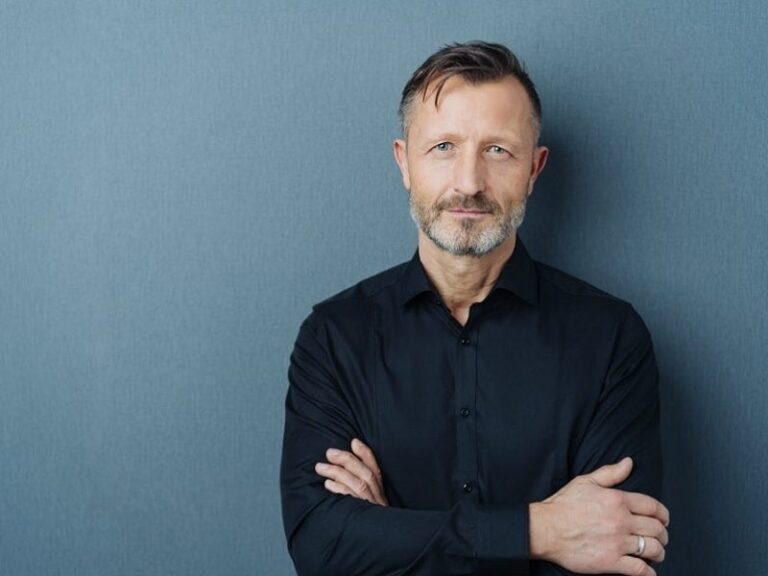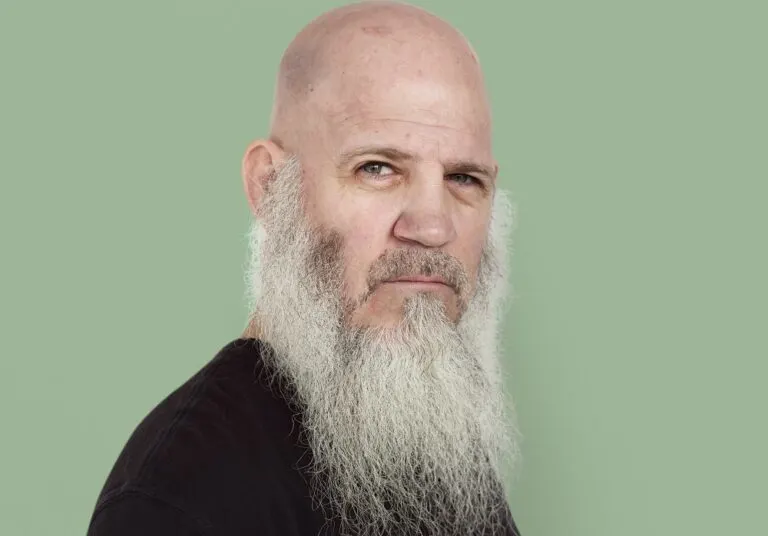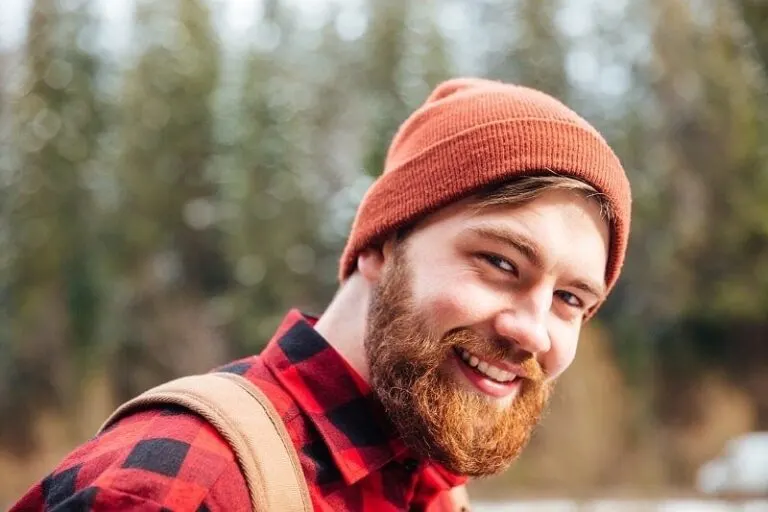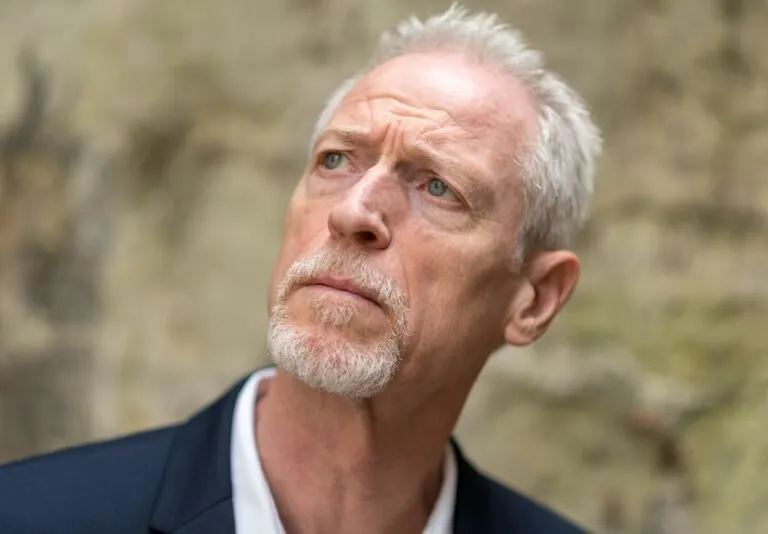
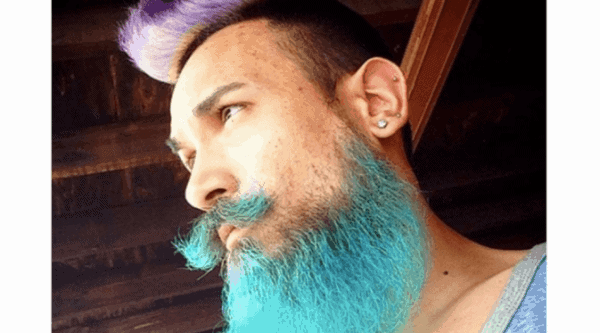
Classic beard colors are getting boring. More and more men are experimenting with colorful beard styles. If you want to get noticed in a crowd, then you should pick a color and get busy dyeing!
Temporary or Permanent Dye for Colorful Beards
You can use temporary or permanent dye to change the color of your beard. Although temporary dye can be washed out more easily, it usually gives a less vivid result on darker beards than a longer-lasting dye applied over a pre-lightened base.
On the other hand, it is a great choice if you only want to have colorful facial hair for the weekend or for a big event. Permanent dye is recommended for those who want to make a big impression and who are not afraid of a big change. Always patch-test any permanent dye 48 hours before use — facial skin is especially prone to allergic reactions to hair-dye ingredients like PPD.
#1: Red Glitter Full Beard
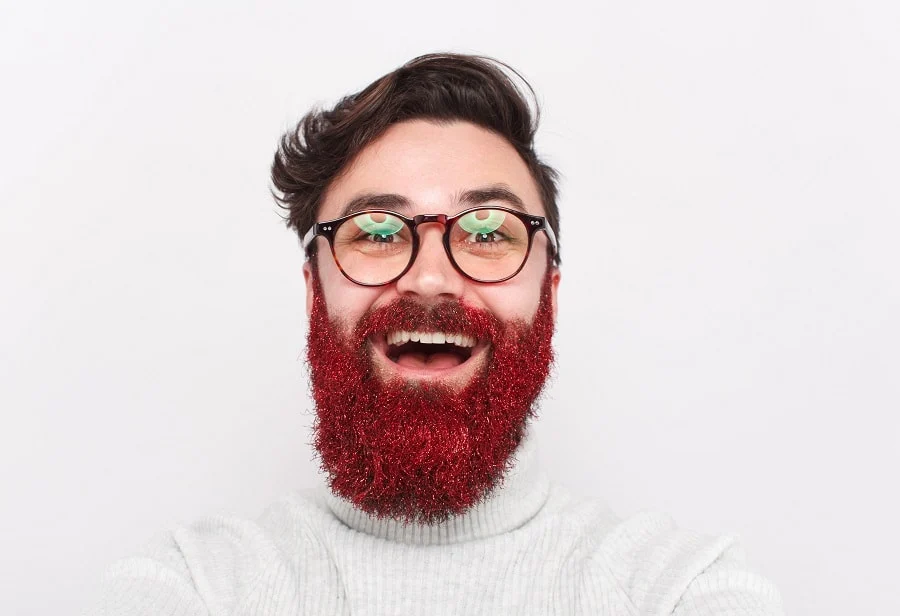
Barn red with glitter is pure commitment to a look, and it works best on a dense, well-grown full beard where the shimmer has enough surface area to really catch the light. Before you dye, make sure your beard is freshly washed and completely dry so the color saturates evenly from cheek line to neckline.
Once the color is in, lock in the vibrancy with a sulfate-free beard wash every few days. Finish each morning with a few drops of beard oil to keep the coarse strands from drinking up the dye too fast and fading out on you within the first week.
#2: Rainbow Multi-Color Full Beard with Glitter
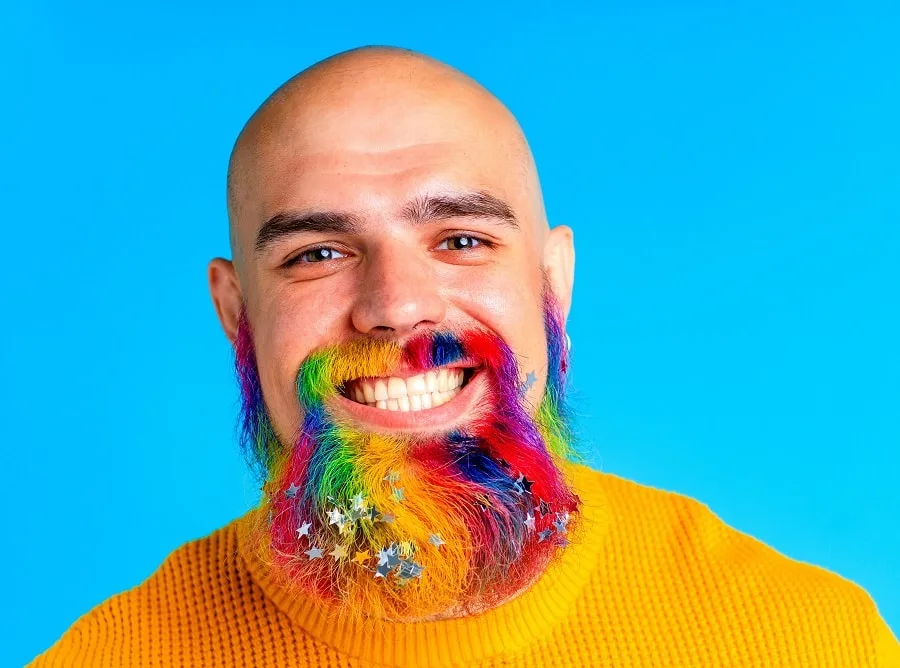
Pull this off and you are the whole room. Each color band needs its own application zone, so section the beard off with foils or clips before you start, working from the mustache down through the chin and out toward the jaw. Blending where the colors meet keeps the transition from looking muddy rather than vivid.
Because this many pigments on one beard means serious chemical exposure, load up on deep-conditioning beard balm after every wash. Keep the cheek line and neckline razor-clean so all that glorious color chaos stays framed and polished rather than just wild.
#3: Blue Medium Stubble with Matched Hair Color
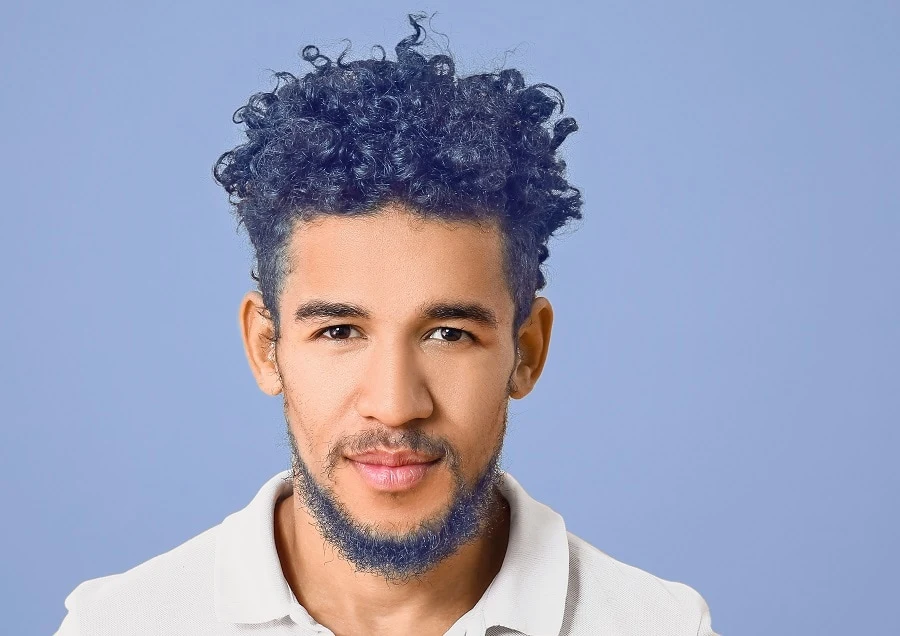
Matching the beard color to the hair color is one of the cleanest moves in the colorful beard playbook, and this navy blue tone proves it. At the medium stubble length, the color appears as a crisp, uniform wash across the face rather than a heavy block, which keeps the overall look surprisingly refined.
Maintain that stubble at a consistent guard length every few days so new growth does not break the color uniformity. Since stubble at this density soaks up dye quickly, a color-depositing beard conditioner between full dye sessions will stretch the vibrancy out considerably.
#4: Blonde Short Boxed Beard
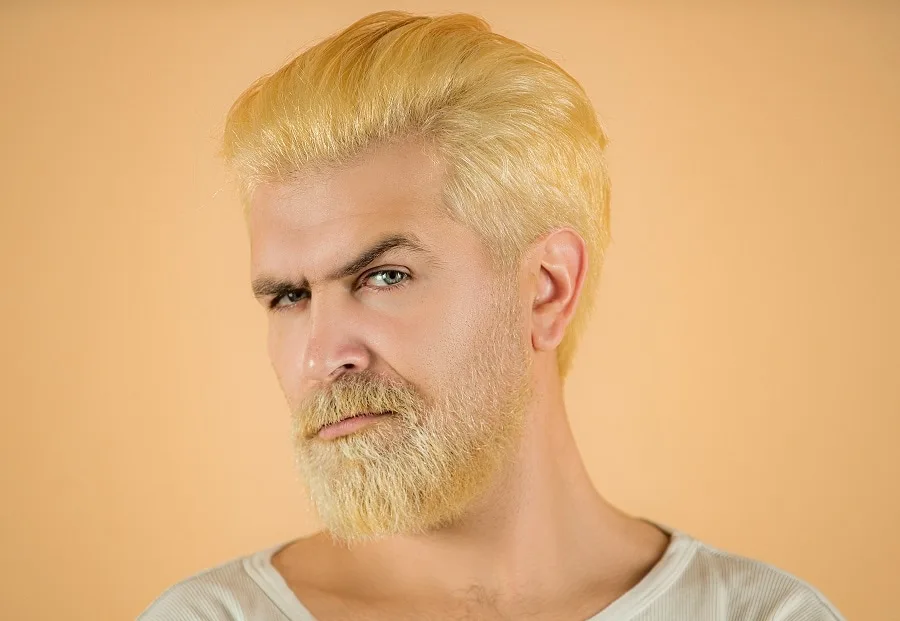
Blonde beard color on a short boxed beard does something really useful for the face: it softens a strong jawline while still keeping the structure crisp. The squared-off corners of the boxed shape give the chin projection without adding bulk, and the warm blonde tone keeps the whole thing from feeling too severe.
Keep the cheek line carved clean and the neckline squared with a detail trimmer every week. If your natural color is darker, you will need to bleach before applying the blonde, so condition aggressively afterward with a beard butter to prevent the coarse strands from going brittle on you.
#5: Green Colored Garibaldi Beard
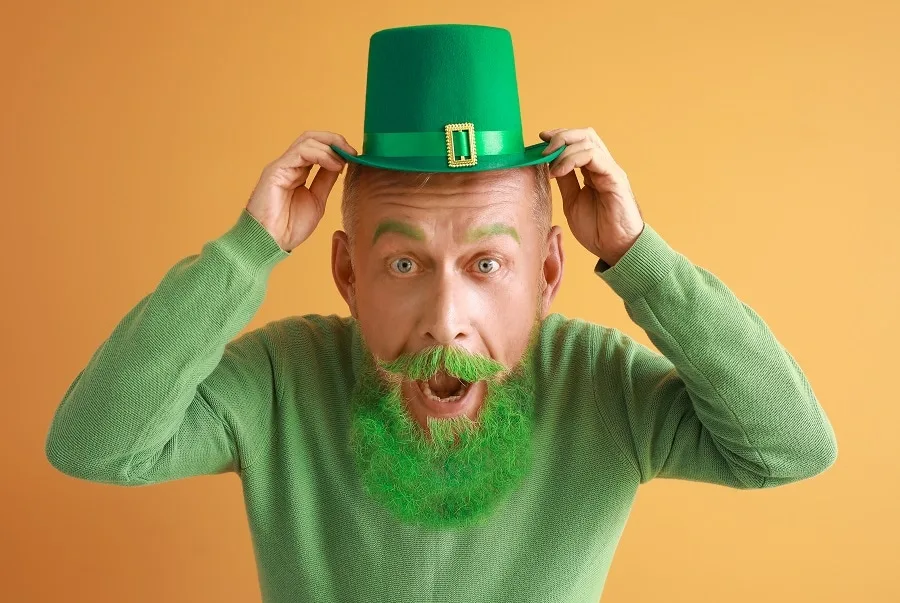
A Garibaldi already commands attention with its wide, rounded bottom and generous fullness, so painting it green turns the volume all the way up. The rounded perimeter of the Garibaldi shape is what makes this color pop so effectively. There are no hard corners to compete with the pigment, just one bold, continuous mass of color.
Because a Garibaldi carries a lot of bulk, apply the dye in sections and work it through with a beard comb to make sure the color reaches the underlayer, not just the surface strays. Follow up with beard oil daily to keep the density hydrated and prevent that characteristic Garibaldi dryness from turning your green into a dull, faded olive.
#6: Auburn Colored Ducktail Beard

Auburn on a ducktail is a genuinely natural-looking beard color choice, especially when the warmth of the tone echoes the hair color above. The ducktail shape does the structural heavy lifting here, with the tapered sides drawing the eye down toward the pointed chin and creating the illusion of a longer, narrower face profile.
To keep the ducktail point clean, run a detail trimmer along the perimeter every week and use a boar-bristle brush to train the growth downward and inward. A light application of beard balm will hold the shape through the day without stiffening the texture.
#7: Dark Blue Old Dutch Beard with Mustache
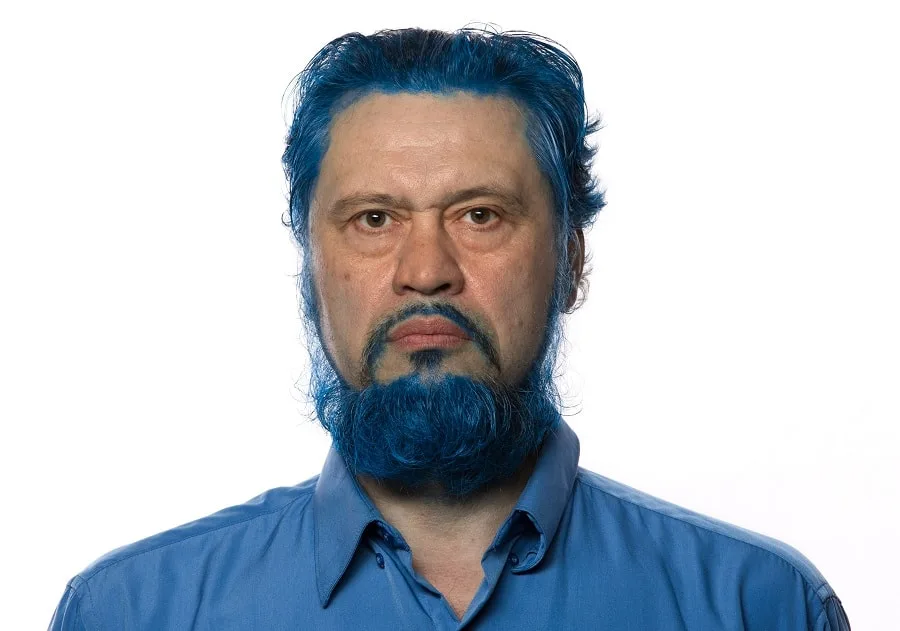
An Old Dutch beard already carries serious weight on the face, and dyeing it a deep, saturated blue makes that presence even more commanding. Because the Old Dutch grows full on the chin and jaw without a mustache connection, the color pools heavily at the center of the face, drawing the eye downward and elongating a rounder face shape considerably.
Work the dye into the beard thoroughly with a wide-tooth beard comb, paying extra attention to the dense undercarriage where color tends to miss. Maintain the shaved upper-lip area and the cheek cleanup with a straight razor or foil shaver to keep those contrast lines sharp against the bold blue.
#8: Blonde Medium Stubble Beard
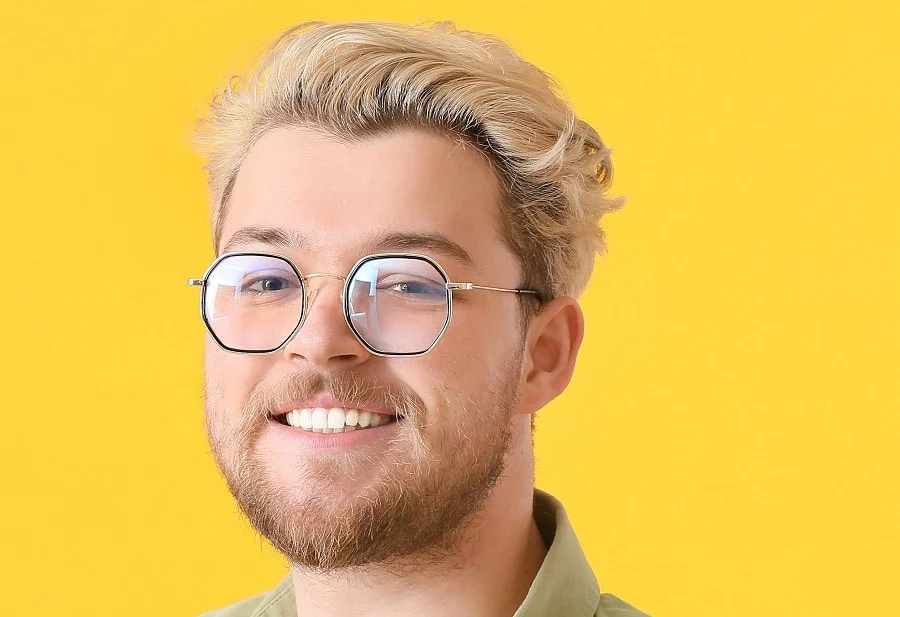
Medium stubble dyed blonde is one of the most low-commitment ways to experiment with beard color, and it works especially well when the head hair is dyed to match. At this length, the color sits right on the surface of the skin, so the tone appears brighter and more saturated than it would on a longer, denser beard.
Bleach gradually if you are starting from a darker base, lifting in stages to avoid snapping the fine stubble strands. Once you hit your target shade, a guard-length trim every three to four days keeps the stubble density even and prevents patchy new growth from breaking up the color field.
#9: Ginger Red Natural Full Beard
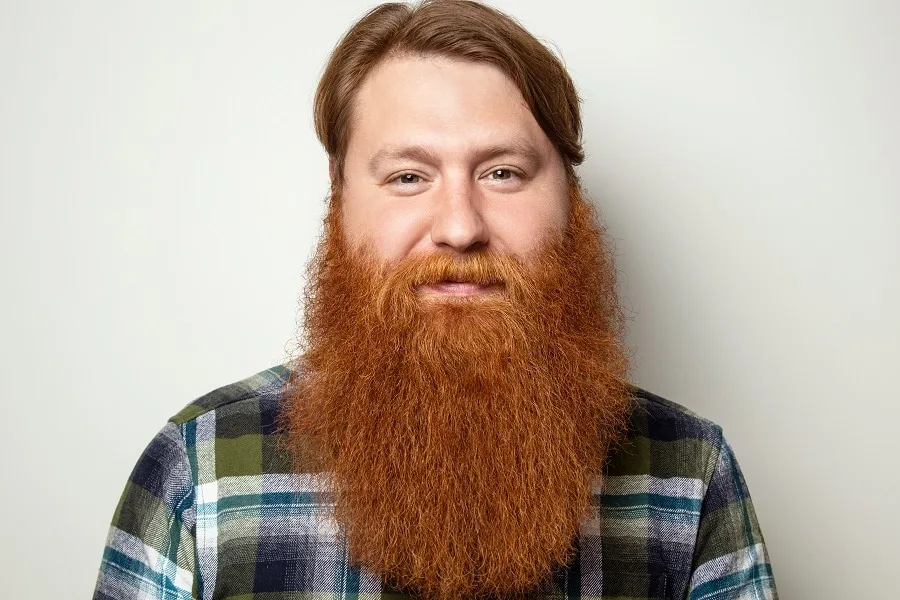
Ginger red is one of those beard colors that looks completely organic on the right complexion, and this extra-long natural full beard wears it with total authority. The coily, dense texture holds the warm pigment beautifully, giving the beard a rich, almost luminous quality in natural light.
Growing a beard to this length takes well over a year of patience, so protect your investment with a consistent routine: beard wash twice a week, beard oil daily, and a boar-bristle brush to distribute the natural oils from root to tip. Trim the perimeter lightly every few weeks to keep the shape from going shapeless, just enough to remove split ends and keep the outline defined.
#10: Platinum Blonde Short Boxed Beard
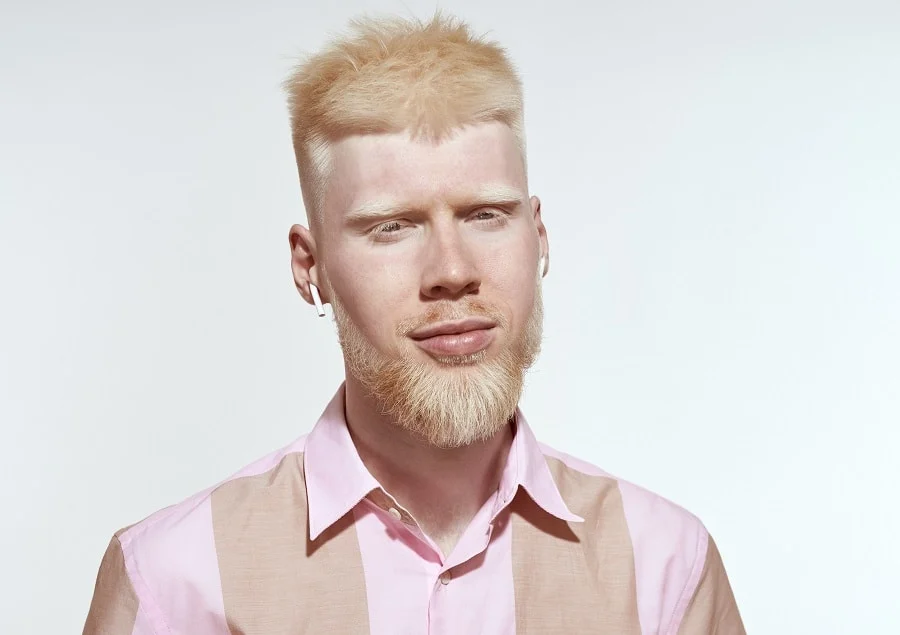
Platinum blonde on a short boxed beard is a high-contrast move, particularly striking when the skin tone is fair and the brows stay dark. The squared corners of the boxed shape frame the lower face with geometric precision, and the near-white color amplifies that structure by reflecting light off the chin and jaw.
Getting to platinum requires a full bleach, so condition the beard heavily after every wash with a beard butter or deep-conditioning balm to fight dryness and brittleness. Apply a small amount of styling balm to damp strands and comb through to keep the boxed shape sitting flat and groomed rather than puffed out at the sides.
#11: Lavender Colored Spade Beard
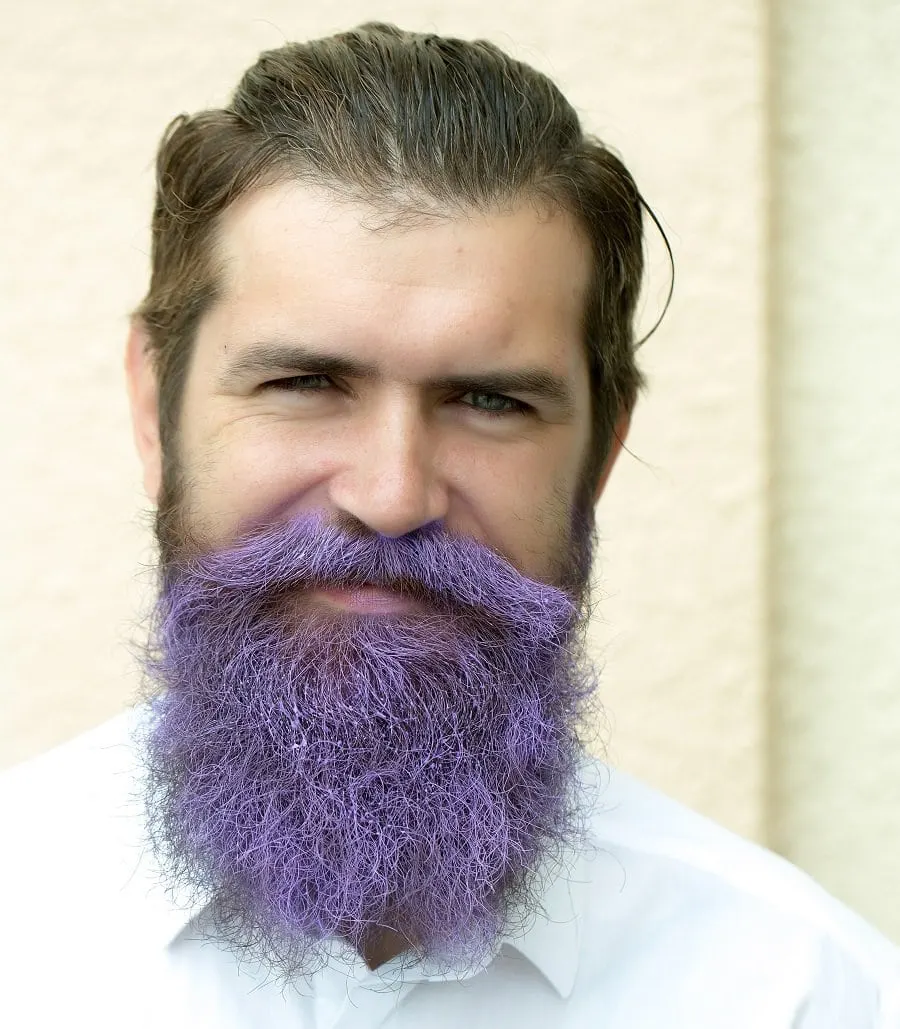
Lavender on a long, wispy spade beard has an almost otherworldly quality to it. The soft purple tone plays off the airy, unstructured texture in a way that feels genuinely artistic. If your beard grows with a lot of fine, spread-out strands like this one, that sparse texture actually works in your favor when applying color, since the dye coats each individual strand visibly rather than disappearing into dense bulk.
Bleach to a pale yellow base before applying the lavender so the pastel tone comes through true rather than muted. Purple pigments fade fast, so use a purple color-depositing conditioner weekly to refresh the tone between full dye sessions and keep that violet vibrancy from washing out to a dull gray.
#12: Red and Yellow Color-Block Short Beard
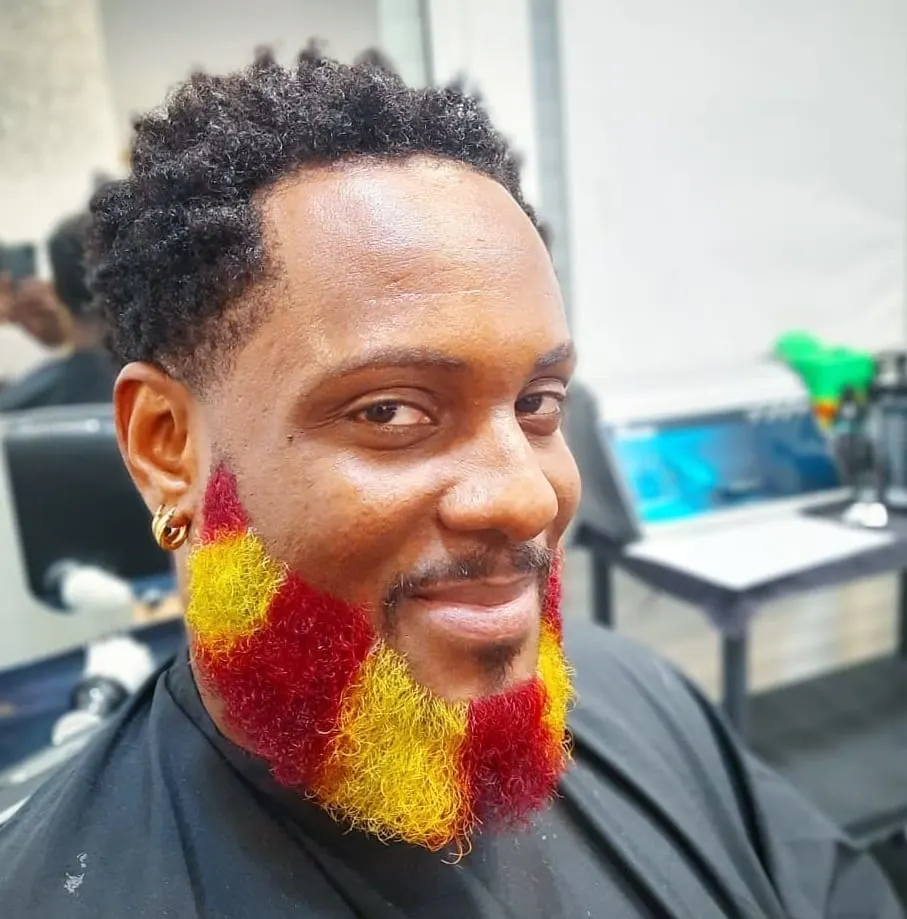
Splitting a short beard into distinct color zones takes real precision at the application stage. Here, the red anchors the sideburn and upper cheek area while the yellow takes over the chin and jaw, creating a bold graphic contrast that turns the beard into a genuine statement piece. Map out your zones clearly before you start, using foils or petroleum jelly along the borders to keep the colors from bleeding into each other.
On coily beard texture like this, the color grips exceptionally well, so vibrancy is rarely the issue. Moisture retention is. Load up on beard oil and beard butter regularly to keep the coily strands from drying out and snapping, which would break up those clean color zones faster than anything.
#13: Magenta Pink Colored Short Boxed Beard
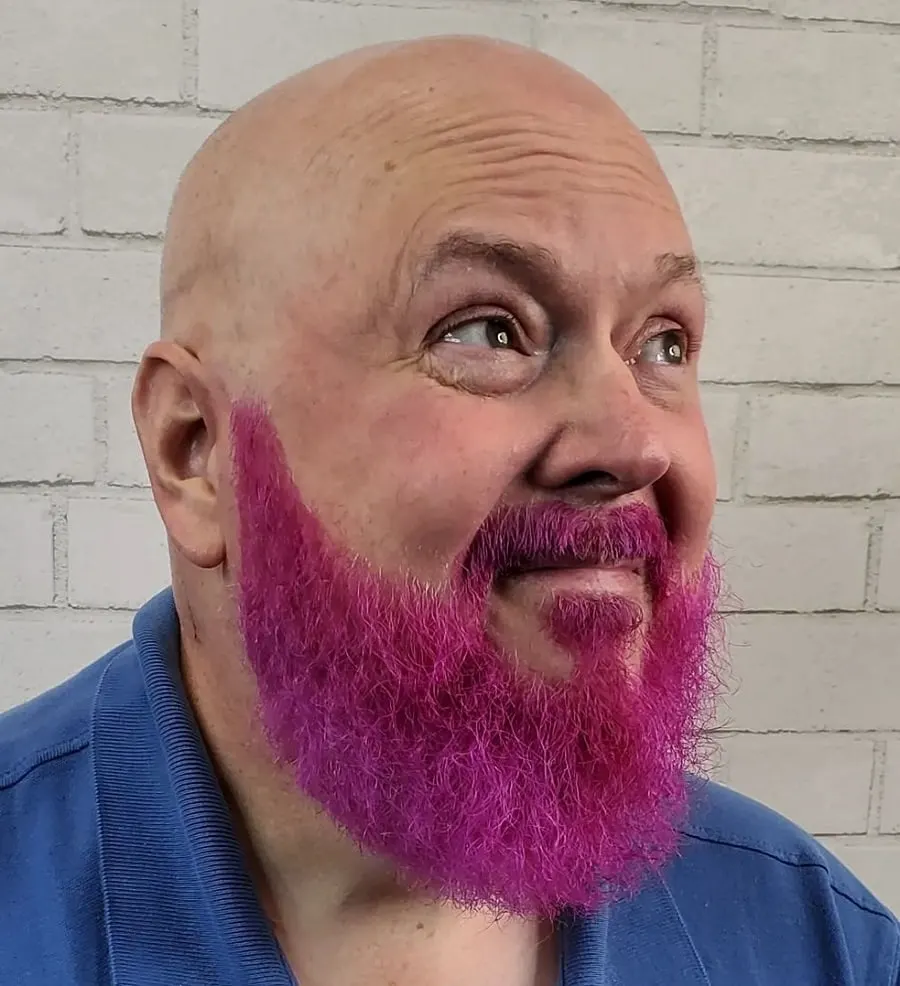
On a bald head, the beard becomes the entire focal point of the face, so going magenta pink on a short boxed beard is a calculated power move. The boxed shape keeps the color contained within a clean geometric frame, which stops the bold pigment from coming across as chaotic and makes it look completely deliberate instead.
Bleach to a pale base first, then apply the magenta evenly with a tint brush, working against the grain to saturate the underlayer. Keep the cheek line and neckline razor-sharp with a foil shaver or straight razor every few days, because on a bald head, any softness in the beard outline will immediately stand out.
#14: Purple Van Dyke with Handlebar Mustache
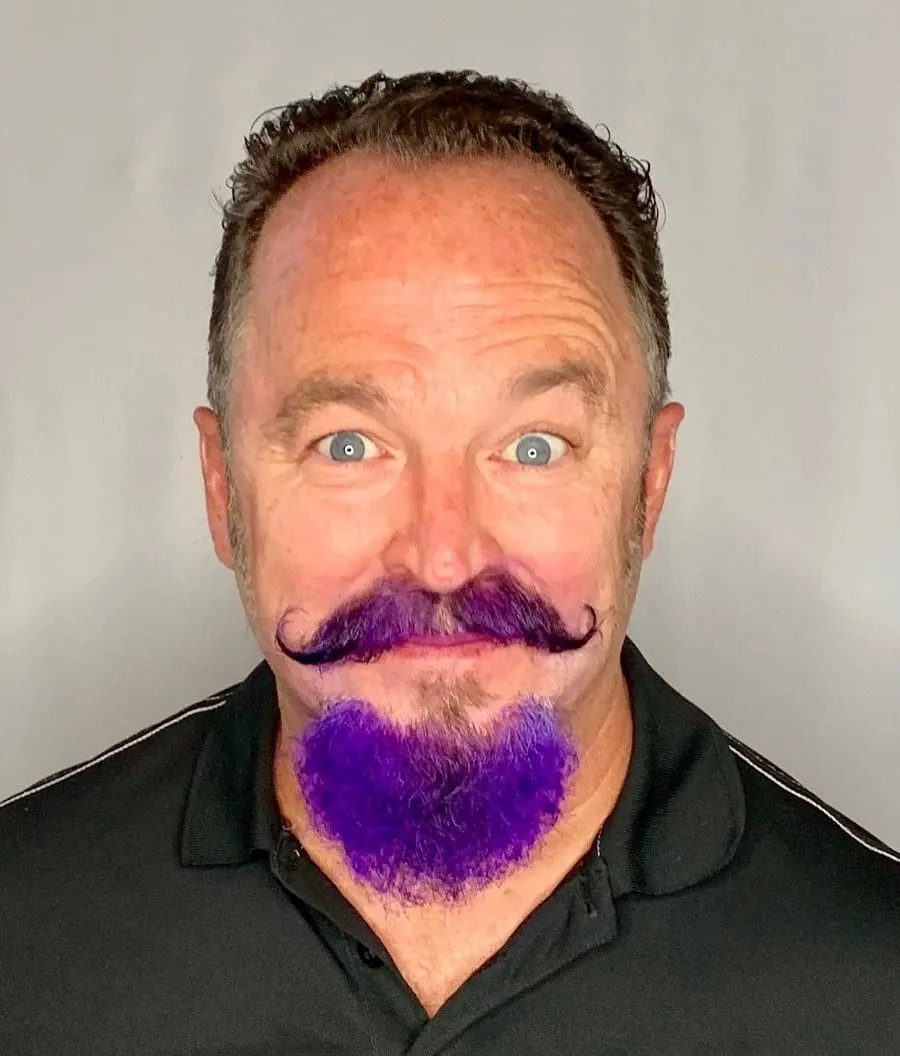
Pairing a purple goatee with a waxed handlebar mustache is a combination that demands a certain level of personal confidence, and this look has it in abundance. The Van Dyke shape keeps the color concentrated at the center of the face, which elongates the chin and draws the eye away from the width of the cheeks, making it a genuinely flattering choice for rounder face shapes.
Curl and set the handlebar tips with a firm mustache wax, working outward from the philtrum to the ends. For the purple goatee below, bleach the chin area first so the violet pigment saturates fully, then maintain the disconnected cheek areas clean-shaven with a straight razor to preserve that sharp contrast between the colored facial hair and bare skin.
#15: Vibrant Orange Full Beard Ducktail
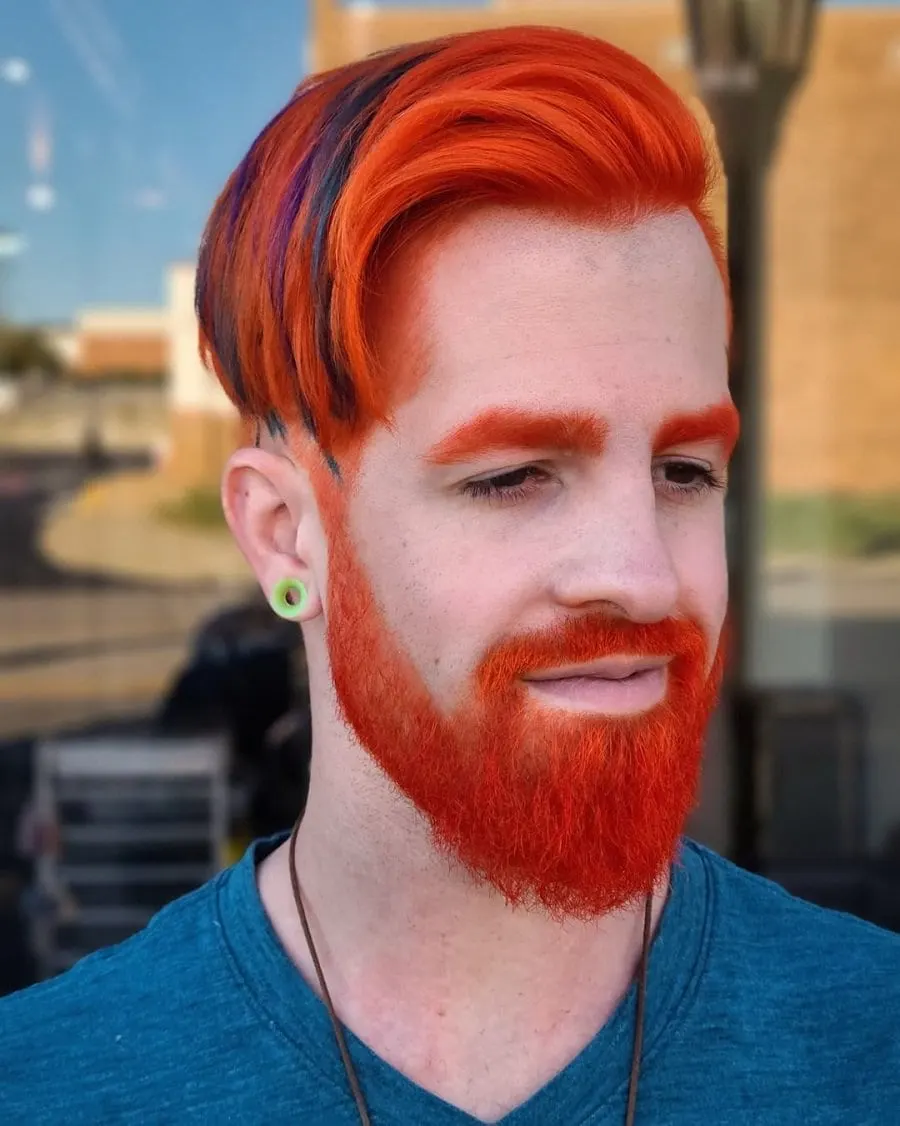
That fiery, saturated orange beard color is doing serious heavy lifting here, turning a well-executed ducktail into a full-on statement. The beard is trimmed with clean cheek lines and a carved neckline, with the chin projection pulled into a soft pointed ducktail that elongates the face beautifully. Oval and rectangular face shapes get the most mileage out of this style.
To nail the color, bleach your beard down to a pale base first, then apply a vivid orange semi-permanent dye for maximum saturation. Consult a colorist before you pick up a box kit, because uneven bleaching will wreck the vibrancy of the final result.
#16: Blue and Pink Ombre Handlebar with Full Goatee
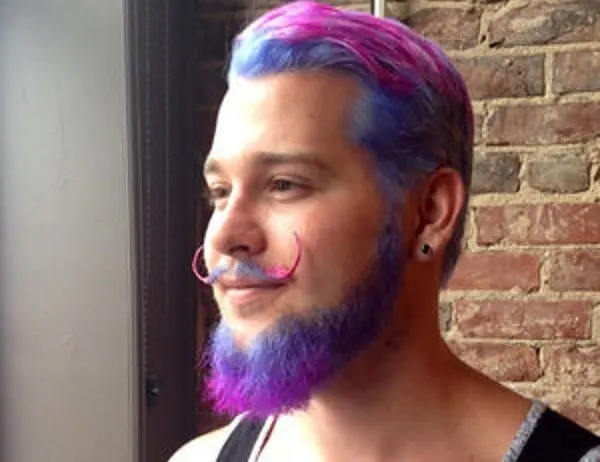
When you want maximum color impact, stacking two complementary shades beats a single flat tone every time. Here, a vivid blue fades into a bold magenta pink through the full goatee, while a waxed handlebar mustache curls up in a contrasting pink to anchor the whole look.
The ombre transition is where the real craft lives, so work with a colorist who can blend the two dyes seamlessly rather than leaving a harsh line at the fade point.
#17: Yellow Dyed Short Boxed Beard with Dark Hair
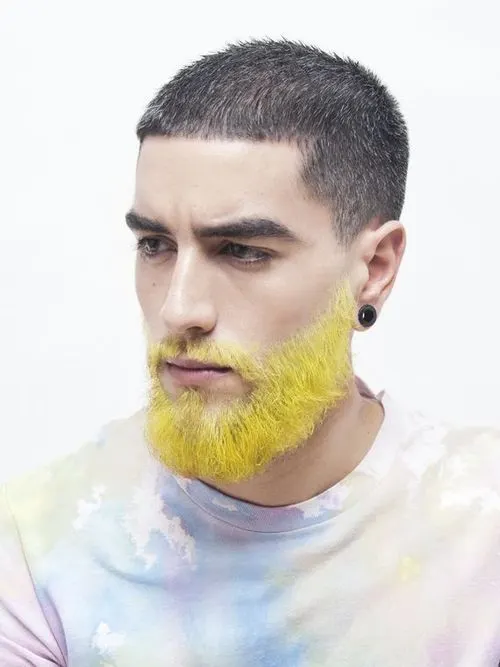
Few color contrasts hit harder than jet-black hair against a vivid yellow beard, and this short boxed beard keeps the whole thing from going off the rails. The beard is trimmed tight with a clean cheek line that follows the jaw up toward the ears, giving the face a structured, controlled perimeter. That discipline in the beard line-up is non-negotiable here; let the outline go soft and the contrast loses all its punch.
Bleach the beard thoroughly before applying yellow dye, since coarse dark beard hair resists color more stubbornly than head hair. Touch up the outline with a detail trimmer every few days to keep that sharp contrast crisp.
#18: Pink Dyed Medium Stubble Jawline Beard
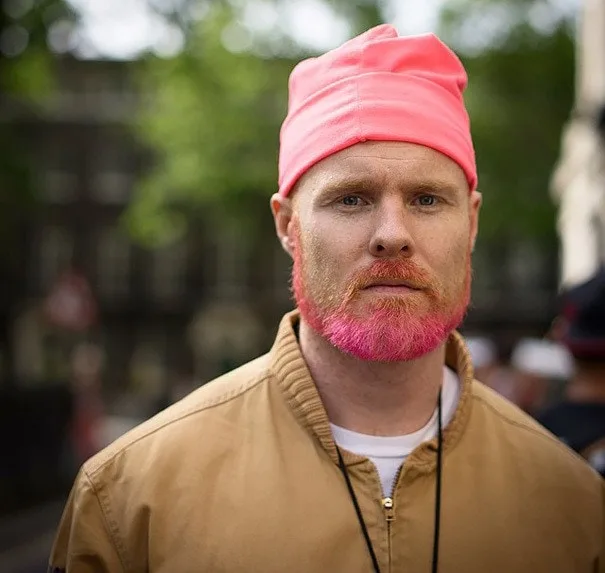
Got a wider or rounder face? A medium stubble beard that hugs the jawline and stays shallow on the cheeks is one of the smartest ways to add definition without adding bulk to the sides. The pink beard color here comes across far more rugged than you’d expect, especially when balanced against neutral or darker accessories.
Pair it with earth tones and let the color do the talking on its own. Because this is a shorter growth, color fades fast with washing. Use a color-depositing beard conditioner between dye sessions to keep the pink punchy and avoid that washed-out, patchy look.
#19: Teal Blue Full Beard with Platinum Blonde Hair
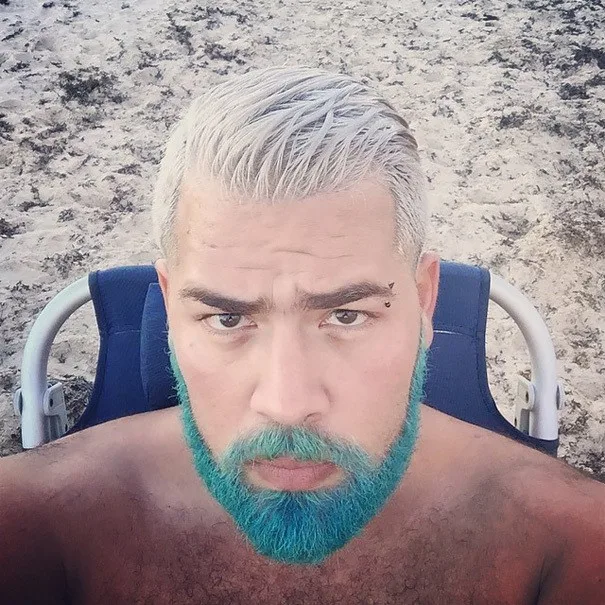
Platinum blonde hair paired with a teal blue full beard is one of those color combos that just locks in together. Both shades sit in the cool tone family, so rather than clashing, they create a unified, almost editorial palette.
To pull this off, both your head hair and beard need to be pre-lightened to a near-white base before the color goes on, otherwise the teal comes across muddy instead of vivid. Maintain the beard with a boar-bristle brush daily to distribute beard oil evenly and keep color-treated strands from going dry and brittle.
#20: Lavender Purple Short Beard with Matching Hair
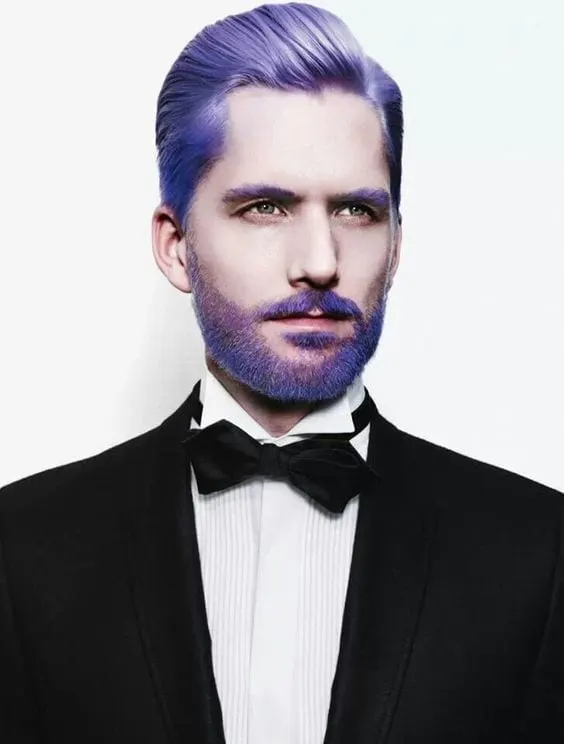
Purple is a surprisingly versatile beard color when it’s applied to a well-groomed, neatly trimmed short beard with a soft cheek line and a clean neckline. Matched to lavender-toned hair swept back in a polished side part, the whole look carries an unexpectedly formal weight, which is exactly what makes it work in an editorial or event setting.
The beard density here is even and full, which helps the color come across as a deliberate choice rather than a novelty. For a uniform lavender result, bleach both beard and hair to the same pale yellow level before toning. Uneven pre-lightening will give you two different shades of purple on the same head, and not in a good way.
#21: Festive Full Beard with Christmas Ornament Decorations
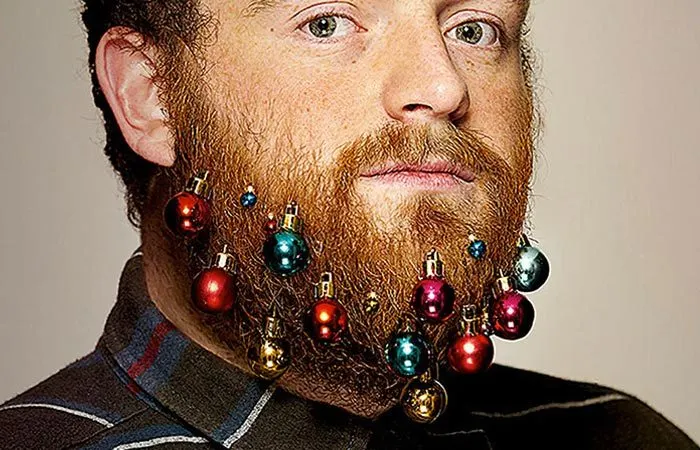
If growing a full, dense beard is your year-round flex, December gives you a legitimate excuse to turn it into a Christmas tree. Mini baubles in red, gold, teal, and blue are clipped directly into the beard here, and the fullness of the growth is what makes it work. A sparse or patchy beard won’t hold the ornaments securely, so this one genuinely rewards the guys who’ve put in the growing time.
No dye required for this look. Just make sure your beard is freshly washed, conditioned, and brushed out so the ornament clips grip the hair without pulling. Remove them carefully to avoid breakage on the strands.
#22: Golden Yellow Dyed Coily Full Beard
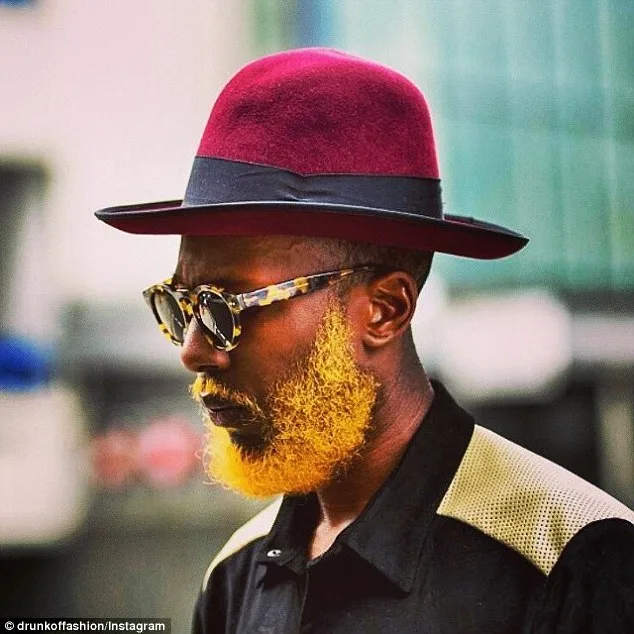
Golden yellow beard color against a deeper skin tone creates a warmth and contrast that almost no other shade can replicate. The coily, textured beard growth here adds natural volume and dimension, making the color look even richer as it catches the light from different angles.
Rather than fighting the natural curl pattern, let it breathe and work with a wide-tooth beard comb to keep it detangled without flattening the texture. Bleach carefully and evenly before applying the golden yellow dye, since coily beard hair tends to have varying porosity levels that can cause the color to absorb unevenly across different sections of the beard.
#23: Vivid Green Dyed Medium Full Beard with High Fade
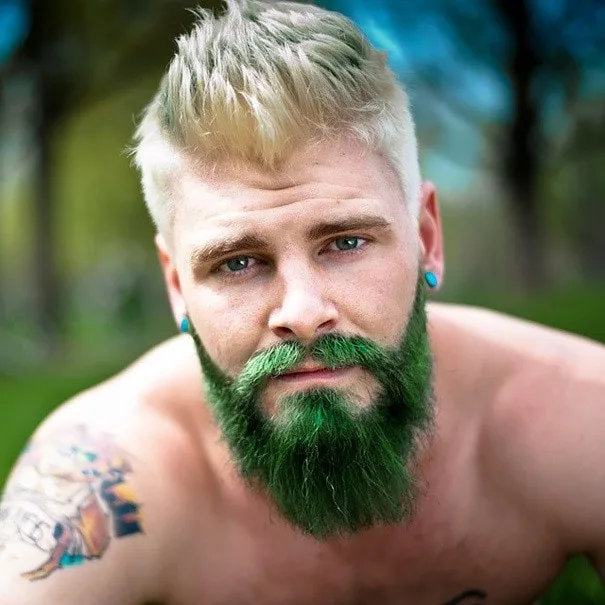
Vivid grass green on a medium full beard with a high fade and a voluminous pompadour on top is a combination that demands attention. The fade creates a seamless blend from the shaved sides into the beard, so the green color appears to emerge organically from the skin rather than sitting on top of it. That fade-to-beard transition needs to be razor-sharp to sell the whole concept.
Because green is one of the hardest colors to achieve on dark beard hair, bleaching to a very light base is non-negotiable before applying the dye. Refresh the color every two to three weeks to prevent it from shifting toward a murky olive tone.
#24: Turquoise Dyed Medium Full Beard with Quiff
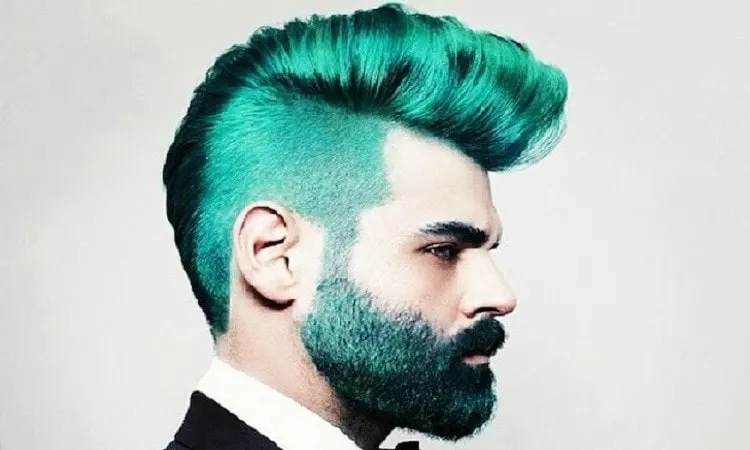
Turquoise hair and a matching medium full beard create a cohesive, head-to-toe color story that feels genuinely modern rather than costume-like. The textured quiff on top adds height and movement, while the beard is kept trimmed and tidy with a clean outline to stop the overall look from getting too unruly.
Maintaining a crisp cheek line and a carved neckline is what separates a polished color look from a messy one. Keep both the hair and beard color in sync by using the same toning product on both. Turquoise fades toward green over time, so schedule a color refresh every few weeks and use a sulfate-free beard wash to slow down the fade between sessions.
Ways to Style Brown Hair with Red Beard
#25: Bright Cyan Blue Medium Full Beard
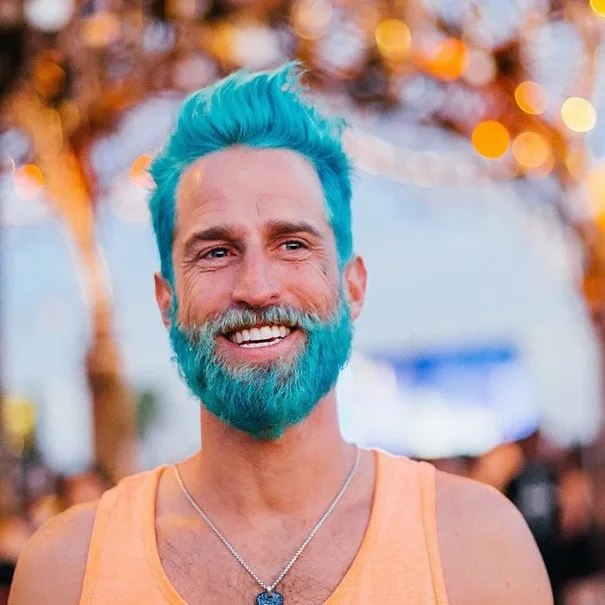
Bright cyan blue on a medium full beard with a gently pointed chin projection is a face-framing move that draws the eye straight to the jawline. On lighter eyes especially, a vivid blue beard creates a remarkable color echo that makes both features pop harder than either would alone.
Trim the perimeter with a detail trimmer to keep a clean outline, and use a straight razor to sharpen the cheek line and neckline for a finish that keeps the color looking precise rather than overgrown. Cyan fades quickly toward a pale, washed-out aqua without proper maintenance.
Lock in the vibrancy with a color-safe beard conditioner after every wash, and avoid hot water during cleansing since it strips color-treated hair noticeably faster than cool water.
You can add color to any beard style that you fancy. Choose your favorite beard style and then transform it into a colorful beard using wonderful hair dyes. If you need to bleach your hair before adding color, you should seek professional help or else you could damage your beautiful beard.