

Many people wonder whether they can lighten their beard with household hydrogen peroxide. Technically, hydrogen peroxide is a bleaching agent, but that does not make straight household peroxide a good choice for facial hair.
Because beard hair sits directly on sensitive facial skin, DIY peroxide methods can lead to irritation, uneven results, dryness, and unnecessary damage. A safer approach is to understand the risks first, then use a product made specifically for facial hair if you want a lighter beard.
Can You Lighten a Beard With Household Peroxide?
Technically, yes. Household 3% hydrogen peroxide can lighten your beard by oxidizing the hair’s pigment. However, you should absolutely not do it.
The Truth: Using liquid household hydrogen peroxide (or mixing it with baking soda) to bleach facial hair is a harmful DIY internet trend. Here is what actually happens if you try it:
- Severe Skin Damage: Facial skin is much thinner and more sensitive than the scalp. Because beard hair sits directly against the skin, saturating it with liquid peroxide can cause chemical burns, severe stinging, blistering, contact dermatitis, and blanching, where the skin temporarily turns stark white due to oxygen bubbles blocking capillary blood flow.
- Terrible, Brassy Color: Household 3% peroxide is chemically too weak, equivalent to a 10-volume developer, to turn a dark beard blonde or white. It simply does not have the lifting power to strip all the melanin. Instead, it will permanently stall out, turning dark beard hair a rusty, brassy orange or yellow.
- Patchy, Uneven Results: Because household peroxide is 97% water, it is a thin, runny liquid that will immediately drip down your face, lips, and neck, making it physically impossible to apply evenly. You will end up with a patchy, permanently stained beard.
- Destroyed Hair: Because 3% peroxide is so weak, people often leave it on for 30 to 60 minutes or repeat it multiple times a week trying to force the hair lighter. This destroys the hair’s structural proteins and disulfide bonds, leaving the beard gummy when wet, brittle when dry, and prone to snapping off at the root.
The Safer Alternative:
A better option is a commercial facial-hair bleaching kit. These formulas come as thick, non-drip creams that stay in place, are made with sensitive facial skin in mind, and are designed to work fast, usually within 8 to 10 minutes.
Hydrogen peroxide is an oxidizing liquid, commonly sold in a 3% solution for first aid use, that can also act as a bleaching agent.
People use peroxide for all kinds of household purposes, but that does not mean every DIY method is a smart idea for facial hair. On the beard, hydrogen peroxide works by oxidizing melanin inside the hair shaft, which is the pigment that gives your beard its natural color.
The Real Dangers of Straight 3% Peroxide on Beard Hair
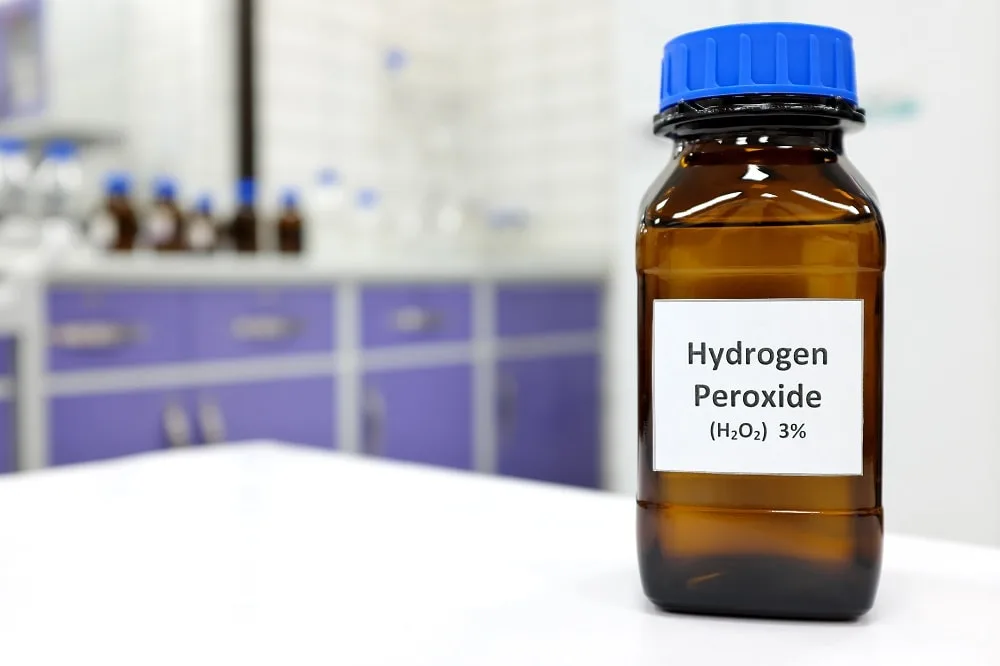
If you want to lighten your beard with peroxide, start with a patch test on a small area of skin and wait 48 hours to check for any reaction. If you notice burning, itching, swelling, or a rash, stop right there.
Do not leave straight 3% hydrogen peroxide on your beard for an hour. Facial skin is far more sensitive than the scalp, and peroxide can cause stinging, irritation, temporary blanching, and even chemical burns if left on too long.
Because liquid 3% peroxide is very thin, it will inevitably drip onto your skin, lips, or neck, creating patchy results and causing irritation along the way. Always opt for a thick, formulated facial-hair bleach cream that stays safely in place.
In most cases, a facial-hair bleach kit or a professional service is a far smarter option than straight household peroxide. If your beard is very dark, expect only modest lift from peroxide alone, plus warm undertones rather than a pale blond or white result.
Why You Should Avoid DIY Baking Soda and Peroxide Pastes
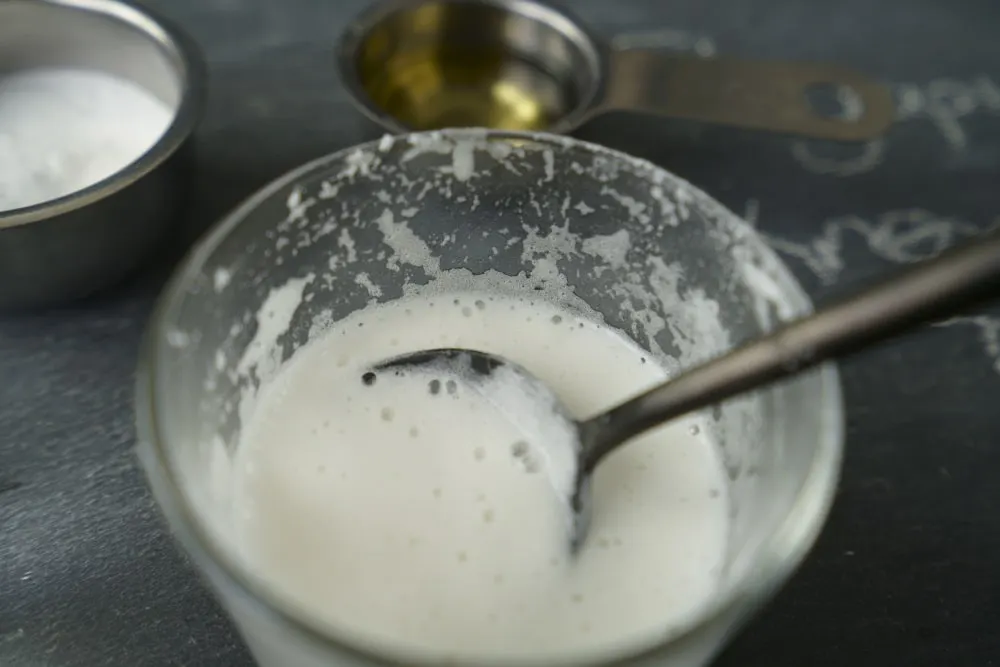
Thinking of mixing baking soda and hydrogen peroxide into a homemade paste? It is still not a good option for your beard. DIY recipes online vary wildly, tend to be messy and uneven, and can make facial irritation significantly worse.
Skip conditioning your beard before bleaching. Unlike scalp hair, facial hair processes differently, and any residue can block even absorption.
If you are using a safe commercial facial bleach kit, follow the instructions closely. Most require you to gently wash the beard with a mild cleanser and cold water, dry it completely, then apply for even processing.
If you want to bleach your beard at home, a product made specifically for facial hair is a far better choice than a homemade baking soda and peroxide paste. Follow the label directions exactly and rinse immediately if you feel strong burning.
The Safe Way to Bleach Your Beard at Home
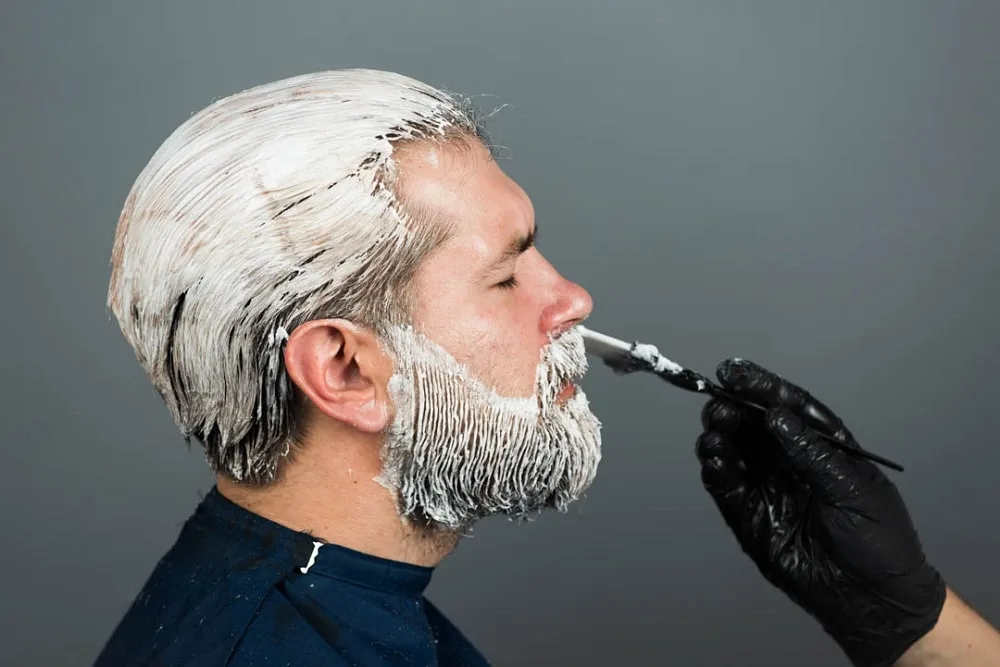
You can lighten your beard at home or in a salon. A professional hairstylist or colorist can typically deliver a more even final color, help match it to your skin tone, and reduce the risk of patchiness or overprocessing.
At home, a facial-hair bleach kit is usually a better option than straight household peroxide or a baking soda mixture because it comes with a measured formula and short timing instructions. High-strength scalp bleach is not ideal for the face unless the product specifically says it is suitable for facial hair.
- Wash & Dry: Gently wash the beard with a mild beard cleanser and cold water to remove surface skin oils, then dry it completely.
- Mix: Follow the kit’s instructions to mix the activating powder and lightening cream in the provided tray.
- Apply: Use a spatula to apply the cream evenly, making sure the roots are covered. Leave it on for 8 to 10 minutes. Do not guess the time. Follow the box exactly.
- Rinse: Rinse thoroughly with cool water, pat dry, and apply a hydrating beard oil to restore moisture.
You could follow a lightening session with toner if your beard turns brassy, but choose the shade carefully. Blue helps neutralize orange tones. Violet is better for yellow or yellow-orange tones. The right toner depends on how light your beard lifted.
If you opt for a safe, commercial at-home beard bleaching kit, here are the general pros and cons:
Pros
- You can lighten your beard at home with a kit designed for facial hair.
- The lightened portion stays lighter until new growth comes in or you dye it darker again.
- It typically costs less to lighten your facial hair at home than at a salon.
Cons
- You may need more than one session to reach the shade you want.
- A toner may be necessary to knock out brassy tones after lifting.
- Some men experience irritation such as redness, itching, rashes, swelling, or skin discoloration.
- Hydrogen peroxide can cause oxidative stress on the skin.
- Bleaching can break down the disulfide bonds in hair proteins, which damages the cuticle and leaves facial hair more fragile and prone to beard breakage.
Precautions
You can reduce some of the dryness caused by bleaching with moisturizing treatments afterward. A good beard conditioner or hydrating beard oil goes a long way here. Massaging coconut or olive oil into your beard is one simple way to restore softness.
Also, cut back on how often you wash with harsh soap or shampoo. You can still rinse with water, but lean on moisturizing beard cleansers more than drying ones. Hydrogen peroxide already strips the hair significantly, so there is no reason to pile on extra dryness.
When applying the treatment, place a thin layer of petroleum jelly on the skin just outside your beard line. Do not smear it onto the beard hair itself, or it may block the lightener and create patchy spots. Drape a towel over your neck and shoulders as well.
Try to keep the solution off as much surrounding skin as possible, and always apply it with gloves. Some skin contact is hard to avoid when bleaching facial hair, so rinse immediately if you feel any marked burning or irritation.
The patch test may feel like an extra step, but it is genuinely worth doing. It lets you check for a bad skin reaction before treating your whole beard.
If you have sensitive skin, active irritation, eczema, or broken skin around the beard area, you may want to skip this treatment entirely and embrace your natural color. Alternatively, you could go darker with beard dye or henna, depending on the look you are after.
How to Regain Natural Beard Color After Bleaching with Hydrogen Peroxide?
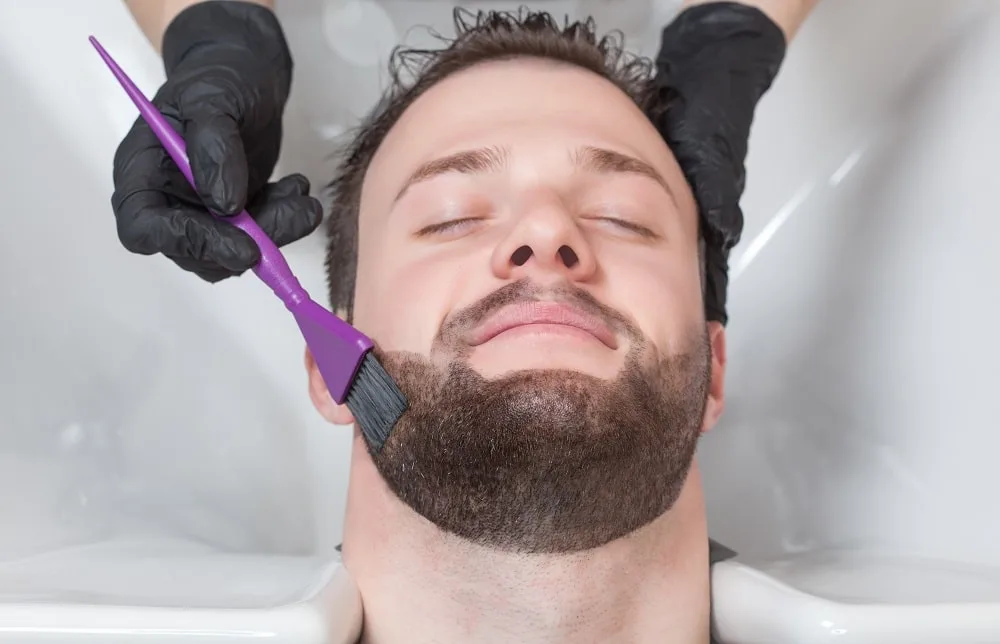
Once you bleach your beard, you will either need to dye it back to its original color with beard dye or cut it off and let it grow back naturally. Hydrogen peroxide does not simply fade away from treated hair because it removes pigment from inside the strand itself.
If shaving is not an option, make sure you genuinely want lighter facial hair before committing. You could let it grow and trim off the blond ends gradually until your natural beard color returns. Or, experiment with temporary beard color products to bridge the gap while the natural color grows back in.