
History doesn’t remember these men for their beards; it remembers them for what they did. But the beards came along for the ride, and some were spectacular.
Long before modern grooming brands and trimmer guards, historical figures wore distinctive facial hair. Here are 30 bearded men represented in photographs, portraits, and sculptures. The artworks show how these men have been depicted; they are not photographic records of their grooming.
Find what suits you: browse all beard styles, mustache styles, or the trimming guide.
Alfred von Tirpitz’s Long Full Beard

Alfred von Tirpitz’s portrait shows a long, broad full beard with a large mustache sweeping out to the sides. The beard extends below the collar, while the mustache gives the upper part of the shape extra width.
This is the sort of beard that proves length does not have to mean chaos. The shape is broad, weighty, and formal, giving the portrait the kind of command only a serious full beard can pull off.
02 of 30Horace Greeley’s Scruffy Gray Chin Curtain

Horace Greeley’s beard sits low on the face, with the jaw and chin doing all the work while the upper lip stays clean. It is scruffy, wiry, and a little uneven, which gives this chin curtain a lot of old-school character.
There is nothing polished about it, and that is exactly the charm. This look feels practical and stubborn, the kind of no-mustache beard that makes a face instantly more memorable.
03 of 30Peter Cooper’s White Wispy Chin Curtain Beard

Peter Cooper takes the chin curtain in a fuller and cleaner direction. The beard wraps the jaw in a soft white frame, with airy texture at the ends that keeps it looking light instead of bulky.
Because the mustache is missing, all the attention goes to the long sweep under the cheeks and chin. It is a great example of how a simple beard shape can still look distinguished when the growth is dense and well settled.
04 of 30John Knox’s Long Pointed Beard in an Engraving

This engraving depicts John Knox with a long beard flowing down his chest. The etched lines suggest wavy texture, and the beard narrows toward the bottom.
Nothing here looks overly shaped or forced. The texture does most of the styling on its own, and that relaxed movement is what gives this full beard its enduring pull.
05 of 30Frederick Douglass’s Coily Gray Medium Full Beard

Frederick Douglass wears a medium full beard with rich coily texture from cheek to chin. The beard is compact compared to the bigger styles on this list, but the density gives it serious power and a strong, sculpted outline.
The mustache blends right into the beard, making the whole shape feel unified and solid. It is a sharp reminder that texture alone can turn a classic full beard into something unforgettable.
06 of 30Otto the Great’s Auburn Medium Spade Beard

Otto the Great’s beard narrows into a clean spade shape, with the length focused at the center and the mustache sweeping outward above it. The auburn tone and pointed finish give the whole style a regal, almost storybook feel.
It is not the fullest beard here, but it does not need to be. The long taper and broad mustache create all the drama, making this a strong example of how a shaped medium beard can still look grand.
07 of 30King George V’s Short Pointed Full Beard

King George V’s portrait shows a compact full beard with a pointed chin and a prominent swept mustache. The cheeks are closely shaped, while the chin projects farther.
This is formal grooming at its best. It has the fullness of a real beard, but the tighter shape keeps it clean, polished, and perfectly suited to a uniformed portrait.
08 of 30Franz Joseph I’s White Friendly Mutton Chops

Franz Joseph I wears friendly mutton chops with serious width. The facial hair pushes outward from the cheeks and flows right into a thick mustache, while the chin stays mostly clear and lets the sides do all the talking.
It is a bold look and a surprisingly elegant one too. The shape makes the face appear broader and more commanding, which is exactly why this style still stands out so strongly in old portraits.
09 of 30Ambrose Burnside’s Classic Hulihee Sideburns

Ambrose Burnside’s sideburns are so famous they almost feel bigger than the man himself. They run thick from the temples down the cheeks and connect straight into a broad mustache, leaving the chin completely bare.
The effect is dramatic, unmistakable, and just a little wild in the best way. This is facial hair with a point of view, and it still looks like one of the boldest statements ever worn on a human face.
10 of 30Ernest Hemingway’s White Short Boxed Beard

Ernest Hemingway’s short boxed beard is rugged without ever looking careless. The white growth stays close to the face, with enough fullness on the cheeks and chin to feel masculine, solid, and lived in.
What makes it work is the finish. It is not razor sharp and it is not overly styled, but that relaxed edge gives the beard its toughness and makes the whole look feel naturally real.
11 of 30Claude Debussy’s Short Pointed Full Beard

Claude Debussy’s portrait shows a dark beard kept close through the cheeks and longer at the chin. The mustache connects to the beard, and the lower edge tapers to a point.
It is a smaller beard than many others on this list, but it has excellent balance. The tighter length keeps the face sharp, while the deeper color gives the whole style extra weight and mood.
12 of 30Nikola Pašić’s Long White Tapered Full Beard

Nikola Pašić wears a long white beard that starts full through the jaw and then narrows into a clean tapered finish. The connected mustache keeps the whole thing flowing as one shape, which makes the beard look calm, stately, and very deliberate.
There is a lot of length here, but the taper stops it from feeling too heavy. It is a classic example of how an older full beard can look dignified when the bulk is guided into a clear point.
13 of 30Edward III’s Long White Natural Full Beard

Edward III’s portrait shows a long white beard drawn into a narrow central point, with the cheeks kept lighter and the length focused under the chin. The result feels regal but restrained, more elegant than wild.
It is a simple natural style, yet the length gives it real authority. Paired with the crown and robes, that pale tapered beard helps turn the whole image into exactly what a royal portrait should be: calm, formal, and unmistakable.
14 of 30Sophocles’ Curly Dense Full Beard
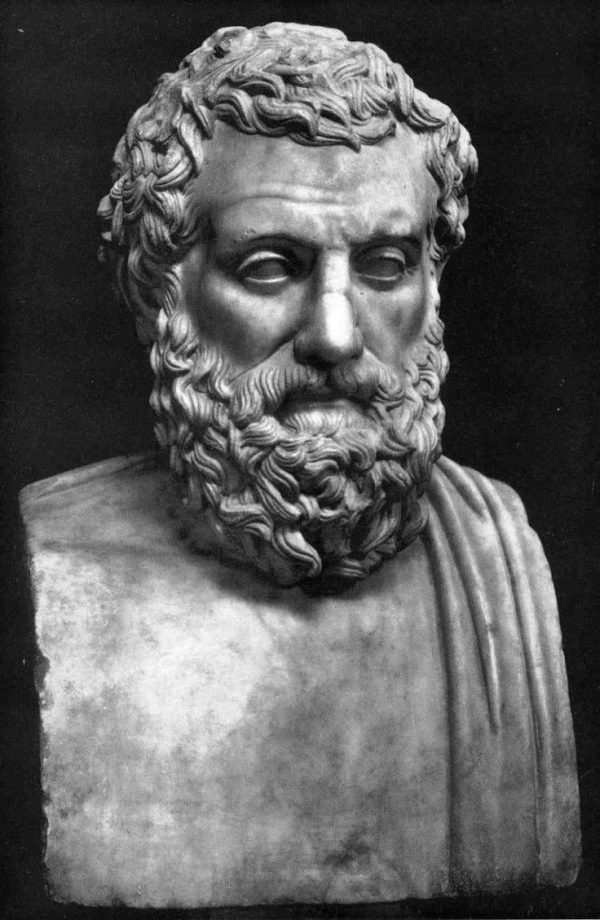
Sophocles is one of the most celebrated ancient Greek playwrights, well known for his enormous contribution to literature. He wrote more than 120 plays, though only a handful survive today.
The sculpture depicts him with a dense, curled full beard. It is an artistic representation, not direct evidence of the exact beard he wore.
15 of 30Karl Marx’s Broad Bushy Full Beard

Karl Marx was a true all-rounder: economist, political theorist, philosopher, historian, socialist, and then some. And like so many towering historical figures, he was absolutely, unapologetically bearded.
If you need inspiration to conquer the world with a full beard on your face, Marx is your guy.
16 of 30Charles Darwin’s Long White Natural Full Beard

Charles Darwin helped develop the theory of evolution by natural selection, a central idea in biology.
In this photograph, his white full beard spreads broadly below the chin and falls in a rounded outline. The mustache blends into the beard above it.
17 of 30Leonardo da Vinci’s Long Flowing Straight Beard

Say the name and most people immediately think of the Mona Lisa. But Leonardo da Vinci was a true Renaissance polymath: painter, scientist, architect, writer, engineer, and so much more.
This portrait depicts him with a long, flowing straight beard extending well below the chin.
18 of 30Abraham Lincoln’s Iconic Chin Curtain Beard

No list like this is complete without Abraham Lincoln. He was the first U.S. president to wear a beard in office, and his style has a proper name: the chin curtain, a no-mustache beard that frames the jawline and chin.
Lincoln wore it, the world noticed, and the style has carried serious weight ever since.
19 of 30Michelangelo’s Short Curly Full Beard

Michelangelo was an Italian sculptor, painter, architect, and poet of the High Renaissance, born in Caprese, Tuscany, and exerting a towering influence on the development of Western art.
His artistic range was so extraordinary that he was considered the direct rival of Leonardo da Vinci. His most iconic works include the Statue of David, the Sistine Chapel ceiling, and St. Peter’s Basilica, among countless others.
The engraving depicts him with a compact, curly full beard and a mustache that blends into the sides.
20 of 30Plato’s Full Beard Marble Bust

Plato was an Athenian philosopher from the Classical period in Ancient Greece. He founded the Academy, an influential school of philosophy in Athens.
He ranks among the most important figures in the history of philosophy, standing alongside his teacher Socrates and his most celebrated student, Aristotle.
The surviving marble busts give him a full beard, and that look became the visual shorthand for the Greek philosopher.
21 of 30Sigmund Freud’s White Short Boxed Beard

Sigmund Freud was an Austrian neurologist and the founder of psychoanalysis, a clinical method for treating psychopathology.
While psychoanalysis has declined as a mainstream diagnostic practice, Freud’s work remains heavily cited and continues to fuel fiercely contested debates across psychology, psychiatry, and psychotherapy.
The image shows a short white beard and a full mustache. It appears to depict a display figure, so it should not be read as a close-up photograph of Freud himself.
22 of 30Confucius’s Long Tapered Pointed Beard

Confucius was a Chinese philosopher and politician from the Spring and Autumn period.
Traditionally considered the epitome of Chinese sages, he is widely regarded as one of the most important and influential individuals in human history. His teachings formed the foundations of East Asian culture and society, a legacy that still resonates powerfully across the region today.
Statues and paintings give him a long, gray beard tapered to a soft point, the sage’s silhouette that East Asian art has repeated for centuries.
23 of 30Aristotle’s Medium Full Beard Marble Bust

Aristotle was a Greek philosopher and polymath from Ancient Greece during the Classical period. He founded the Lyceum, a school devoted to philosophy and the Aristotelian tradition.
His work spans physics, biology, logic, ethics, theater, and far beyond. It is largely through his writings that the West inherited its intellectual methods of inquiry.
The bust above depicts a short, curled full beard with a compact outline beneath the chin.
24 of 30Pythagoras’s Short Natural Full Beard

Pythagoras, another towering Greek philosopher, made contributions spanning politics and religious teachings, and his influence shaped both Plato and Aristotle and, through them, the entire arc of Western philosophy.
His name is associated with the Pythagorean theorem, although the evidence for his personal mathematical discoveries is uncertain.
This engraving depicts him with a curly full beard and a connected mustache.
25 of 30Galileo Galilei’s Salt-and-Pepper Wavy Medium Full Beard

This painting depicts Galileo with a full beard that falls below the chin in a gently tapered outline. The darker and lighter tones give the beard visible texture.
26 of 30Henry David Thoreau’s Chin Curtain Beard

Thoreau wore a classic chin curtain, with fullness framing the jawline and cheeks but a clean-shaven upper lip. The beard followed the natural contours of his face, perfectly suited to a man who spent his life in quiet, deliberate contemplation.
27 of 30Lord Kelvin’s Rounded Full Beard

Lord Kelvin’s portrait shows a white, rounded full beard and a connected mustache. The beard sits around the collar rather than extending down the chest.
28 of 30Rabindranath Tagore’s Long White Full Beard

Tagore’s portrait shows a long, flowing white beard and a connected mustache. The photograph shows its length and texture, but cannot establish a year-long growth period.
Duck Dynasty Hunter’s Photos Without Beard
29 of 30William Shakespeare’s Pointed Beard

This painted portrait depicts Shakespeare with a pointed chin beard, short hair along the jaw, and an upturned mustache. The fuller jaw coverage makes “pointed beard” a clearer description than calling it a classic Van Dyke.
30 of 30Vladimir Lenin’s Classic Van Dyke Beard

The famous Soviet leader Vladimir Ilyich Ulyanov, who revolutionized the history of Russia, wore a sharp Van Dyke beard. His look is a textbook example of the classic Van Dyke, which is worth studying if you have ever been confused about the Van Dyke vs. goatee debate.
Historical photographs and artworks offer plenty of beard-shape inspiration. Choose a length and outline that suit your own growth rather than expecting to reproduce every portrait exactly.