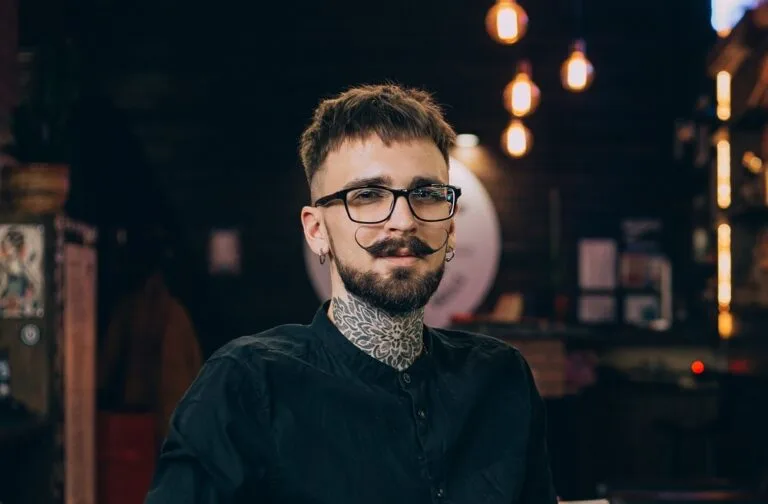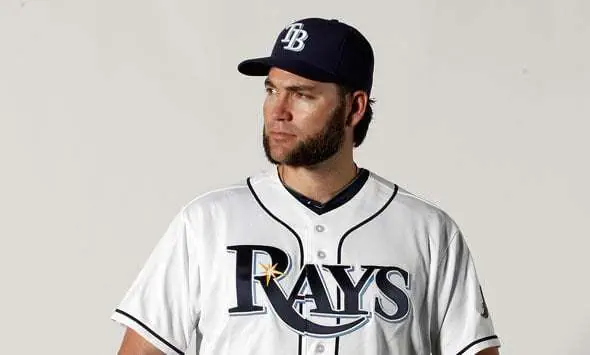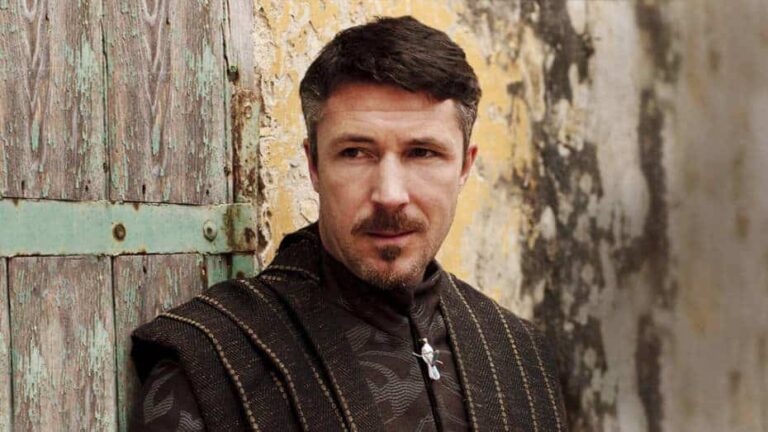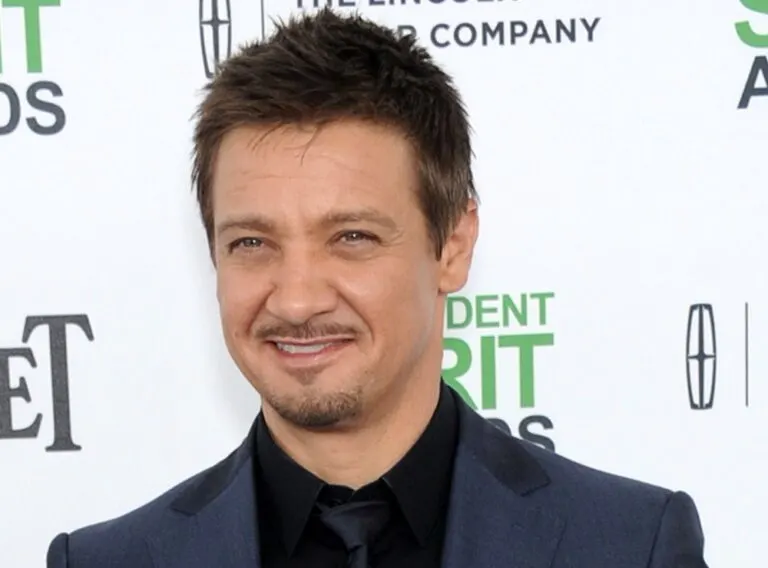
The V-Shape Beard is a unique style that goes beyond trends and has its own special place among different beard styles. As the name suggests, the beard is shaped to create a ‘V’ point at the chin. This distinct formation contributes to a look of refined ruggedness, offering a perfect balance of classic sophistication and modern edge.
In this comprehensive guide, we will provide you with all the necessary information about growing and maintaining a V-shaped beard. We’ll cover different styles of V-shaped beards, tips on growing one, and techniques for proper maintenance.
Features of a V-Shape Beard
The V-Shape Beard stands apart from the crowd of generic facial hair arrangements. More than just a grooming choice, it’s a precision-cut statement that signals attention to detail and a sharp sense of personal style.
Defining Characteristics
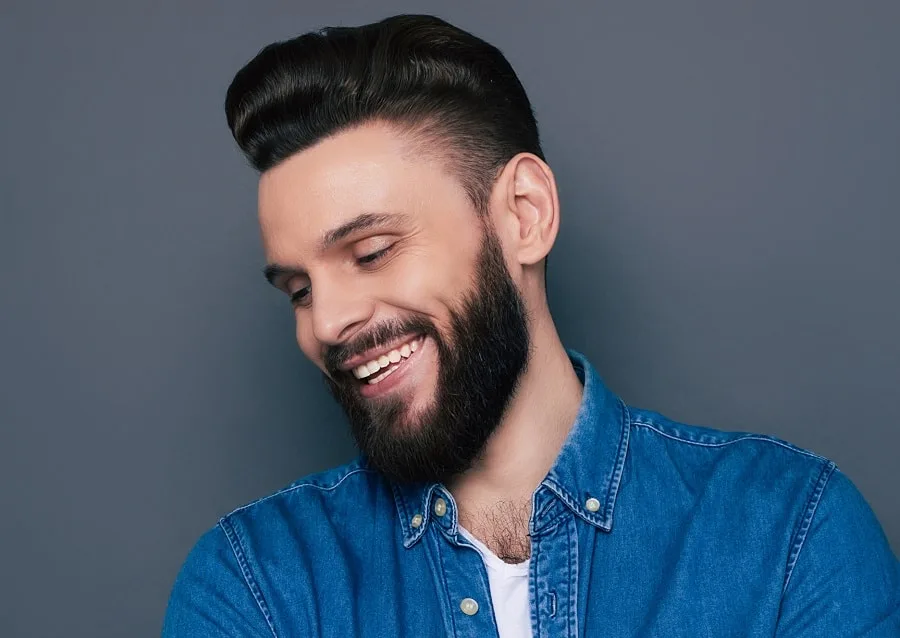
A V-Shape Beard is defined by clean, carved cheek lines that taper symmetrically down to a pointed chin apex, forming an unmistakable ‘V’ in the beard outline. It’s typically paired with a mustache, and the hair is kept at an even, well-groomed length for a polished finish.
- A V-shaped beard is not always full. The key defining characteristic is that it is pointed at the chin.
- The beard is typically kept at a consistent length throughout.
- It can be styled in a variety of ways, from short and stubble-like to long and full.
Suitable Face Shapes
V-Shape beard styles can be modified according to face shapes. To give the illusion of a more symmetrical face shape, there are some general rules for choosing beard styles for different face shapes. If you are not sure what face shape you have, you can use a simple online face shape quiz to find out.
Once you know your face shape, consider these tips for choosing your V shape beard style.
- Oval face shape: If you have an oval face shape, you can choose any V-shaped beard style that you like. The V-shaped beard will complement your natural beauty.
- Round face shape: Round faces may sometimes struggle with the V-Shape beard. The beard may emphasize the roundness. For a round face, choose a V-shaped beard style that has a longer, more pointed chin. This will help to create the illusion of a longer, more angular face.
- Square face shape: If you have a square face shape, you may want to choose a V-shaped beard style that has a softer, more rounded chin. This will help to balance out the strong angles of your face.
- Heart face shape: A regular V-shaped beard can make the forehead look wider and the chin look smaller. Men with heart-shaped faces should choose a V-shaped beard that is fuller on the chin and narrower on the cheeks.
V Shape Beard Styles
The V-Shape can be implemented in different beard styles. You can try a V-shape on different types of beards. Check out the popular V-shape beard styles below.
1. Classic V-Shape Full Beard
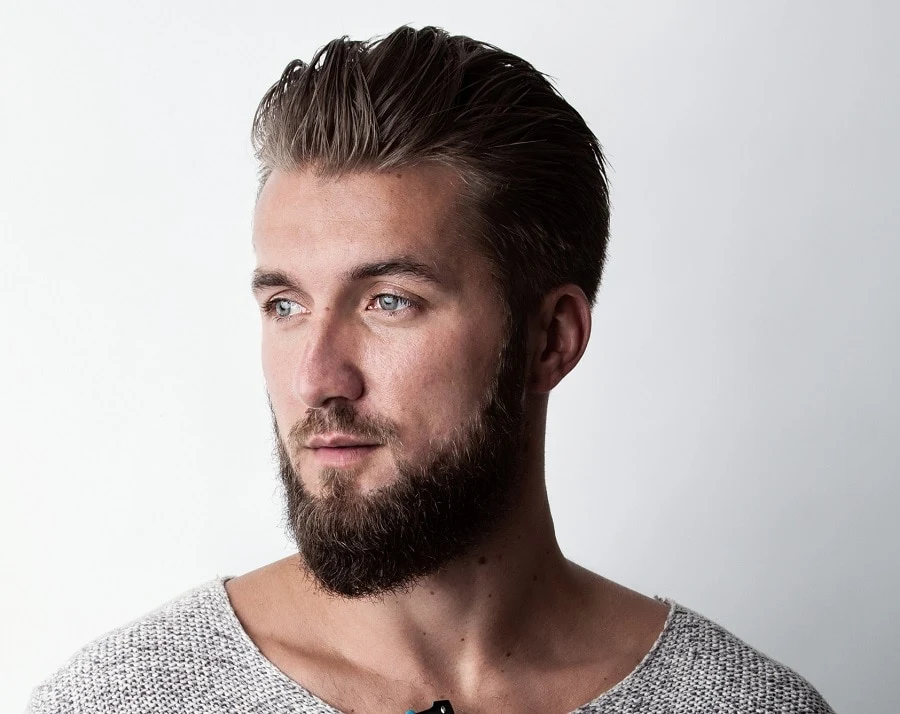
When your goal is a jawline that commands a room, this is your blueprint. Every element of the beard, from the sideburns through the cheeks down to the chin apex, is grown to a uniform length and then sculpted into one seamless, symmetrical V.
Use a detail trimmer to carve the cheek line and neckline with precision, and finish with a straight razor to keep the perimeter razor-sharp. Because the outline does all the heavy lifting here, beard symmetry is non-negotiable.
Do a symmetry check from the front profile before you finalize any lines, and apply a light beard balm to keep the fullness looking dense and controlled throughout the day.
2. Ducktail V-Shape Beard
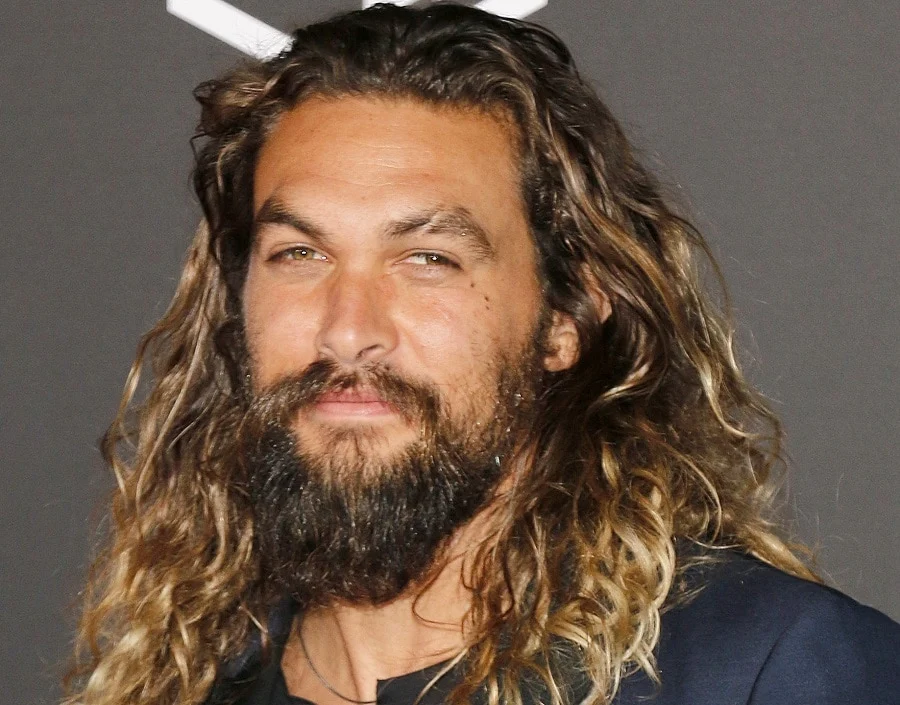
If a standard V-shape feels too contained, let the chin projection do the talking. The ducktail takes the V-shape concept and pushes it further, allowing the chin hair to grow noticeably longer than the sides, which are trimmed back to maintain a clean taper toward that signature pointed tip.
Work scissor-over-comb on the sides to gradually reduce bulk as you move toward the jaw, keeping the weight concentrated at the chin point. A boar-bristle brush and a dab of beard butter will train the hair downward and keep that ducktail sitting tight and defined rather than fanning out.
3. Goatee with V-Shape
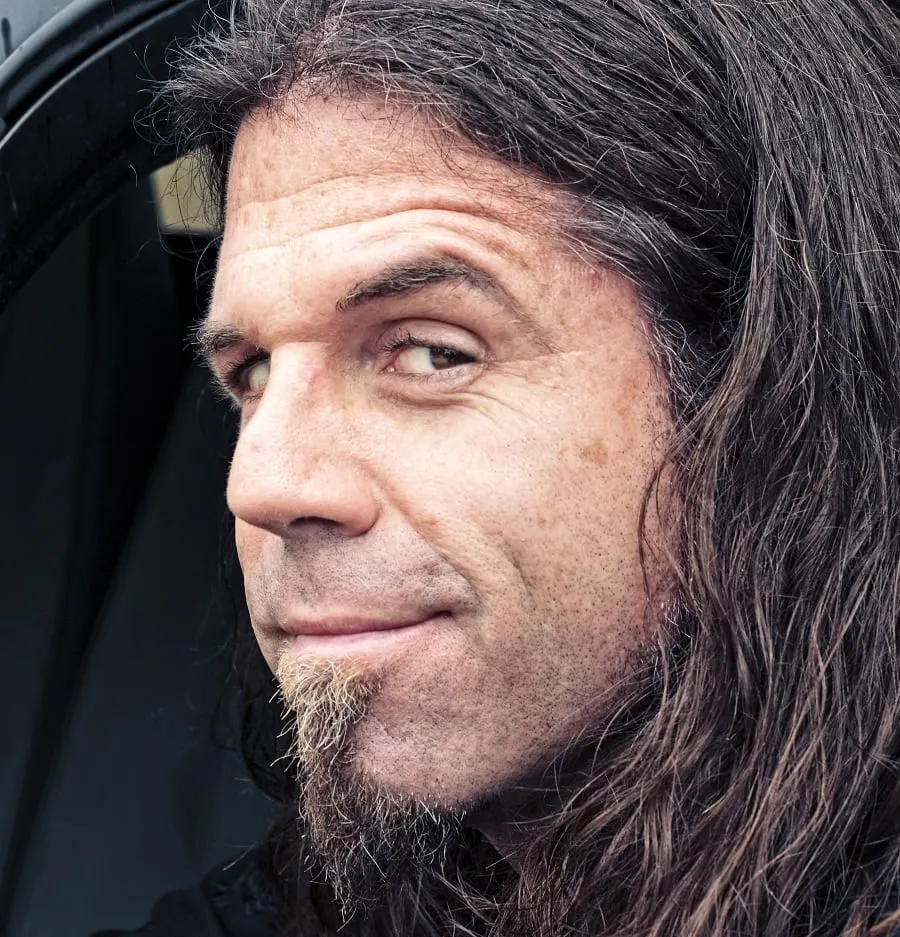
Sparse growth on the cheeks? Stop fighting it and lean into a V-shape goatee instead. By concentrating all the density around the chin and mouth and keeping the cheeks either clean-shaven or at a bare five o’clock shadow, you direct every eye straight to the chin point, manufacturing the illusion of a longer, more angular face.
Keep the goatee outline tight with a foil shaver on the cheeks and a detailer along the perimeter. Round faces benefit enormously from this setup, since the elongated chin projection visually stretches the face downward and narrows the overall appearance.
4. Van Dyke V-Shape Beard
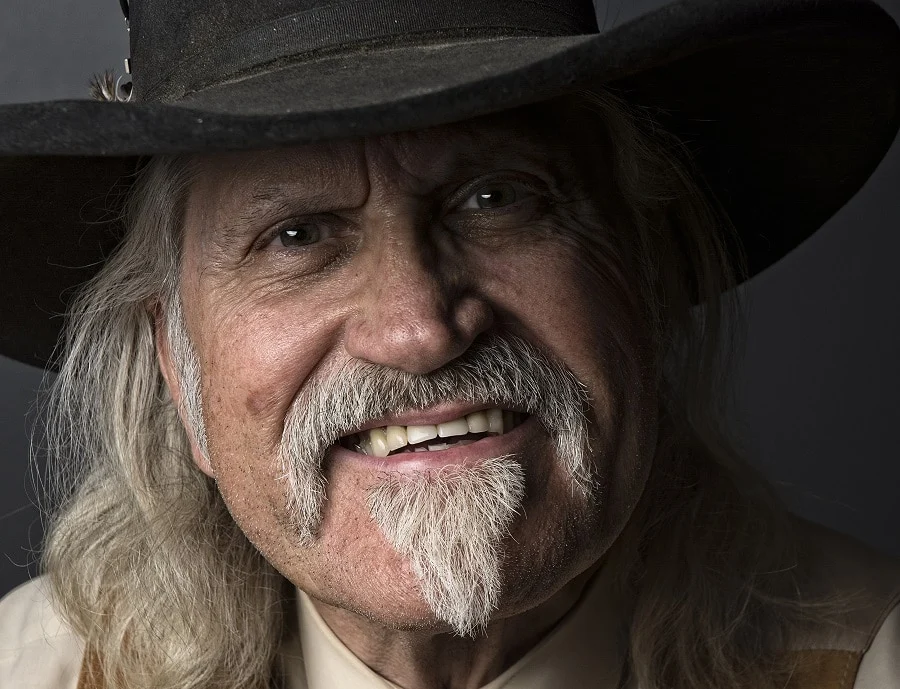
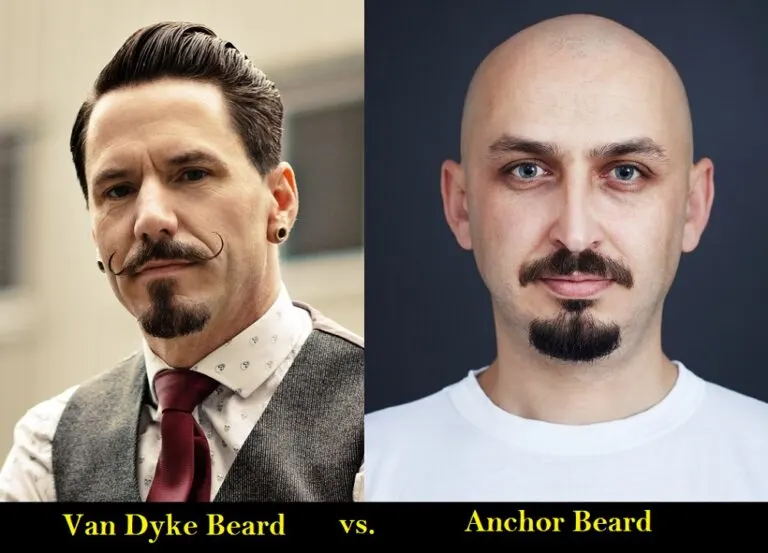
Few beard styles carry as much artistic weight as the Van Dyke. The disconnected goatee and mustache create two separate focal points on the face, with the pointed chin beard forming a crisp V that draws the eye downward and elongates the front profile.
Clean-shaven cheeks are mandatory here; any stubble on the sides dilutes the whole effect. Use a straight razor or shavette to maintain razor-clean cheeks and keep the mustache disconnect sharp.
A small amount of mustache wax on the ends will add just enough definition to balance the pointed goatee below without competing with it.
5. Hollywoodian V-Shape Beard
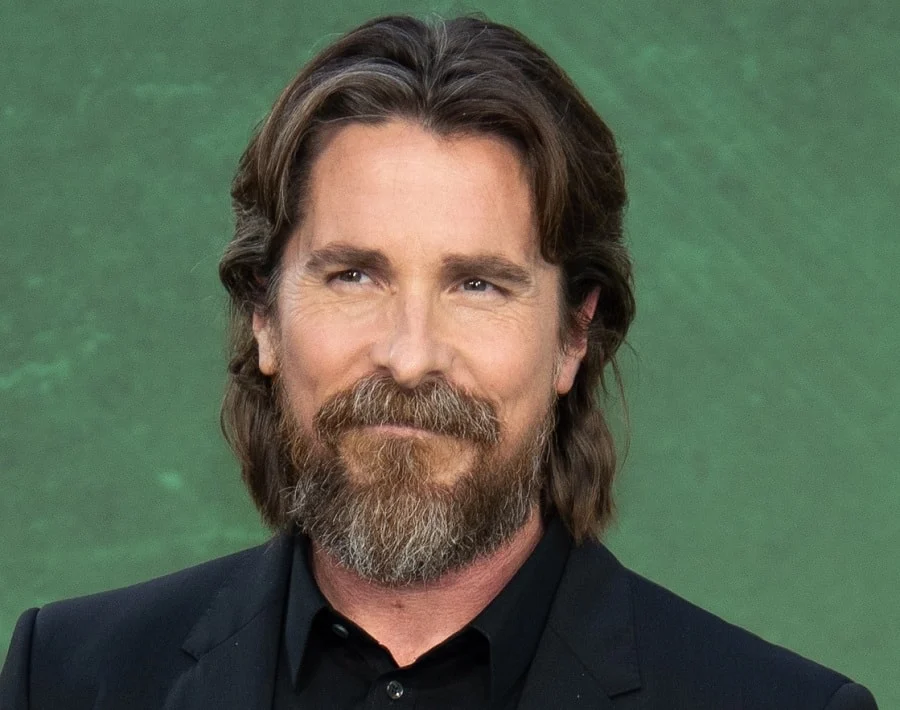
The Hollywoodian is built for guys whose sideburn growth is sparse or nonexistent. It runs a full beard along the jawline and chin while completely disconnecting from the sideburns, so patchy cheek connectors simply vanish from the picture. Keep the mustache connected and let the chin projection do all the heavy lifting.
Use a detail trimmer to carve a razor-clean perimeter along the cheek line and neckline, and that disconnected gap becomes a design feature rather than a flaw.
6. Verdi V-Shape Beard
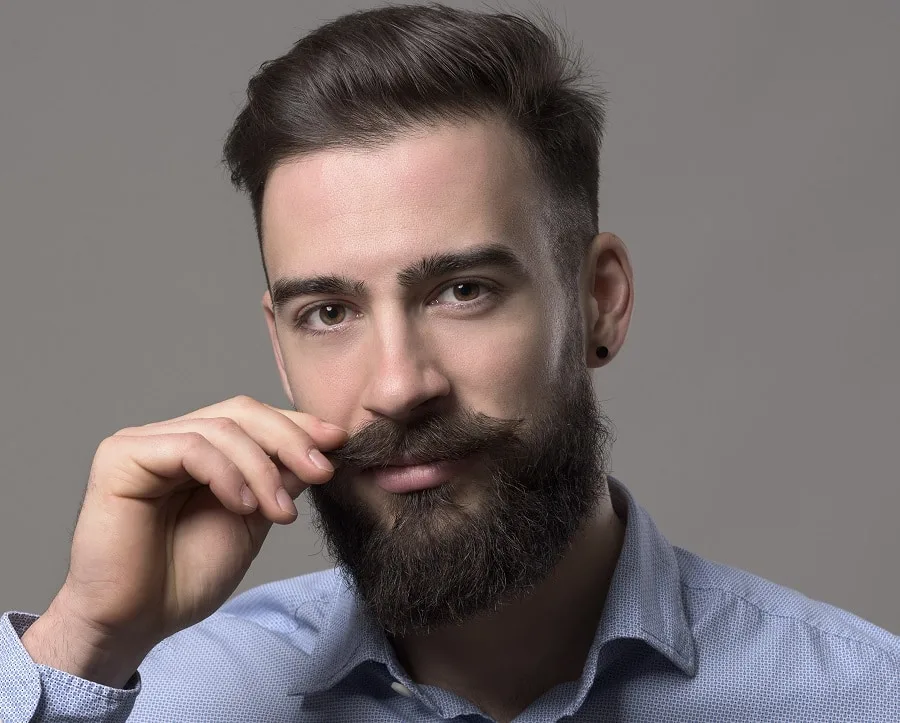
Named after the 19th-century composer Giuseppe Verdi, this style pairs a short full beard (kept to around 10 cm with a gently rounded bottom and only the softest taper toward the chin) with a bold, groomed mustache that commands its own attention.
If your beard grows in coily or wiry hair, work a generous amount of beard balm through damp hair and blow-dry downward to tame the bulk and coax the V-shape into a clean, pointed finish. Trim the mustache separately with scissors to keep it from overhanging the lip.
7. Anchor V-Shape Beard
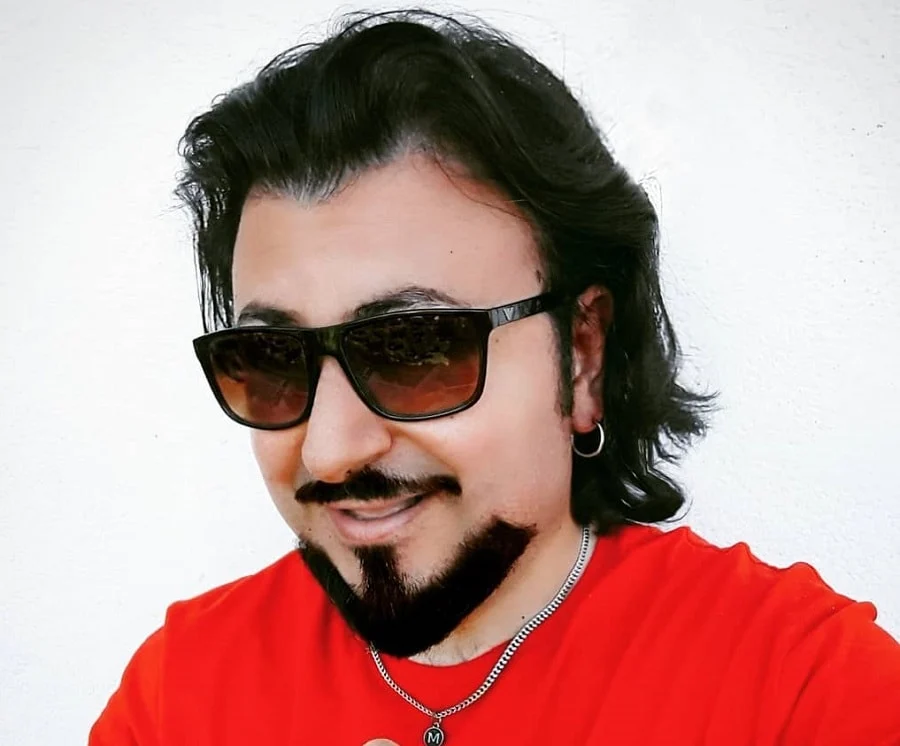
Precision is everything here. The anchor beard traces a narrow line of hair along the jawline that converges into a pointed chin beard, paired with a pencil-thin mustache to complete the nautical look. Use a shavette or straight razor to carve the outline, keeping the cheek line high and the perimeter razor-clean.
Men with oblong or diamond face shapes will find this style naturally elongates the chin apex and draws the eye downward for a seriously defined front profile.
8. Balbo V-Shape Beard
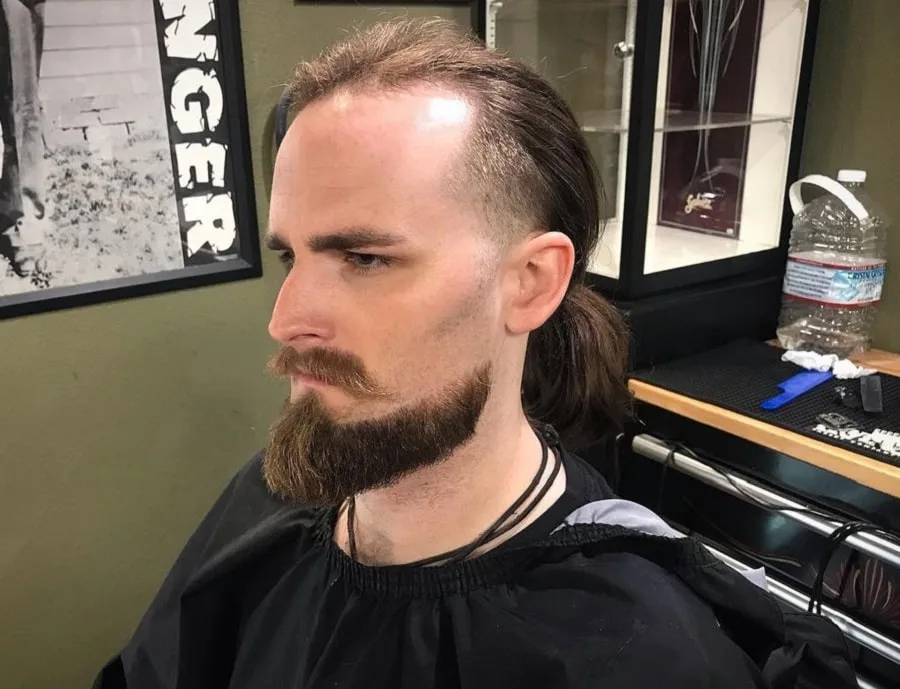
Where the anchor stays thin and graphic, the Balbo goes fuller through the chin and soul patch zone while keeping the mustache completely disconnected from the beard. Named after Italian aviator Italo Balbo, it suits men with narrower chins because the added bulk at the chin base creates the illusion of a wider, more projected jaw.
Sculpt the V at the chin point with a detailer, and use transparent shave gel when outlining the mustache disconnect so you can see exactly where you’re cutting.
9. French Fork V-Shape Beard
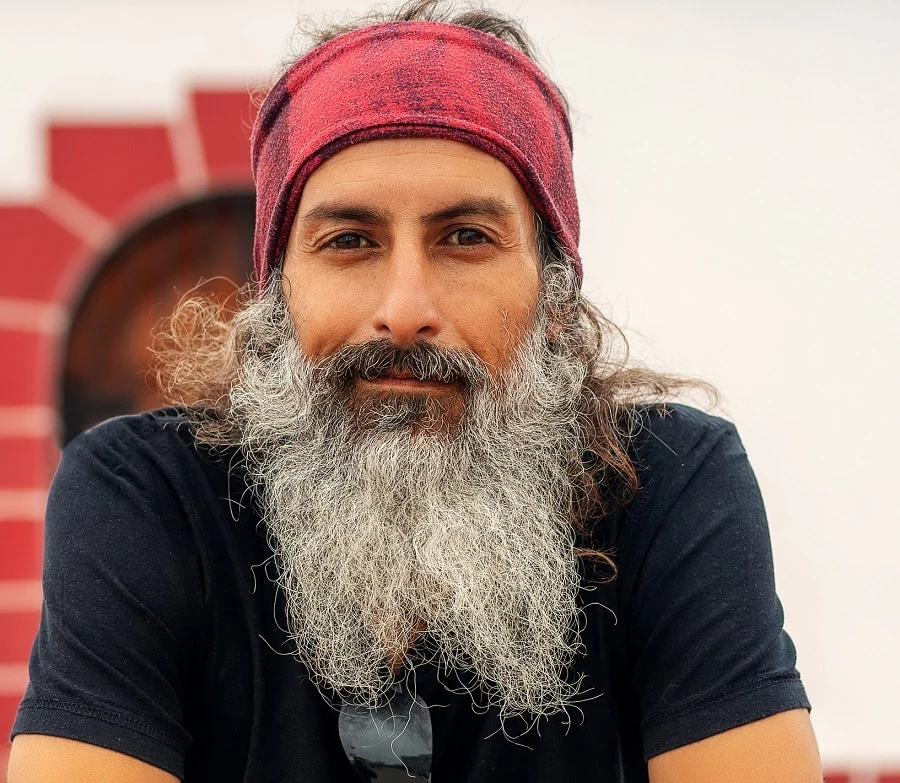
Got a square or round face you want to visually elongate? The French fork splits a full beard down the center of the chin into two distinct prongs, creating a forked V that pulls the eye downward and adds serious length to the face.
Let the chin hair grow out past your usual trim line before attempting the split, then use scissors to carve the center channel. Finish with a light hold beard balm to keep each fork lying flat and separated without looking stiff.
10. Chin Strap V-Shape Beard
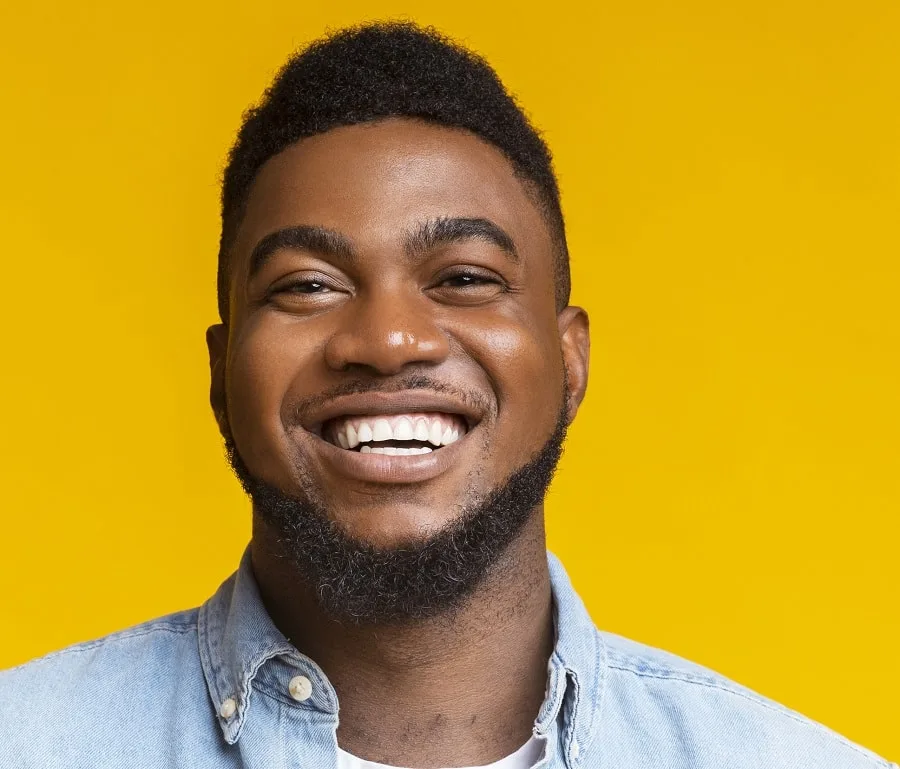
Rather than filling in the full face, this style runs a thin line of hair from sideburn to sideburn along the jawline, then lets the chin hair grow out and taper into a V. It’s a modern, graphic rework of the classic chin strap, and it works brilliantly for men who want to manufacture the appearance of a stronger mandible without dense growth.
Keep the strap width consistent using a clipper guard, and hit the edges with a foil shaver for a razor-level finish along the perimeter.
Celebrities with V-Shape Beard
In the world of glitz and glamour, some renowned celebrities with beards experiment with various facial hairstyles. From Hollywood to the world of sports, some of the most stylish men have chosen the V-Shape Beard, popularizing it with their own twists. Here’s a glimpse at a few of them:
11. Brad Pitt’s Blonde French Fork V-Shape Beard
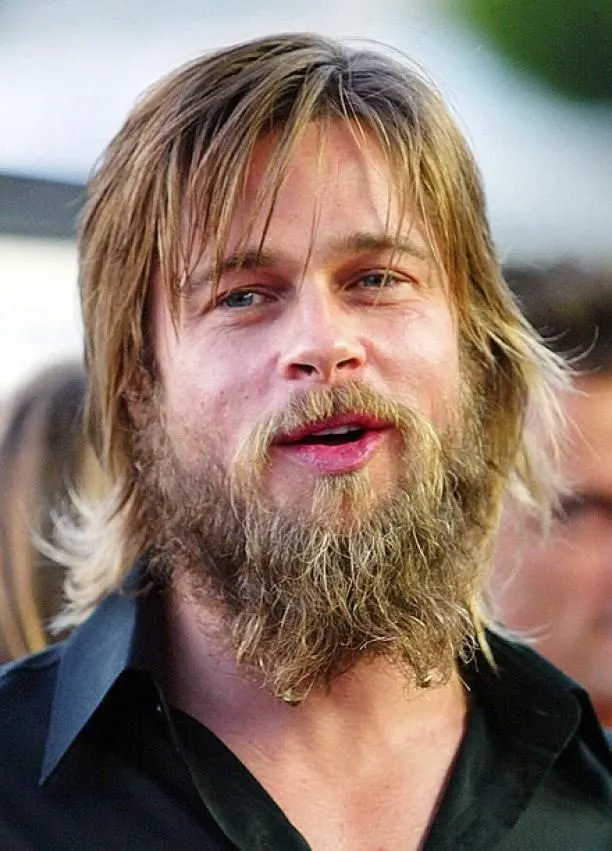
Brad Pitt’s beard in this shot is a textbook medium full beard with a natural French fork split at the chin, grown out long enough that the two prongs separate on their own. Paired with his square face shape, that forked chin projection pulls the face downward and counterbalances a wide jawline beautifully.
To replicate it, resist over-trimming the chin bulk, let the center channel form naturally, and use a boar-bristle brush daily to train the growth direction away from the middle.
12. James Harden’s Dense Power V-Shape Beard
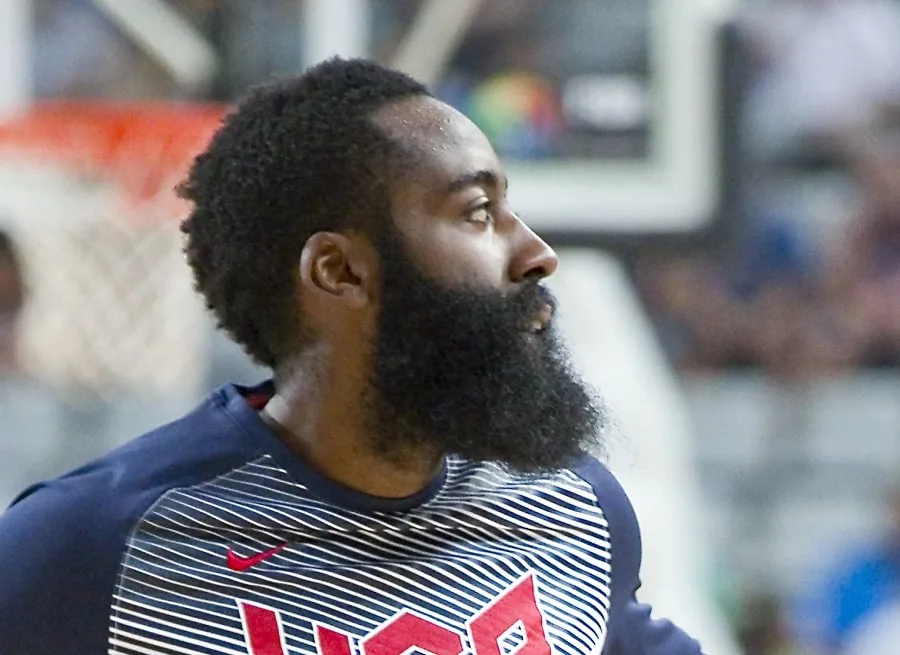
Harden’s beard is the definition of a power beard: thick, coily, and built for maximum visual impact. Even within all that density, the V-shape is there, with the beard tapering from wide cheeks down to a rounded but pointed chin apex.
Managing this much bulk requires regular debulking sessions with a clipper-over-comb technique to remove weight from the interior without disturbing the outer perimeter. Follow up with beard oil daily to keep coily strands moisturized and reduce beardruff.
13. Will Smith’s Groomed V-Shape Goatee
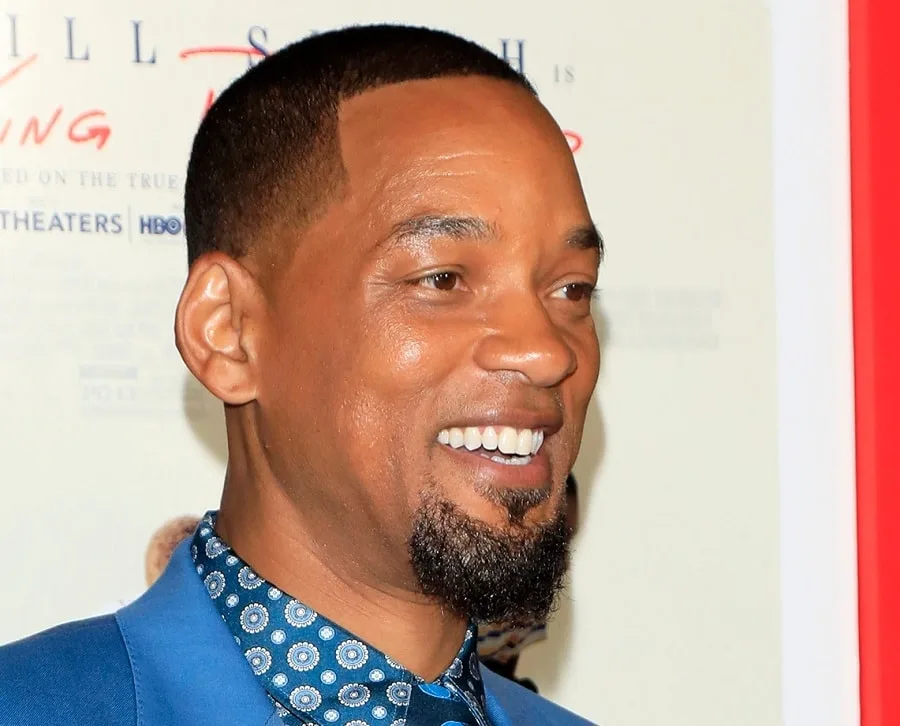
Will Smith keeps his V-shape tight and corporate: a close-cropped goatee with a precisely carved chin point and clean, hard cheek lines that frame his oval face without adding unnecessary width. Hit this look with a detail trimmer set to a low guard, then refine the outline with a straight razor pass and calm the skin with an alum block for that polished, red-carpet finish.
Men with oval faces get a natural advantage here since the face shape accommodates the narrow V without needing extra width on the sides.
14. Zac Efron’s Short Boxed V-Shape Beard
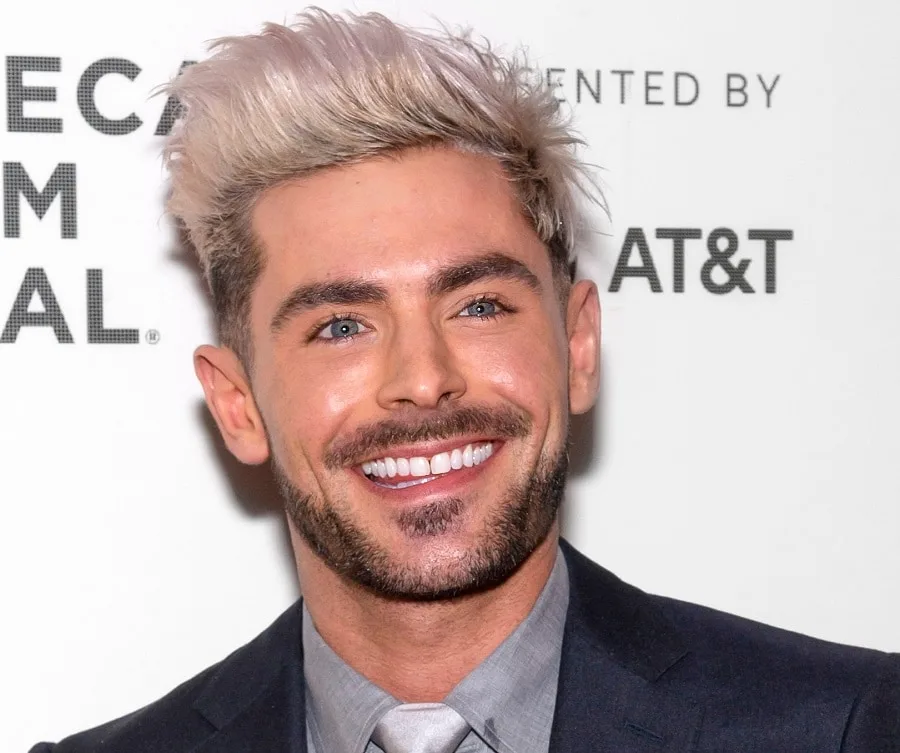
Efron wears a short, neatly sculpted corporate beard where the sides stay full but the chin tapers into a clean V, adding a mature sharpness to what could otherwise read as a boyish face. Run a mid-length clipper guard across the cheeks to keep the density even, then use freehand detailer work to carve the chin taper.
The contrast between the fuller sides and the narrowing chin point is what gives this style its jaw-emphasizing effect on an oval face shape.
15. Ryan Reynolds’ Medium V-Shape Beard
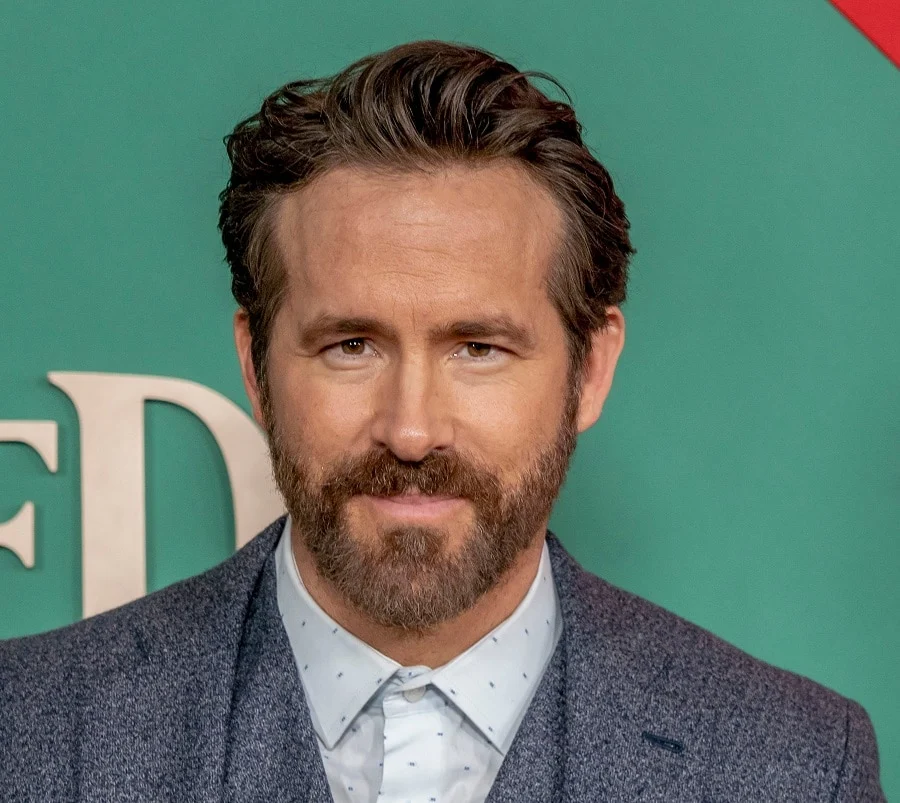
Reynolds sports a medium-length short full beard with a naturally soft cheek line and a chin that gently converges to a V without going too geometric. On a square face, this softer approach to the V works better than a hard carved point because it refines the gonial angle without making the jaw look wider.
Maintain it with scissor-over-comb to keep the bulk even, and resist the urge to drop the neckline too low or you’ll lose the structured shape that makes this style so wearable.
16. Chris Hemsworth’s Heavy Stubble V-Shape Beard

Hemsworth keeps his V-shape in heavy stubble territory, dense enough to read as a short beard but cropped close enough to stay rugged rather than overgrown. On a square face, this length is the sweet spot because it softens the gonial angle while the chin taper still draws the eye to a central point.
Maintain it with a clipper set to a 3 or 4 guard across the face, then use a detailer freehand to carve a subtle V at the chin without making the outline feel too constructed.
17. Ben Affleck’s Pointed V-Shape Beard
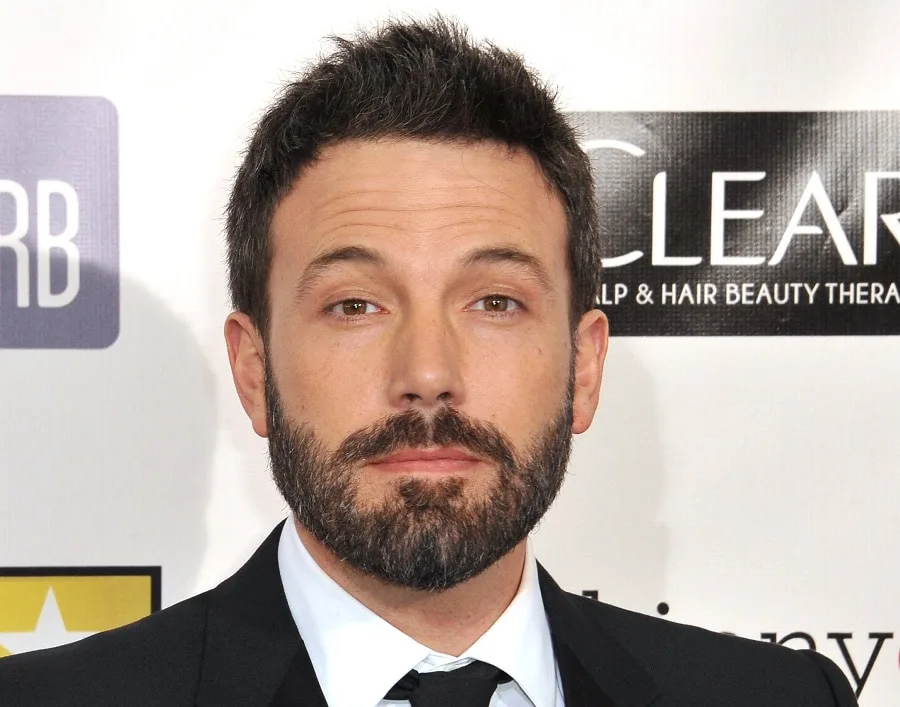
Ben Affleck’s V-shape is a masterclass in chin projection. Worn at a medium stubble-to-short beard length, the beard tapers cleanly from the sideburns down the jaw, converging into a precise pointed chin that draws the eye straight down and elongates his oval face. If your growth is dense enough to hold a clean perimeter, this sculpted shape is absolutely achievable with a detail trimmer and a steady hand on the razor line.
18. Idris Elba’s Salt-and-Pepper V-Shape Short Boxed Beard
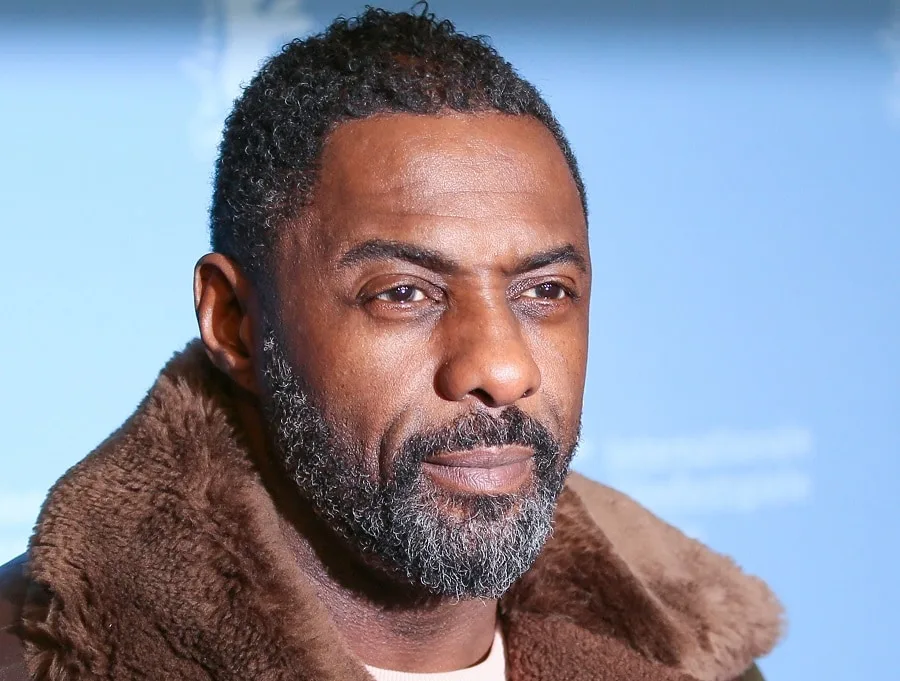
Salt-and-pepper coloring on a well-sculpted short boxed beard hits differently, and Idris Elba proves exactly why. The beard sits at a medium stubble density, with a carved cheek line that respects his natural cheek taper and a neckline cleanup that keeps the undercarriage tight. For a diamond face shape like his, maintaining a little more width through the sides while keeping the chin apex pointed balances the narrower forehead and jaw beautifully.
Use a boar-bristle brush daily to train the growth direction and keep those two-toned strands lying flat against the face. Without that step, the coily texture will fight the outline and blur your hard-earned beard line.
These celebrities prove the V-shape beard is one of the most adaptable outlines in the game, flattering across face shapes, hair textures, and personal aesthetics alike.
How to Grow a V-Shape Beard
Growing a V-shape beard takes patience, a solid growth phase, and some basic understanding of how your facial hair actually behaves. Follow these steps to get there without wasting weeks of growth on avoidable mistakes.
Prepping Your Beard
Before you touch a trimmer, let everything grow out for at least three to four weeks. You need enough density and length to accurately map the V-shape outline, because trying to sculpt too early leaves you guessing at a perimeter that simply is not there yet.
Growing Phase
During the growth phase, keep the beard clean and conditioned. Work a beard oil into the skin and hair daily to prevent beard itch, soften coarse strands, and encourage even, healthy growth across the cheeks and chin. A patchy connector zone is much easier to work with when the surrounding hair is well-nourished and lying flat.
Styling and Shaping a V-Shape Beard
Once you have got enough growth to work with, shaping the V is where the real craft begins.
Tools Required
Grab a quality clipper with multiple guard lengths for bulk removal, a precision detail trimmer for outlining, a straight razor or shavette for razor-sharp line carving, a beard comb for detangling and alignment, and beard balm for post-shaping hold and aftercare.
Trimming the Beard
Start by running your clipper over the entire beard at a consistent guard length to even out the bulk. Getting everything to a uniform density first makes the symmetry check far easier before you commit to any outline work.
Shaping the V
Switch to your detail trimmer or straight razor and begin carving the perimeter. Start at the sideburn point, angle the line diagonally down toward the gonial angle of the jaw, and guide both sides to meet at the chin apex in a clean, pointed finish. Take your time on the symmetry check here; one side even slightly higher than the other will throw off the entire V shape.
Pros and Cons of V-Shape Beard Styles
Like any style choice, the V-shape beard comes with its own set of advantages and drawbacks. Here is a quick rundown before you commit:
Pros:
- Adds genuine chin projection and jaw emphasis, making it one of the most face-slimming beard shapes available.
- Defines the cheek line and jawline with structure that a natural, unshaped beard simply cannot deliver.
- Works across a wide range of face shapes, from round to diamond, with minor adjustments to width and chin length.
Cons:
- Patchy or uneven growth makes achieving a clean, symmetrical V outline genuinely difficult without professional beard sculpting.
- The sharp perimeter demands regular line-up sessions every few days to stay looking polished rather than grown-out.
- Beard detailing at this precision level is time-consuming, and the products needed, including beard oil, balm, and quality trimmers, represent a real ongoing cost.
The V-shape beard is a proven, versatile shape that rewards the effort put into it. Do your research, find the proportions that suit your face shape, and commit to the maintenance routine it deserves.