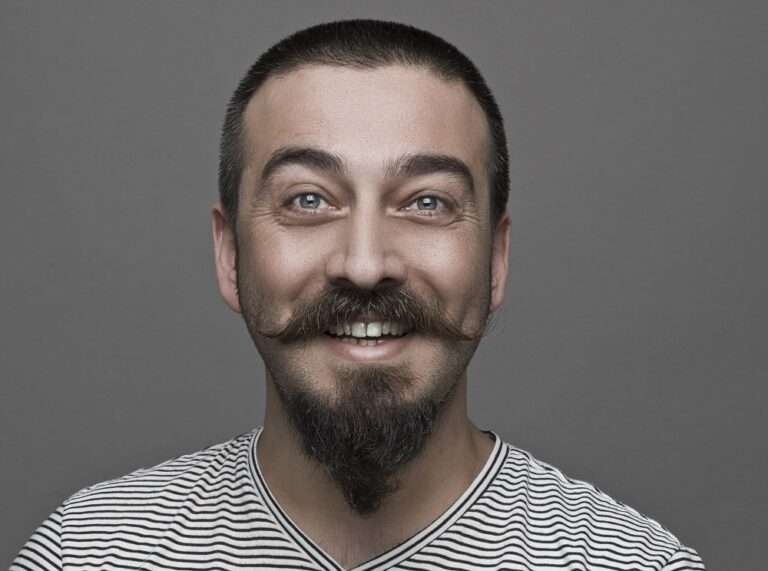

At a glance
- The difference: a Van Dyke has a separate mustache; a classic goatee is chin hair only
- Upkeep: depends on the length and outline you choose
- The statement: the Van Dyke, kept sharply separated
Mix up a Van Dyke and a goatee at the barbershop and you’ll probably still walk out looking fine. They’re close cousins. But they are not the same beard.
A Van Dyke pairs a separate mustache with a chin beard. A classic goatee is chin hair without a mustache, while a full goatee, also called a circle beard, joins the mustache to the chin hair. Those are the three shapes to compare.
Find what suits you: browse all beard styles, mustache styles, or the trimming guide.
What Does A Van Dyke Beard Look Like?

The first photo shows the key feature: bare skin separates the mustache from the chin beard, with the cheeks shaved.
The general description of a Van Dyke is any style of mustache that does not connect to a goatee. The size and style of your mustache and goatee are entirely up to you.
You can have a full mustache or a short one, and the goatee can cover your entire chin or be shaved down so you’re left with a soul patch (a small patch of hair under the bottom lip) and a strip of hair on the chin.
The defining feature of a Van Dyke is that clear mustache disconnect from the goatee, regardless of the shape or style of either. It’s a look that gained fame when 17th-century Flemish painter Anthony Van Dyck and his models sported it.
Back then, the classic approach was to shape the mustache by twisting the ends upward into a handlebar and taper the goatee to a sharp point. It’s also sometimes called a “Charlie” after King Charles I of England, whom Van Dyck painted many times as his court painter.
If you want a Van Dyke beard, there are several styles to consider. Men usually keep clean-shaven cheeks and sideburns with a Van Dyke, though current trends are putting fresh spins on this classic look. Either way, the Van Dyke is a genuinely distinguished choice for anyone willing to commit to keeping that mustache and goatee well-sculpted and separate.
What Does A Goatee Look Like?

During the 1950s, 60s, and 90s, the goatee was a seriously trendy style. In recent years, all forms of beard growth have been making a comeback, so the goatee’s renewed popularity makes perfect sense.
Technically, a goatee is facial hair on the chin only. This classic form does not include the mustache, but you can connect the mustache and chin hair for a full goatee. In either variation, you can include the soul patch or leave it out.
According to the Oxford Dictionary, a goatee is a small pointed beard that grows only on the chin. The name comes from the beard’s resemblance to the tuft on a goat’s chin. That said, you can absolutely connect your mustache for a full goatee.
The length of the mustache and chin hair is yours to decide, depending on how much grooming you’re willing to put in.
Throughout the years, the goatee has been the style choice of rockstars and rebels. At least that’s who made it famous in previous decades, from the beatniks (50s) and hippies (60s) to grunge and alt-rock groups (90s). Today you’ll find clean, polished goatees on everyone from professors to athletes.
The best goatee beard style is absolutely attainable; you just need to settle on your preferred shape and commit to it.
Van Dyke vs. Goatee: The Key Differences

Look at where the mustache and beard meet
A classic goatee has hair on the chin and no mustache. A circle beard connects the mustache to the chin beard around the mouth.
A Van Dyke has a separate mustache and pointed chin beard, with shaved cheeks.
People also use “goatee” for several mustache-and-chin combinations. Show your barber whether you want a gap beside the mouth and how you want the chin shaped.
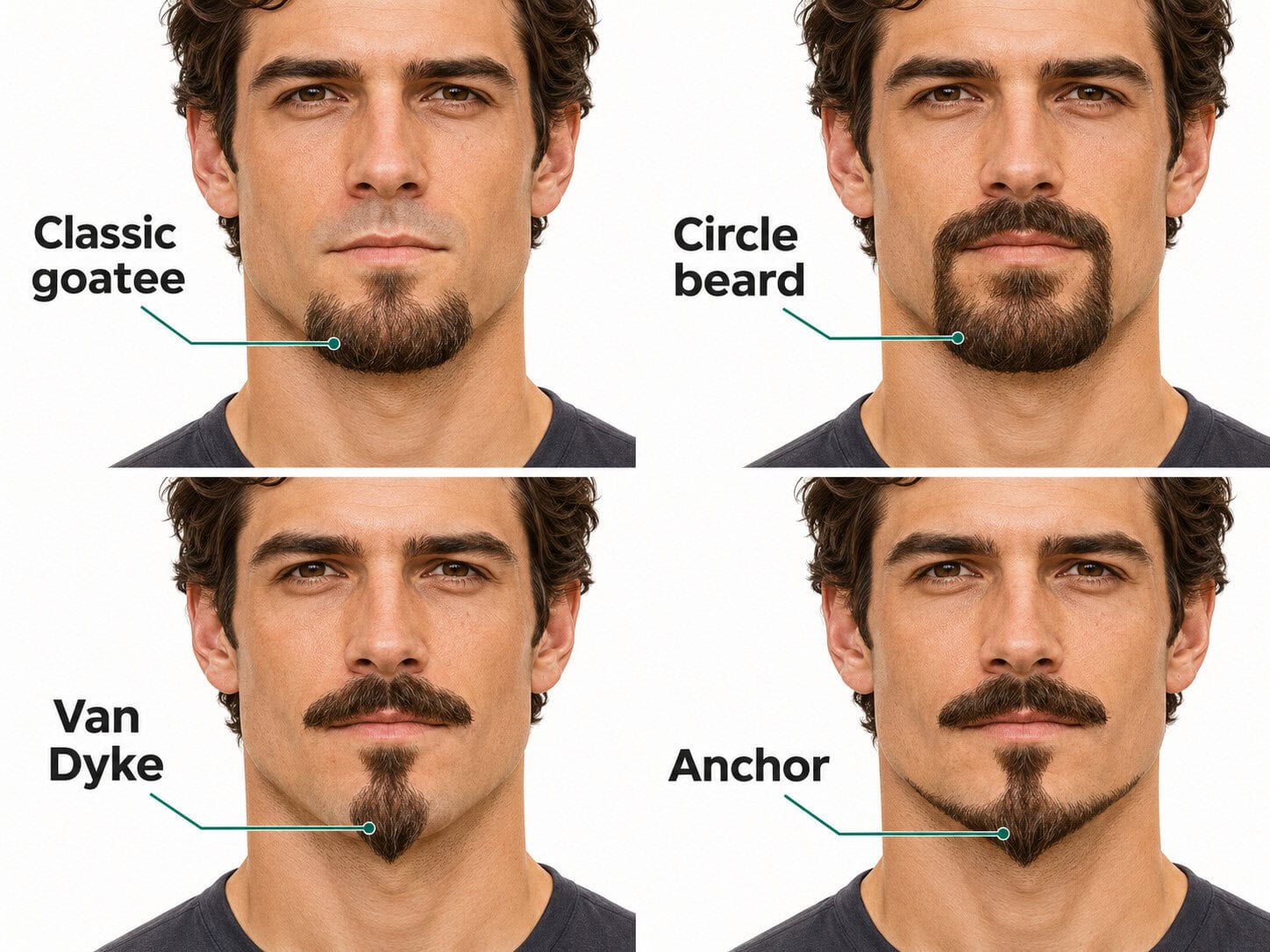
- First check whether there is a mustache. A classic goatee has chin hair alone; if a mustache is present, check whether it connects to the chin beard.
- If you’ve shaped the mustache, possibly even curled it into a handlebar, with a separate and styled goatee below, then you’re looking at a Van Dyke.
- If the mustache connects directly to the chin hair, then you have a full goatee.
- In both styles, the cheeks and sideburns are clean-shaven.
Van Dyke or Goatee: Which One Should You Pick?
To figure out which style works best for you, it comes down to what you can grow, how much maintenance you’re willing to do, and personal preference.
Some men simply can’t grow a full beard or have patchy spots. But that disconnected growth is actually the perfect setup for a Van Dyke. Shave the patchy areas off and use those natural gaps as the starting point for your Van Dyke’s mustache disconnect.
Both styles need regular cleaning and trimming. A long goatee also needs detangling and careful shaping of the ends. You do not need a collection of oils or brushes to wear either style.
A Van Dyke needs its separating gaps kept tidy. A short classic goatee may be simpler to trim, but a long or precisely shaped goatee can take just as much work.
Choose a Van Dyke if you like the separate mustache and chin outline. Goatees are considered lower maintenance, although the actual effort depends on the length and shape you choose.
Extra chin length makes the lower face appear longer, so keep it shorter if you want to avoid emphasizing an already long face. A more rounded or pointed outline changes the effect; try a short version first and adjust it to your preference.
Van Dyke vs Goatee, Answered
What is the difference between a Van Dyke and a goatee?
A classic goatee is hair on the chin without a mustache. A full goatee or circle beard connects the mustache to the chin hair. A Van Dyke includes a mustache but keeps it separate from the chin beard.
Which is easier to maintain?
A short, simple goatee can be easier to maintain, but length and detail matter more than the name. A Van Dyke adds the task of keeping the gaps between the mustache and chin beard clear.
Which suits my face shape?
Choose according to the effect you want. More chin length visually lengthens the lower face; a shorter, rounded outline keeps the emphasis closer to the chin. Neither style is a guaranteed match for a particular face shape.
The Beard Style Verdict
The easiest way to tell these styles apart is to check the mustache and its connection to the chin. Bring a photo so you and your barber mean the same thing.